Russo-Ukrainian War Sparks Global 'Energy Crisis'
Europe Faces Persistent High Prices... Protests Demand 'Relief from Hardship'
South Korea Records First 6 Consecutive Months of Trade Deficit Since IMF Crisis... Government Says "Managing Imported Energy Demand"
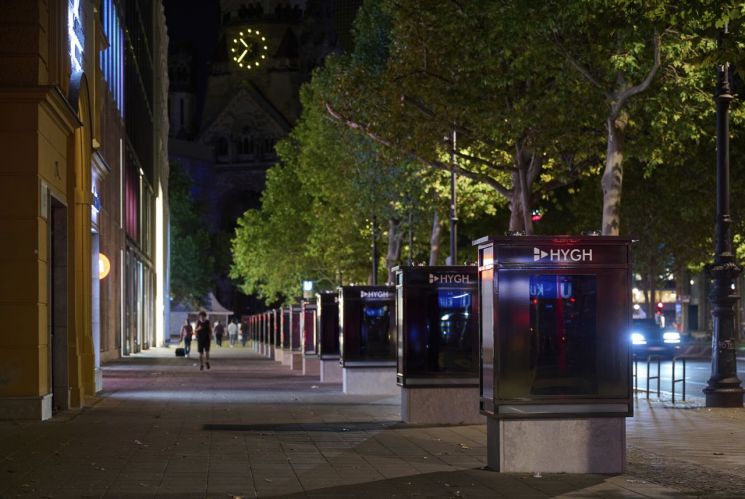 Last September, the electronic billboards on Kurf?rstendamm Street, a bustling area in Berlin, Germany, were shrouded in darkness. Due to the energy-saving measures implemented by the German government starting that day, neon signs and electronic billboards are turned off from 10 p.m. to 4 a.m. the following day. [Image source=Yonhap News]
[Asia Economy Reporter Yoon Seul-gi] As global energy prices soar, concerns about an economic crisis are growing. In Europe, social unrest is increasing with protests erupting against high inflation triggered by rising energy prices. South Korea is also experiencing a growing trade deficit amid the energy crisis, prompting the government to launch a nationwide energy-saving campaign aiming to reduce energy consumption by 10%.
Recently, as Europe struggles with skyrocketing inflation, citizens have staged protests demanding relief from the cost of living. According to The Guardian, on the 1st (local time), thousands of people took to the streets in over 50 locations across the UK, including Plymouth in southern England and Aberdeen in Scotland. This was the largest protest organized in the UK in recent years.
In France, on the 29th of last month, protests demanding price stabilization were held. Led by the French General Confederation of Labour (CGT) and the far-left opposition party La France Insoumise (LFI), approximately 200 protests took place nationwide according to organizers, with 40,000 people gathering in Paris and around 4,000 in Marseille.
Currently, Europe continues to face high inflation due to supply chain disruptions caused by the Russia-Ukraine war. European inflation has hit record highs for 11 consecutive months from November last year through September this year. According to Eurostat, the EU's statistical office, the consumer price index (CPI) in the Eurozone (19 countries using the euro) rose 10.0% in September compared to the same period last year, marking the first double-digit increase. This is higher than last month’s 9.1% and the previous expert forecast of 9.7%.
In particular, rising prices of natural gas and electricity have driven overall inflation. Energy prices surged 40.8% compared to a year ago, surpassing the previous month’s 38.6%. Food, alcoholic beverages, and tobacco prices increased by 11.6%, industrial goods by 5.6%, and service prices by 4.3%.
Russia was the largest supplier of oil and natural gas to the European Union (EU) last year, but in response to EU sanctions, Russia shut off gas valves to Europe this year. According to a report by the International Energy Agency (IEA), Russia has reduced gas supplies to the EU by nearly 50% since early this year, worsening the energy demand-supply imbalance and driving up energy prices.
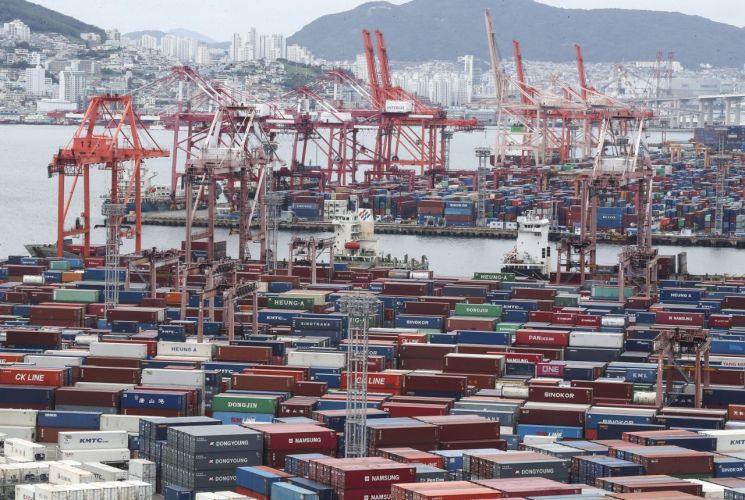 Container handling operations were underway in the morning of last August at Busan Port's Sinsundae and Gamman docks. [Image source=Yonhap News]
The global surge in energy prices caused by the Russia-Ukraine war is also impacting South Korea. The sharp rise in international energy prices has not been reflected in domestic electricity rates, leading to overconsumption of electricity, increased energy imports, and consequently a trade deficit. The trade deficit has persisted for six consecutive months since April, marking the first six-month deficit streak since May 1997.
In fact, the international spot price of natural gas soared nearly fivefold from $10 per million BTU (British Thermal Unit) in the first quarter of last year to $55.2 in August, and Dubai crude oil prices also surged about 40% compared to a year ago. In the first half of this year, coal and gas imports amounted to $38.03 billion, more than double the $17.73 billion in the first half of last year.
As a result, calls are growing to reduce electricity consumption to improve the trade deficit. The Korea Electric Power Corporation (KEPCO) Research Institute analyzed that reducing annual electricity consumption by 10% could improve the trade deficit by 59%. Cutting electricity consumption by 10% this year would reduce liquefied natural gas (LNG) power generation by 57.8 TWh (terawatt-hours), decrease LNG imports by 4.2 MMBtu, and reduce import costs by up to 15 trillion won annually.
The government announced plans to focus on managing energy import demand by launching a nationwide energy-saving campaign aiming for a 10% reduction in energy use this winter, alongside gradually normalizing energy prices.
On the 6th, Ahn Deok-geun, Director General for Trade Negotiations at the Ministry of Trade, Industry and Energy, held the '2nd Export Situation Review Meeting' at the Korea International Trade Association in Gangnam-gu, Seoul, stating, "To manage the demand for imported energy, which is the main cause of the trade deficit, we will mobilize all possible policies including energy saving, energy efficiency innovation, restoring energy price functions, and inducing demand efficiency."
© The Asia Business Daily(www.asiae.co.kr). All rights reserved.


















