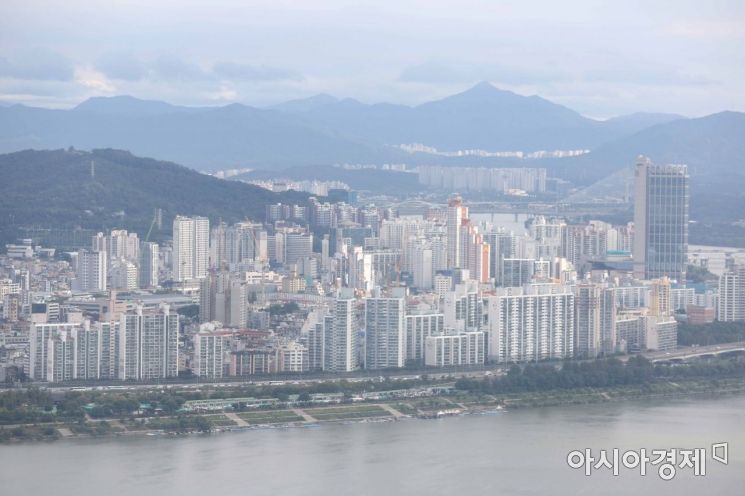
[Asia Economy Reporter Kim Hyemin] A first-come, first-served sale case has appeared in the Seoul subscription market. Until now, "N-th round jupjup (non-priority subscription)" has been repeated to clear unsold units, but when even this fell short, arbitrary disposal was initiated. The market expects that as interest in non-priority subscriptions wanes, first-come, first-served sales cases will increase in the future.
According to the industry on the 5th, Hanwha Forena Mia in Gangbuk-gu, Seoul is currently conducting first-come, first-served designated unit contracts. First-come, first-served contracts involve selling units on a first-come, first-served basis if there is a shortfall at the time of subscription. Like non-priority subscriptions, subscription savings accounts are not used, but applicants can specify the building and unit number and apply regardless of the number of houses owned or residence. There is no re-winning restriction. In the case of Hanwha Forena Mia, even though it is in Seoul, it is not subject to the price ceiling system, so resale is possible after the ownership transfer registration date, and there is no obligation for actual residence.
This place held the main subscription in March and sold out, but cases of giving up the official contract were repeated, leading to four additional non-priority subscriptions afterward. Even after non-priority subscriptions, repeated sellouts followed by non-contracts led to a plea to refrain from subscription being posted in the resident recruitment announcement.
Afterward, as interest in non-priority subscriptions declined and only 25 out of 70 units were gathered in August, the route was changed to first-come, first-served sales. Under the current system, the project entity can only proceed with first-come, first-served sales after a shortfall occurs once in non-priority subscriptions. A sales official said, "About 60 units remain in exclusive areas of 80㎡ and 84㎡," adding, "Discounted sales are not conducted together."
The market views that the real estate market downturn has also affected the Seoul subscription market. Non-priority subscriptions can either attract many people or fall short depending on location and price. In fact, Forena Mia was not popular mainly because its price was set higher than the market price as it was not subject to the price ceiling system. The exclusive 84㎡ unit price was formed at around 1.1 billion KRW, which is more expensive than the recent actual transaction price of 900 million to 1 billion KRW for the nearby flagship apartment, Raemian Trivera.
Cases where non-priority subscription shortfalls lead to first-come, first-served sales are expected to increase. At Dow Artige in Chang-dong, Dobong-gu, some unit types fell short in the fourth non-priority subscription at the end of last month. For exclusive 58㎡ and 59㎡ units, only 16 applicants applied for 21 units. At Moa Elga Treview near Cheonwang Station in Guro-gu, the exclusive 84㎡ unit had only 19 applicants for 120 units, showing an increase in shortfall cases.
In the industry, there are claims that the government should actively revise the non-priority subscription system, which only adds time and cost burdens, and promote first-come, first-served sales. In fact, since Dow Artige in Chang-dong and others have only partial unit type shortfalls rather than total shortfalls, they must proceed with "N-th round subscriptions" again. According to current housing supply regulations, apartments with an average competition rate exceeding 1:1 per type must conduct non-priority subscriptions unconditionally. If the competition rate is maintained, non-priority subscriptions must be repeated until all units are sold.
© The Asia Business Daily(www.asiae.co.kr). All rights reserved.

















