Designed as a space to glimpse the excellence of traditional crafts
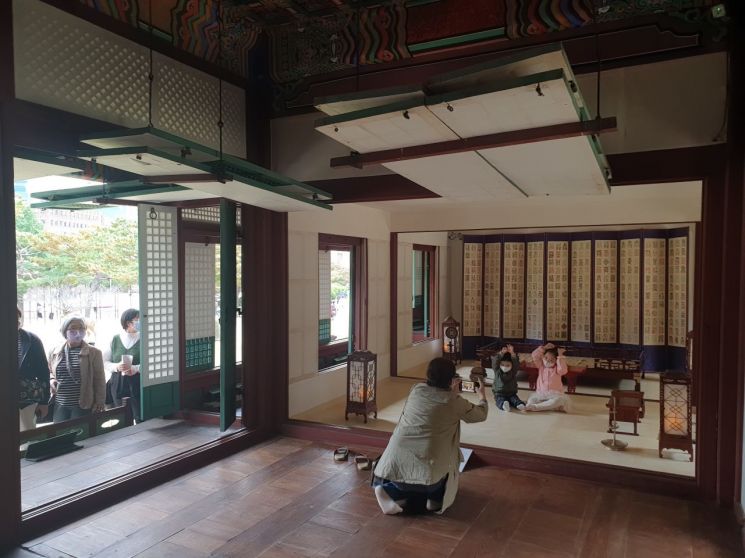
The Jeukjodang Hall at Deoksugung Palace will be transformed into a space showcasing the excellence of traditional crafts.
The Cultural Heritage Administration's Palace and Royal Tombs Division announced on the 6th that, together with the Areumjigi Foundation, they will exhibit royal court life utensils recreated by intangible cultural heritage artisans at Jeukjodang from the 12th to the 19th. This event highlights the achievements of reproducing royal court life utensils over the past four years based on expert consultations. Visitors can explore the interior of Junmyeongdang, connected through Jeukjodang and Wolrang (Moon Corridor), to observe the lifestyle of the royal court.
Jeukjodang is the place where King Gwanghaegun and King Injo of the Joseon Dynasty ascended the throne. During the early Korean Empire period, it was used as the main hall (Jeongjeon) and later served as an office (Pyeonjeon). Considering this, the Deoksugung Management Office has recreated it as Emperor Gojong's office.
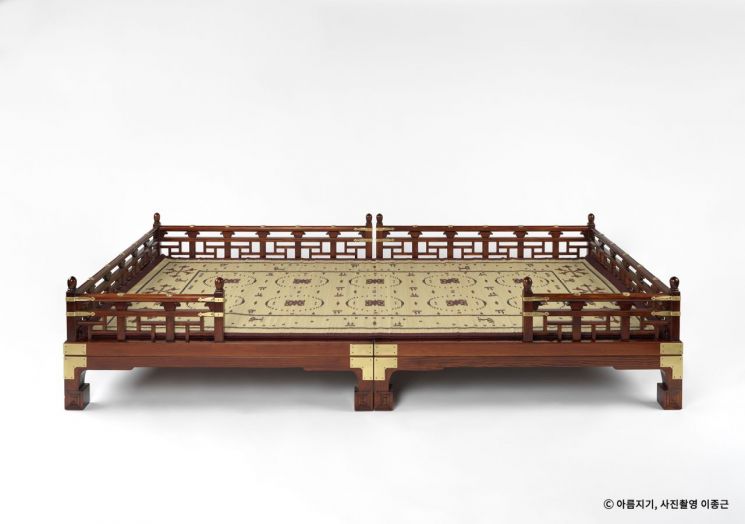
Inside Jeukjodang, the emperor's seat is arranged with a ten-panel embroidered folding screen featuring the characters for 'Longevity (壽)' and 'Blessing (福)' (Baeksu Baekbokja embroidered folding screen), and a flat wooden bed (Pyeongsang) used as a portable bed or chair. A summer mat made of king's grass was placed on top, and directly in front is a desk called Gyeongsang. Outside the room where the officials sat, alongside the Gyeongsang, there is a brush and ink storage box called Yeonsang. Additionally, an inlaid silver candlestick used to light the interior at night and an inlaid silver brazier used for heating have been recreated, allowing visitors to easily understand the royal court culture of the past.
Visitors can freely tour without separate reservations. Admission is free, but the Deoksugung entrance fee must be paid separately.
© The Asia Business Daily(www.asiae.co.kr). All rights reserved.
![Clutching a Stolen Dior Bag, Saying "I Hate Being Poor but Real"... The Grotesque Con of a "Human Knockoff" [Slate]](https://cwcontent.asiae.co.kr/asiaresize/183/2026021902243444107_1771435474.jpg)












