Ministry of Environment Grants 3-Year Grace Period for Ban on Single-Use Wet Wipes in Restaurants
Increase in Wet Wipe Usage Since COVID-19
Opposition to Ban Citing Hygiene Concerns
Calls for Alternatives Like Hygiene Inspections and Soap Placement
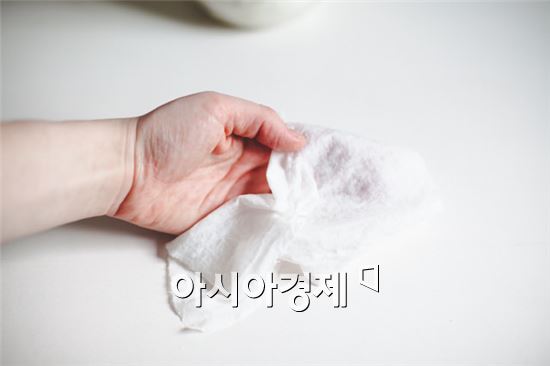 Opinions are divided over the bill banning the use of disposable wet wipes in restaurants.
[Asia Economy Reporter Kim Jung-wan] Following the Ministry of Environment's announcement of a law banning the use of disposable wet wipes in restaurants, the ministry is now considering a three-year grace period, sparking divided opinions among citizens. While the importance of hygiene management has been emphasized since the COVID-19 pandemic, some argue that such a measure is inappropriate, whereas others point out the serious issue of waste and the need for alternative solutions.
According to the Ministry of Environment on the 6th, during the National Assembly Environment and Labor Committee's audit report held on the 4th, the ministry stated it is reviewing a plan to postpone the enforcement of the ban on disposable wet wipes in food service establishments by three years. Originally, the ban was scheduled to take effect one year after the law's promulgation.
Under the revised bill, disposable wet wipes containing plastic will no longer be allowed in food service establishments. Currently, disposable wet wipes commonly used in restaurants contain 40-50% plastic. Hygienic towels or wet wipes without plastic content will still be permitted, and wet wipes used at home are not subject to regulation.
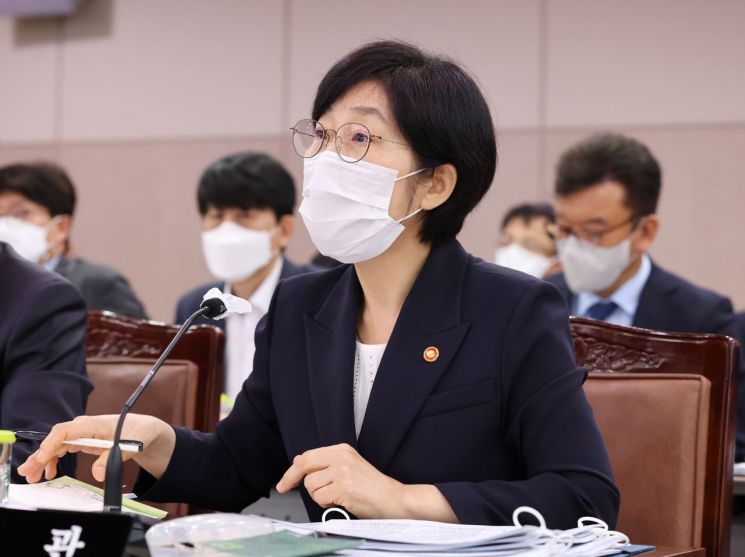 Han Hwa-jin, Minister of Environment, is responding to questions from lawmakers during the National Assembly's Environment and Labor Committee's audit of the Ministry of Environment held on the morning of the 4th at the Government Complex Sejong in Sejong City.
 [Image source=Yonhap News]
Since the spread of COVID-19, demand for wet wipes has surged significantly. According to the production status by hygiene product category from Statistics Korea, in 2020, 343,024 tons of wet wipes for food service establishments were produced throughout the year. This represents an increase of 26,527 tons compared to the previous year, making wet wipes the most produced disposable item compared to cups, spoons, toothpicks, straws, and others. It is estimated that even more wet wipes were used last year when the infection rate peaked.
Due to this situation, some citizens believe that banning disposable wet wipes for hygiene reasons is inappropriate. Office worker Choi (34) said, "If you cannot wash your hands, disposable wet wipes are less uncomfortable than wet towels," adding, "I don't think wet towels would be properly managed in restaurants where restrooms are dirty or even lack soap."
There is also a response that the demand for wet wipes has increased as hygiene management has become part of daily life. Jeon (56), who runs a restaurant in Seodaemun-gu, Seoul, said, "No matter how thoroughly we manage wet towels, since COVID-19, many customers have requested wet wipes separately, so we switched to wet wipes," adding, "People seem to be more concerned because it touches their hands or mouth."
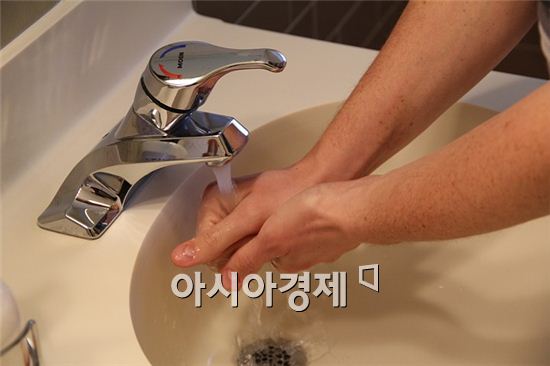 There is an opinion that hygiene issues can be addressed by managing wet towels and placing soap, which can replace the use of wet wipes.
On the other hand, there are concerns about serious environmental pollution issues, suggesting alternatives such as hygiene inspections of wet towels and placement of soap. Wet wipes are made of plastic fiber material, a type of plastic that does not decompose easily and releases harmful substances even when incinerated. Due to hygiene issues, recycling is difficult, but as global wet wipe usage increases, countermeasures are necessary. According to Grand View Research, the global wet wipe market size is expected to reach $28.85 billion by 2028.
Office worker Kim (29) said, "Washing hands is the cleanest method compared to wet towels or wet wipes," adding, "I think it is better to properly equip soap in restaurant restrooms rather than wasting disposable items that are not essential."
Park (43), who operates a pub in Mapo-gu, also said, "Even just managing the restroom cleanly speeds up the refilling cycle of liquid soap," adding, "That means people are washing their hands more." He further stated, "If soap placement and wet towel hygiene inspections are thorough, the number of customers requesting wet wipes in restaurants could decrease."
Meanwhile, when the Ministry of Environment announced the draft enforcement decree to ban disposable wet wipes in restaurants in January, it stated that the enforcement timing would be "one year after the revision and promulgation of the Resource Recycling Act enforcement decree and rules." However, after gathering industry opinions that three years are needed to develop wet wipes without plastic and prepare related facilities for production, it is highly likely that the grace period will be extended to three years. If the grace period is extended to three years, the actual enforcement of the ban is expected to take place no earlier than the end of 2025.
© The Asia Business Daily(www.asiae.co.kr). All rights reserved.

![User Who Sold Erroneously Deposited Bitcoins to Repay Debt and Fund Entertainment... What Did the Supreme Court Decide in 2021? [Legal Issue Check]](https://cwcontent.asiae.co.kr/asiaresize/183/2026020910431234020_1770601391.png)