Confirmation of Hair Growth Promotion and Thickness Increase in Experimental Book
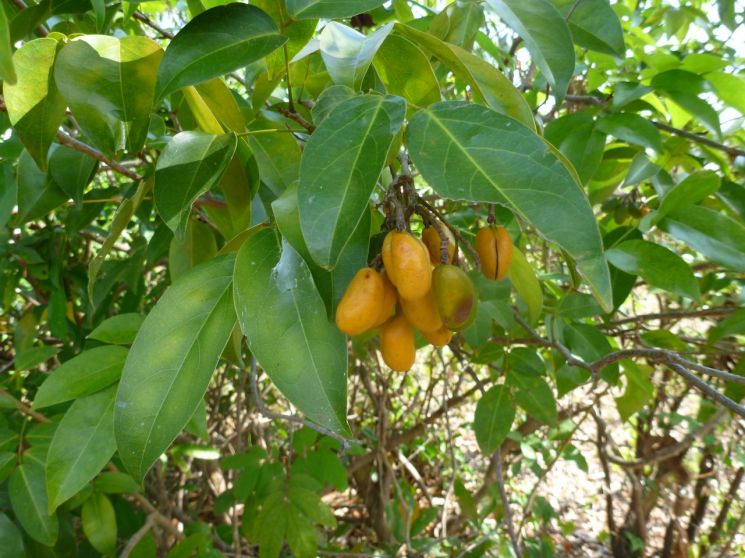 Konarus semidecandrus, a wild plant native to Cambodia. Photo by National Institute of Biological Resources [Image source=Yonhap News]
[Asia Economy Reporter Park Hyun-joo] The extract of the Cambodian wild plant 'Konarus semidecandrus' has been confirmed to have hair loss prevention effects.
The National Institute of Biological Resources under the Ministry of Environment announced on the 5th that through a joint research project lasting over two years with Professor Cho Jae-yeol's research team at Sungkyunkwan University, the hair loss prevention effect of Konarus semidecandrus extract was confirmed. Konarus semidecandrus is a medicinal plant native to Cambodia and Laos. Since 2007, the Ministry of Environment has been conducting joint biodiversity surveys in Cambodia, and the samples used in this study were secured through this effort.
The Konarus semidecandrus extract was found to inhibit the activity of '5-alpha reductase,' an enzyme that converts the hormone testosterone into dihydrotestosterone, which shortens the hair follicle growth phase and causes miniaturization, leading to hair loss. On the other hand, it was confirmed to promote the expression of proteins related to the survival and proliferation of dermal papilla cells, which secrete various growth factors that influence hair generation and growth.
The research team reported that when this extract was applied to experimental mice with alopecia, the hair grew better, and the hair length and thickness were greater compared to mice treated with finasteride, a hair loss treatment approved by the U.S. Food and Drug Administration (FDA). The team has filed related patents and is considering technology transfer to companies. Research using native plants from Mongolia, Laos, and Vietnam is also underway.
Meanwhile, according to the National Health Insurance Service's public interest disease statistics, the number of patients with hair loss disorders last year was 242,960. This is a 13% increase (27,935 people) compared to 215,025 patients in 2017.
© The Asia Business Daily(www.asiae.co.kr). All rights reserved.

















