Trade Association Vice Chairman Jeong Manki's Presentation on 'The US IRA Act and Our Response'
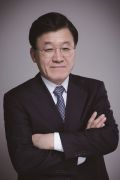
[Asia Economy Reporter Sunmi Park] Chung Manki, Vice Chairman of the Korea International Trade Association (KITA), emphasized that since the U.S. Inflation Reduction Act (IRA) was politically driven, its revision is unlikely to be easy. He stressed the need for continuous diplomatic efforts and solidarity with foreign brands to persuade U.S. political circles, including members of Congress.
According to KITA on the 5th, Vice Chairman Chung attended the ‘Mega FTA Utilization Economic Crisis Overcoming Strategy Seminar’ held the previous day at the National Assembly Members’ Office Building Seminar Room 1, jointly hosted by the National Assembly World Forum FTA Job Center and Rep. Yoon Changhyun of the People Power Party. He delivered a presentation titled ‘Implementation of the IRA and Our Response.’
Regarding the enactment and implementation of the U.S. IRA, he said, "In the battery sector, as of the first half of 2022, China holds about 60% of the market, and in battery raw materials, it accounts for 65% of the lithium market, 80% of nickel processing, and 60% of nickel mining." He added, "From this perspective, the enactment and implementation of the U.S. IRA are understandable." He also noted, "There is a positive aspect for us in promoting diversification of supply for electric vehicle-related battery materials and raw materials."
However, he pointed out the problem that despite issues related to the World Trade Organization (WTO) subsidy agreement and the national treatment provisions within the Korea-U.S. Free Trade Agreement (FTA) concerning U.S. efforts to counter China and establish an electric vehicle supply chain, Korea was excluded.
Vice Chairman Chung stated, “A surprising fact confirmed through recent contacts with U.S. and European industries is that none of them were aware in advance of the significant changes and sudden promotion of the U.S. Senate’s electric vehicle subsidy legislation. Therefore, it would have been difficult for us to know about the U.S. legislation beforehand.” He emphasized, “On the contrary, our National Assembly was the first in the world to adopt a resolution declaring the legislation unfair and urging our government to actively negotiate. The government also entered negotiations with the U.S. faster than any other country, so there seems to be no room for criticism of a delayed response.”
Regarding future responses, Vice Chairman Chung said, “Since the IRA was politically driven, revision is not impossible but is expected to be difficult,” adding, "We must prepare and implement proactive and wise countermeasures. While participating in the diversification of battery supply, we need to actively respond to the electric vehicle subsidy issue under the principle of doing so, and persuade U.S. political circles, including members of Congress, through diplomatic efforts and solidarity with foreign brands.”
He stressed, “It is especially necessary to submit official industry opinions well during the public hearing and other opinion-gathering procedures when the U.S. Treasury Department prepares notices,” and “At this time, it is important to actively highlight that Korea is an FTA partner with the U.S. and that our companies are major investors in the U.S.”
He also advised, “Since the U.S. has newly established industrial transition subsidies and purchase subsidies related to electric vehicle subsidies, our companies should actively utilize industrial transition subsidies such as manufacturing tax reductions, fossil fuel alternative tax support, advanced technology automobile manufacturing tax support, and domestic manufacturing transition cash support, as well as purchase subsidy programs for used electric vehicles and commercial electric vehicles.”
Furthermore, he added, “It is necessary to consider similar measures on the basis of reciprocity,” and “Especially if corporate tax reductions are promoted limited to U.S. exports, it could somewhat compensate for the weakening of our competitiveness.”
© The Asia Business Daily(www.asiae.co.kr). All rights reserved.

















