Signs of Tactical Nuclear Weapons Deployment on Ukraine Frontline
Largest Nuclear Crisis in 60 Years Since Cuban Missile Crisis
NATO Allies May Prompt US and Western Intervention if Radiation Damage Occurs
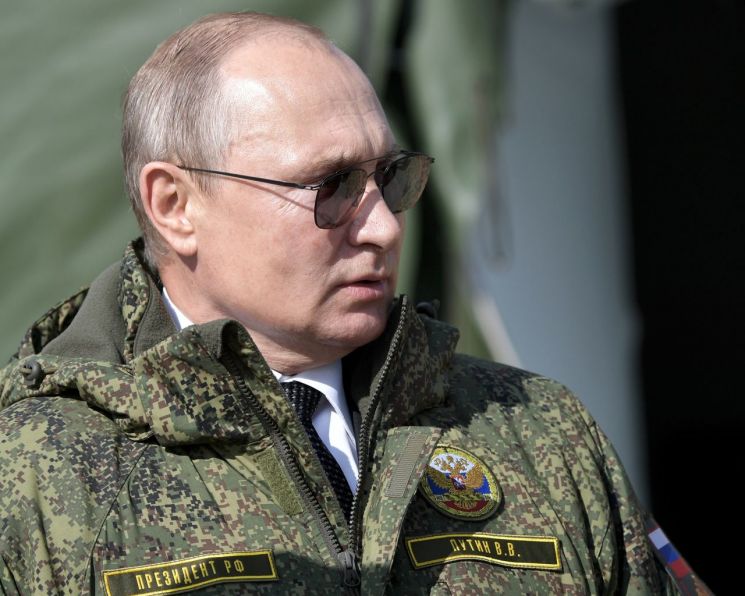
[Asia Economy Reporter Hyunwoo Lee] As the Russian military's defensive lines are collapsing at various points on the Ukrainian front, signaling a bleak outlook, concerns are rising that Russia might resort to using tactical nuclear weapons to reverse the tide of the war. Should Russia proceed with nuclear use, the United States and Western countries, which have so far refrained from direct military intervention, may step in, plunging the world into an unprecedented vortex of conflict.
Experts warn that if Russia's nuclear use and subsequent nuclear threat strategy succeed, it could set a precedent for other hostile nuclear-armed states to follow suit. If Russia's nuclear use is tolerated, demands for nuclear armament from U.S. allies neighboring China, North Korea, and Iran are expected to increase, further heightening global military tensions. Some voices express concern that the world is facing its greatest military confrontation in 60 years since the 1962 Cuban Missile Crisis.
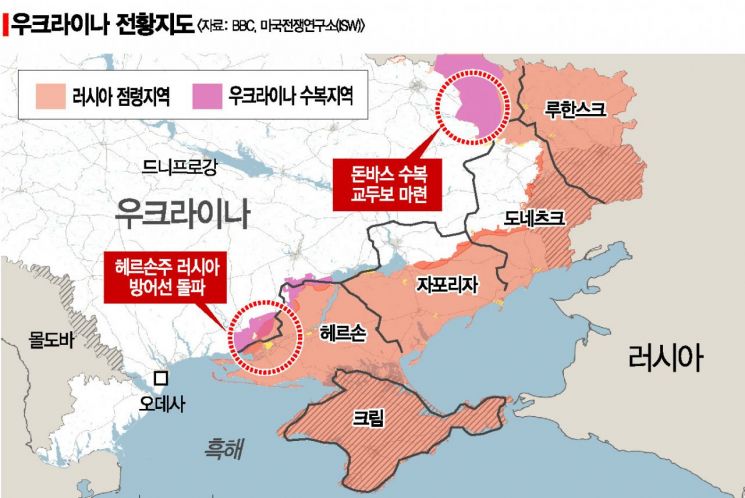
On the 4th (local time), according to the Associated Press, even Russian state media, which had previously reported positively on the situation on the Ukrainian front, are now publishing critical articles reporting Russian military defeats.
Following Russia's state-owned Rossiya-1 TV reporting the defeat in Lyman, Donetsk Oblast, eastern Ukraine, the pro-government daily Komsomolskaya Pravda criticized the Russian military's poor performance, stating, "Demoralized soldiers barely escaped from Lyman, and communication with other units was also inadequate."
Despite Russia's annexation declarations, Ukrainian forces are steadily reclaiming key areas including Kharkiv, Lyman, and the southern strategic region of Kherson. On the same day, Ukraine's Ministry of Defense released a video showing the 35th Marine Brigade raising the Ukrainian flag atop a communications tower in Davydiubrids, Kherson Oblast.
◇Russia’s Bleak Outlook Raises Concerns Over Tactical Nuclear Weapon Use
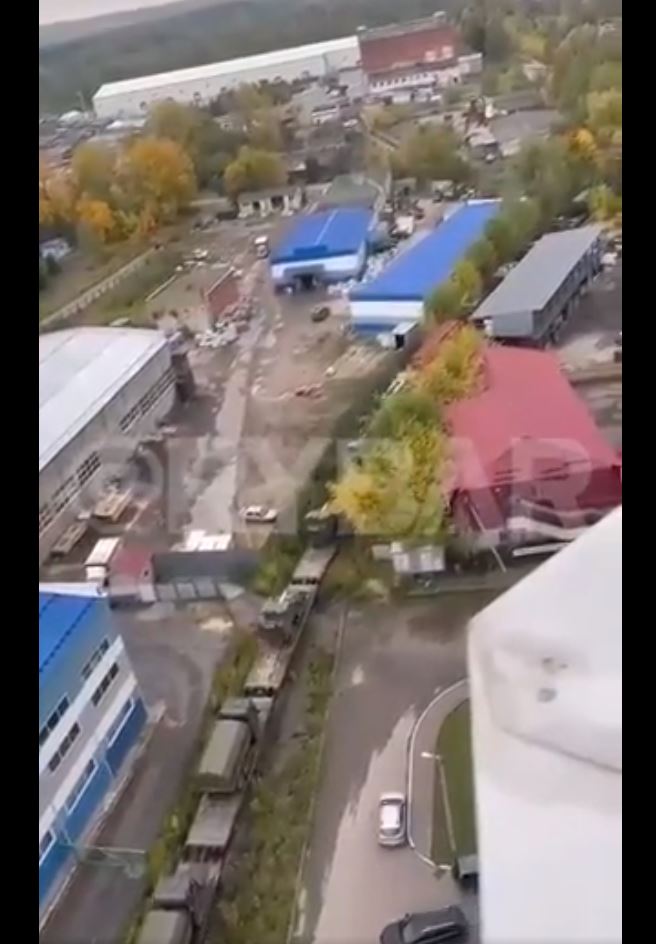 On the 2nd (local time), the pro-Russian Telegram channel Rybar revealed an image of a cargo train suspected to be transporting nuclear weapons for the Russian military. The equipment marked with red lines is known to be managed by the Secret 12th Direct Unit of the Russian Ministry of Defense, the department responsible for nuclear weapons within the Russian military. [Image source= Rybar Telegram]
As Russian forces begin to retreat rapidly after their defensive lines on major fronts collapse, concerns have emerged that they might use tactical nuclear weapons to halt the Ukrainian advance. On the previous day, British media outlets such as The Times and Daily Mail reported signs that Russia's tactical nuclear weapons are being moved to the Ukrainian front.
According to these outlets, the pro-Russian Telegram channel Rybar released a video showing a freight train carrying equipment belonging to the Russian Ministry of Defense's secret 12th Direct Unit, which oversees nuclear weapons, passing through central Russia en route to Ukraine.
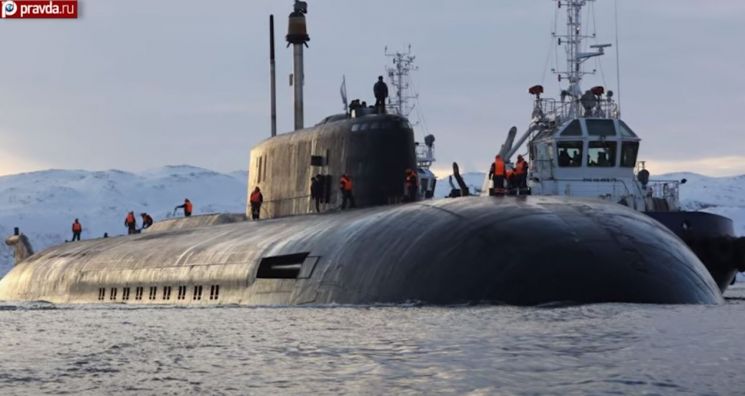
Separately, warnings have been issued that Russia might conduct nuclear tests in the Arctic Ocean area to threaten the U.S. and the West with nuclear intimidation. Italy's La Repubblica cited a senior NATO official saying, "NATO has warned member countries that Russia's Belgorod nuclear submarine has left its Arctic base." This nuclear submarine can carry a nuclear torpedo called 'Poseidon,' a strategic weapon known to cause nuclear tsunamis capable of destroying coastal cities.
The U.S. and Russian governments have both denied the possibility of tactical nuclear weapon use for now. White House spokesperson Karine Jean-Pierre stated in a press briefing, "There are no immediate signs of Russia using nuclear weapons, and we have found no reason to adjust our existing nuclear posture."
Russian Kremlin spokesperson Dmitry Peskov also dismissed the possibility, saying, "Western media, politicians, and national leaders seem to be practicing the art of nuclear-related falsehoods. We do not want to pay attention to such exercises by the West."
However, it is known that the U.S. government is reviewing countermeasures for various possible scenarios related to Russia's nuclear threats. CNN reported, citing a senior U.S. official, that "possibilities being considered include Russia using tactical nuclear weapons on the front lines, bombing the Zaporizhzhia nuclear power plant, and conducting electromagnetic pulse (EMP) attacks to disable electronic equipment in major Ukrainian cities."
◇U.S. May Intervene Directly If NATO Countries Suffer Radiation Damage
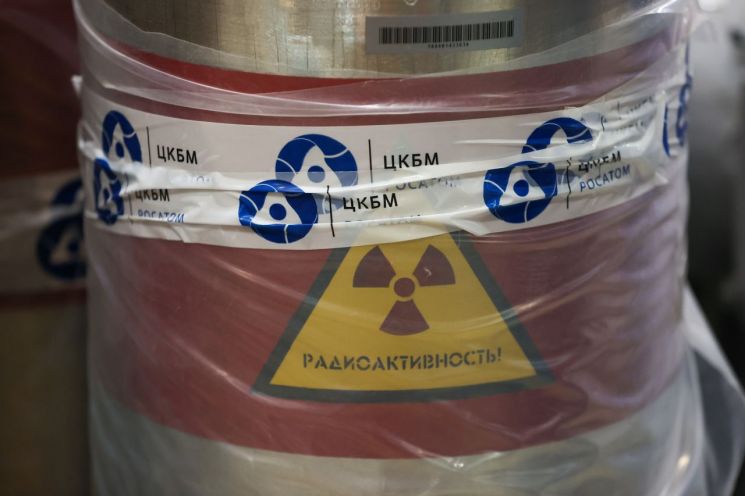
Even the relatively low-yield tactical nuclear weapons can devastate one or more cities and cause widespread radioactive contamination over large areas. If radiation damage spreads to NATO allies in Europe adjacent to Ukraine, concerns are growing that the U.S. and NATO may directly intervene militarily.
According to the British BBC, tactical nuclear weapons are small nuclear warheads with yields ranging from 1 to 100 kilotons, less lethal than strategic nuclear weapons with yields exceeding 1,000 kilotons but still possessing extremely powerful destructive capabilities. The atomic bomb dropped by the U.S. on Hiroshima during World War II in 1945 is estimated to have had a yield of about 15 kilotons. The Federation of American Scientists (FAS) estimates that Russia possesses approximately 2,000 tactical nuclear weapons.
In particular, if Russian forces use tactical nuclear weapons near the western Ukrainian border with Poland, a major route for Western arms supplies to Ukraine, NATO member countries in Eastern Europe adjacent to Poland are expected to suffer significant damage. In such a case, the U.S. and NATO members would be compelled to participate directly in the war under Article 5 of the NATO treaty, which guarantees collective defense.
Former CIA Director David Petraeus said in an interview with ABC News the previous day, "If radioactive fallout from Russia's tactical nuclear weapon use reaches NATO allies, it can effectively be considered an attack on NATO. Should such a situation arise, the U.S. is expected to lead NATO's collective action to destroy all Russian conventional forces and warships in the Ukrainian battlefield and the Black Sea region."
Some voices also raise the possibility of a direct military confrontation between the U.S. and Russia even more dangerous than the 1962 Cuban Missile Crisis. The British weekly The Economist pointed out, "During the 1962 Cuban Missile Crisis, Soviet leader Nikita Khrushchev had a collective leadership to check his unilateral decisions, but none of President Vladimir Putin's close aides have the power to restrain him."
◇Imitation of Nuclear-Armed States’ Strategies... Vigilance Over North Korea and Iran
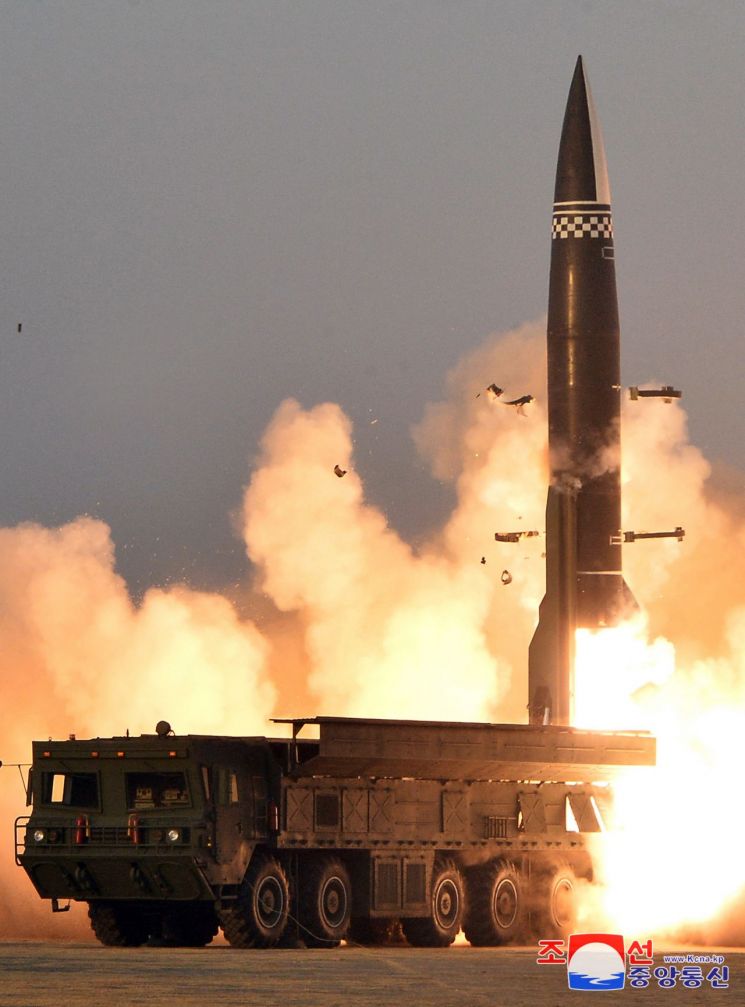
If Russia gains an upper hand in negotiations with the U.S. and the West through nuclear threats involving tactical nuclear weapons, concerns are rising that other nuclear-armed states might imitate Russia's strategy, setting a precedent.
According to The New York Times (NYT), unlike intercontinental ballistic missiles (ICBMs) or intermediate-range ballistic missiles (IRBMs), tactical nuclear weapons have been excluded from arms control agreements even after the Cold War ended, resulting in inadequate management. Although the CIA has led efforts to track tactical nuclear weapons for over 20 years, even the exact numbers remain unknown. Tactical nuclear weapons are spread worldwide, mainly among Russia, China, and North Korea, and if Russia uses them directly on the Ukrainian battlefield, control will become even more difficult.
NYT pointed out, "Tactical nuclear weapons are not subject to arms control, their numbers are not precisely known, and management is nearly impossible. Not only North Korea and Iran but also terrorist organizations such as Al-Qaeda and the Taliban could actively pursue the use and acquisition of tactical nuclear weapons and related technologies."
© The Asia Business Daily(www.asiae.co.kr). All rights reserved.



















