Risk of Crime by Diverting Before Inspection After Excessive Cultivation
Limitations of On-Site Inspection Due to Many Remote Mountain Villages
‘Daema’ as an Introductory Drug... "Cultivation Management Must Be Thorough"
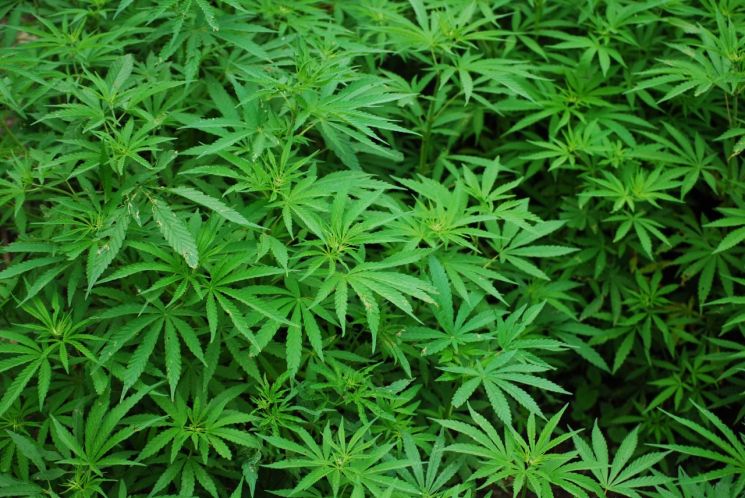 In the past five years, the number of reported marijuana cultivation sites has increased 2.7 times, highlighting the need for cultivation management. [Image source=Pixabay]
[Asia Economy Reporter Kim Jung-wan] Amid the recent rise of drug abuse as a social issue, the cultivation area of hemp has increased 2.7 times compared to 2017. Since hemp is called a "gateway drug," there are calls for stricter cultivation management.
According to hemp cultivation status data received by Rep. In Jae-geun of the Democratic Party of Korea from the Ministry of Food and Drug Safety on the 3rd, the number of reported hemp farms in the first half of 2017 was 154 households, with 75 households actually cultivating, and the cultivation area was 31.1285 hectares. The status reported in the first half of this year showed 385 reported farms, 204 actual cultivating farms, and a cultivation area of 88.5423 hectares, more than doubling in five years.
According to the "Narcotics Control Act," to cultivate hemp, one must obtain permission from the special self-governing city mayor, mayor, county governor, or district office chief. Additionally, cultivators must report the hemp cultivation area, production status, and quantity twice a year to the special self-governing city mayor, mayor, county governor, or district office chief. Each local government’s narcotics post-management department must also inspect the cultivation sites at least once a year before and after the hemp harvest period to check compliance with reporting and disposal regulations and to prevent illegal leakage of hemp leaves.
However, despite this management system, concerns have been raised that loopholes in the system allow for over-cultivation beyond reported amounts and the diversion of hemp just before local government inspections. Due to the nature of hemp cultivation sites, which are often in remote mountainous or isolated areas, it is difficult for local government officials to inspect every site thoroughly.
Recently, some local governments have been attempting to cultivate hemp in regulatory special zones to create industrial added value, and the Ministry of Food and Drug Safety is also trying to legalize hemp-based medicines to alleviate the suffering of patients with rare and intractable diseases such as pediatric epilepsy.
Rep. In said, "Although the Ministry of Food and Drug Safety is the main agency responsible for narcotics control, it seems to rely solely on local governments for management and supervision," and emphasized, "Measures to strengthen surveillance and supervision, such as surprise inspections and installation of closed-circuit television (CCTV), should be promptly prepared."
© The Asia Business Daily(www.asiae.co.kr). All rights reserved.