[Asia Economy New York=Special Correspondent Joselgina] "It will deliver a severe shock to low-income countries and plunge the global economy into a recession."
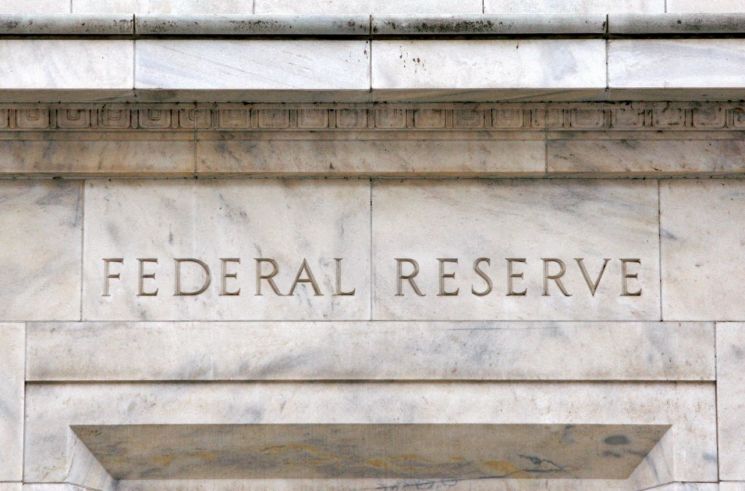
A United Nations (UN) agency has urged central banks around the world, including the U.S. Federal Reserve (Fed), to halt interest rate hikes. Since recent inflation is driven by supply-side issues, raising rates to suppress demand will never control it and will only increase the risk of a long-term economic downturn.
According to the Wall Street Journal (WSJ), the United Nations Conference on Trade and Development (UNCTAD) stated in its annual international economic outlook report released on the 3rd (local time) that "If the Fed and other central banks continue rapid interest rate hikes, it will cause severe damage to developing countries."
It is estimated that if the Fed’s benchmark interest rate rises by 1 percentage point, the GDP of other advanced countries will decrease by 0.5%, and the GDP of developing countries will decline by 0.8% over the following three years. Furthermore, due to the Fed’s rate hikes since the beginning of this year, developing countries’ GDP is expected to shrink by $360 billion over the next three years. Since there is still no sign of the Fed’s tightening stopping, UNCTAD predicts that the impact will become even greater.
Rebecca Greenspan, Secretary-General of UNCTAD, expressed concern that the current interest rate hikes by central banks worldwide "are harming the most vulnerable people, such as those in developing countries, and pose a risk of pushing the global economy into a recession." According to UNCTAD, the rate hikes by central banks in July reached the highest level since statistics began in the early 1970s.
The U.S. central bank Fed implemented aggressive rate hikes starting with 0.25 percentage points in March, followed by 0.5 percentage points in May, 0.75 percentage points in June, 0.75 percentage points in July, and 0.75 percentage points in September. At the September meeting, it also confirmed that the median interest rate for the end of this year was raised to 4.4%, and the median rate for next year to 4.6%, reaffirming that high-intensity tightening will continue for the time being.
In addition, major countries such as the United Kingdom, Switzerland, Norway, and Hong Kong have simultaneously accelerated their rate hikes, increasing concerns about a global economic recession. Recently, the Reserve Bank of India warned that following the COVID-19 pandemic and Russia’s invasion of Ukraine, the global economy is now facing a third shock from major countries’ interest rate hikes.
UNCTAD pointed out that these simultaneous rate hikes will not help ease inflation. Richard Kozul-Wright, the chief author of this report, questioned, "Are we trying to solve supply-side problems with demand-side solutions?" and criticized it as a "very dangerous approach."
To curb inflation caused by supply-side issues such as the pandemic, policies that expand supply rather than interest rate hikes that suppress demand are necessary. UNCTAD cited the example of how resolving supply issues led to a drop in grain prices. In July, Russia and Ukraine agreed to export about one million tons of grain, which had the effect of lowering global grain prices by 1.4%.
It also proposed introducing one-time windfall taxes on energy companies to control the rapid rise in prices of key products.
Secretary-General Greenspan emphasized, "There is still time to step back from the edge of recession," and added, "We have the tools to calm inflation and support vulnerable groups."
In this report, UNCTAD revised down its global economic growth forecast for this year from 2.6% presented in March to 2.5%. It expects growth to slow further to 2.2% next year.
© The Asia Business Daily(www.asiae.co.kr). All rights reserved.
![Clutching a Stolen Dior Bag, Saying "I Hate Being Poor but Real"... The Grotesque Con of a "Human Knockoff" [Slate]](https://cwcontent.asiae.co.kr/asiaresize/183/2026021902243444107_1771435474.jpg)











