Report from the 'Saerogochim Committee' led by Woo Sang-ho, former Democratic Party Emergency Committee Chair
Diversified voter landscape: 'Conservative' and 'Progressive' voters
The party must change to respond to shifts in public opinion
Woo Sang-ho: "Lee Jae-myung communicates well on livelihood and within the party... but needs to increase engagement with the media"
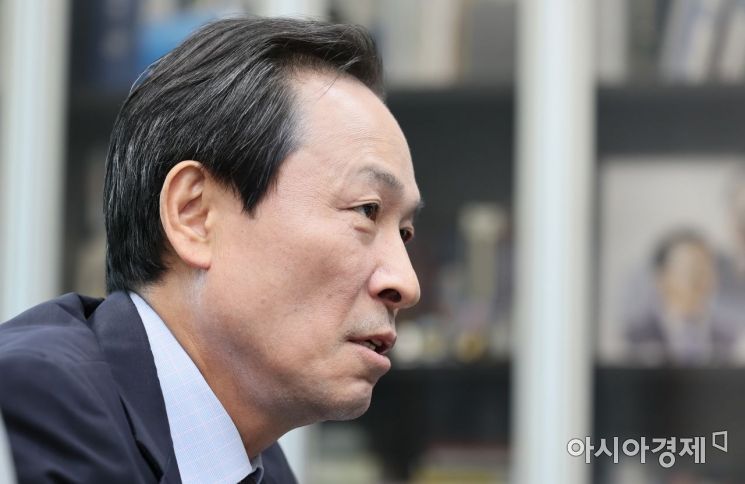
[Asia Economy reporters Naju-seok and Park Joon-yi] "The reason we created the Refresh Committee to analyze this is as follows. When various entities within the party evaluated the election, I made sure to attend without fail to listen carefully. At that time, I felt the limitations. No matter how I looked at it, it seemed to me that the voter landscape had changed. The voter landscape during President Kim Dae-jung's era and during Presidents Roh Moo-hyun and Moon Jae-in's time had changed. But now, it seems to have changed again. So, if politicians are aiming for elections, they should study the voter landscape well. No one has succinctly explained why the Lee Jun-seok phenomenon occurred."
On the 26th of last month, when we met at the National Assembly Members' Office Building, Woo Sang-ho, a member of the Democratic Party of Korea, spoke rapidly when the topic of the party's presidential election evaluation report came up. The Refresh Report was a kind of presidential election evaluation report for the Democratic Party, which Woo led proactively during his time as the emergency committee chairman. Reports made by parties after losing a presidential election tend to be retrospective, and their results usually involve assigning responsibility to someone. It is common to investigate why the election was lost and who is to blame. However, the Refresh Report differed from past presidential election evaluation reports in that it looked at future issues.
"Regarding why only 37.7% voted in Gwangju during the local elections, people just pass by without deeply pondering 'What happened here?' A political party should know why and devise countermeasures. That is innovation. The Refresh Committee's report newly analyzed the voter landscape. It presents meaningful results there."
After the Democratic Party lost both the presidential and local elections, Woo took on the role of emergency committee chairman. With a regular party convention scheduled, he was to serve as emergency chairman for up to two months. This period was too short for a revolutionary party reform, and the party's situation was too poor to just vaguely prepare for the convention. Voices calling for accountability for the election defeat were loud. There were calls to hold accountable Lee Jae-myung, the current Democratic Party leader who was the presidential candidate and local election standing campaign committee chairman, and former President Moon Jae-in. However, Woo chose to look forward rather than backward.
"What is the conclusion? There is no vague middle ground. Within one voter group, there are two to three opposing types. In some aspects, they are progressive, but in others, they have very concrete conservative traits. For example, people living in rural areas with a monthly income below 2.5 million won do not support the Democratic Party. That is a big problem. We need to analyze what type these people are, what issues they are sensitive to. These people are very far-right. For instance, they strongly dislike feminism but strongly support basic income. They find it hard to make a living and do not see women as vulnerable. They demand basic income for themselves as the vulnerable. Classic policies aimed at people in their 20s and 30s do not work on these people."
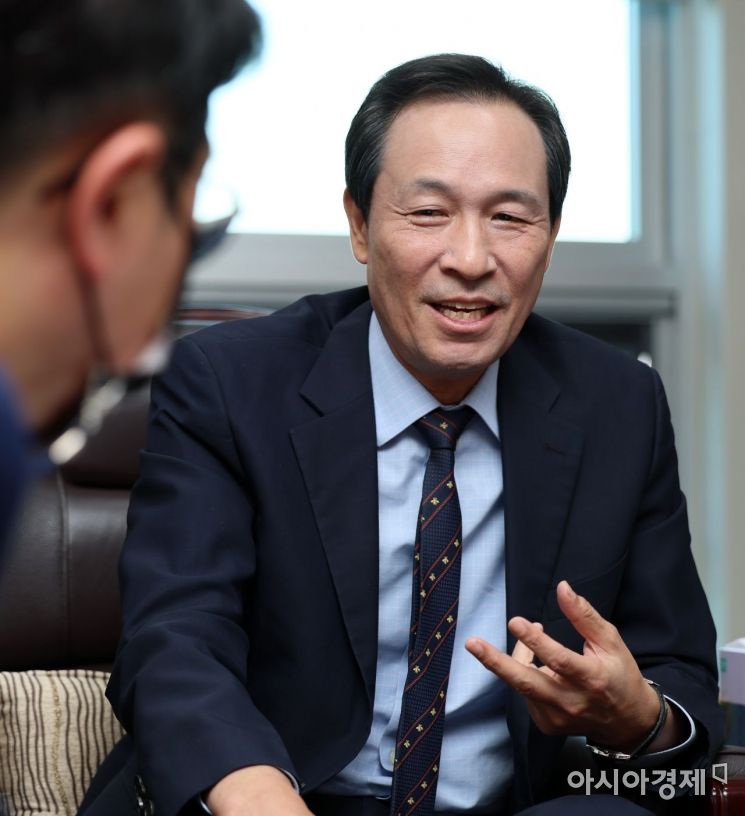
"Therefore, by analyzing these voter regions and devising countermeasures, we can gather more supporters. If things continue as they are, the Democratic Party's vote share will likely stabilize around 37%. If this continues for ten years, elections will be fought hard but losses will keep repeating. To avoid vaguely expecting to win the next general election in two years due to the failure of the Yoon Seok-youl government, we must act because the voter landscape has changed and we need to capture additional support."
"We need to persuade that having only a strong group of enthusiastic reformists is not enough. The Democratic Party you want is a strong reform party, but to win elections, we must also capture some people who oppose this reform. We need to ask for understanding and continue to target these people. Only then can we achieve 45% to 50% support in elections. The benefit we can gain from the Yoon Seok-youl government's mistakes is only about 5%."
After Woo's successor, Lee, took the helm of the Democratic Party at the party convention, Woo did not meet him separately to give additional advice. Instead, he urged through a public press conference to focus on people's livelihoods and prevent division through internal party communication. He gave a favorable evaluation of these efforts.
"This time, the government accepted the rice price issue and decided to isolate 450,000 tons from the market. Although the farming population is decreasing, about 6 million farmers is not a small number, and considering the country's overall regional division, about 60% of the area is rural. In that sense, I think Lee and Democratic Party floor leader Park Hong-geun achieved results on a very important livelihood issue. A competent livelihood party is ultimately a party that delivers results for people's livelihoods. Easing the suffering of these 6 million farmers is an achievement. I evaluate it as 'well done.'"
"(I hear) Lee is actively meeting many people within the party to communicate. I understand he is having conversations and meals with many people."
While generally positive about Lee, who has been in office for over a month, Woo also expressed some regrets. He advised Lee to be more proactive in engaging with the media. During his time as emergency committee chairman, Woo voluntarily held weekly press briefings to express his stance on current issues, and he urged Lee to actively communicate with the media as well.
"Sometimes, it is necessary to hold press briefings and communicate. Politics is ultimately a process of communicating with the public while enduring uncomfortable questions. In that sense, even the president sometimes does this every morning, and we should do the same. Communication with the media is very important. If we talk about direct democracy, we can converse with people close to us or those more interested in what we say, but it is difficult to communicate with those who are not interested in the Democratic Party. That can only be done through the media. Our difficulties in elections are not due to a lack of communication with our supporters and those who like us. From that perspective, although there is no major election soon, these things accumulate."
© The Asia Business Daily(www.asiae.co.kr). All rights reserved.


















