Measures to Reduce Youth Smoking Rates
Strengthening Regulations on General Electronic Cigarettes as Well
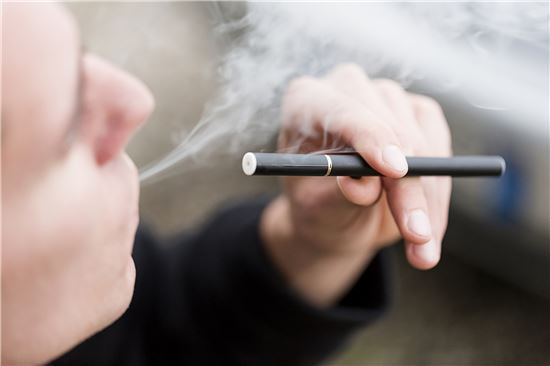 China has banned the sale of fruit-flavored e-cigarettes starting from the 1st. The photo is not related to the specific content of the article. Photo by Getty Images Bank
[Asia Economy Reporter Kim Hyunjung] China has moved to ban the sale of fruit-flavored e-cigarettes.
According to the Chinese local media outlet Daily Economic News on the 1st, the China National Tobacco Administration has implemented a complete ban on the sale of e-cigarettes containing fruit-flavored additives starting from this day, while also tightening regulations on regular e-cigarettes that have tobacco flavors.
E-cigarette retailers can only open shops after receiving approval from authorities, and advertising is prohibited in public places, public transportation, and broadcast media including social networking services (SNS). Additionally, the sale of e-cigarettes is banned near elementary, middle, and high schools, and advertisements targeting youth are also prohibited. The quantity of e-cigarettes ordered via delivery or brought in from overseas is also subject to regulation.
Initially, the China National Tobacco Administration planned to start banning fruit-flavored e-cigarette sales in May, but postponed the enforcement due to concerns raised by industry workers about potential damage and occurrences of panic buying.
China, with a population of 1.4 billion, has 300 million smokers, making it a "smoking powerhouse" that consumes 40% of the world's cigarettes. The main consumers of e-cigarettes in China are aged 18 to 35, accounting for 95% of total e-cigarette consumption. E-cigarette users prefer them because they do not emit the characteristic smell of tobacco.
According to a report released in October last year by the Health Communication Research Institute at Fudan University in Shanghai, about half of Chinese youths first tried e-cigarettes between the ages of 13 and 15. Furthermore, among youths who smoked e-cigarettes in the past 30 days, fruit flavors were the most preferred. However, experts warn that fruit-flavored e-cigarettes contain additives that make them much more harmful than regular cigarettes when inhaled. In response, the U.S. Food and Drug Administration (FDA) is engaged in ongoing legal battles with JUUL Labs, the manufacturer of JUUL e-cigarettes with various flavors such as mango and citrus, over sales bans.
China banned the sale of e-cigarettes to minors in 2018 and prohibited online sales of e-cigarettes the following year. These measures are regarded as efforts to reduce youth smoking rates.
Meanwhile, flavored tobacco smoking is also rapidly increasing among young people in South Korea.
According to the "Status of Flavored Tobacco Use and Its Impact on Health" study by the Korea Disease Control and Prevention Agency on the 27th of last month, the proportion of flavored tobacco users among smokers aged 19 to 39 this year was 77.2%, up 12.4 percentage points from 64.8% in 2016. The reasons these users chose flavored tobacco included "liking the scent," "eliminating the smell," and "reducing physical discomfort." The most common flavor for first-time smokers or recently used flavored products was "fruit" among those aged 13 to 18, while "menthol" was the most popular among other age groups.
© The Asia Business Daily(www.asiae.co.kr). All rights reserved.
![Clutching a Stolen Dior Bag, Saying "I Hate Being Poor but Real"... The Grotesque Con of a "Human Knockoff" [Slate]](https://cwcontent.asiae.co.kr/asiaresize/183/2026021902243444107_1771435474.jpg)















