Electricity Rate Raised by 7.4 KRW per kWh... Household Burden Up by 2,270 KRW
Large-Scale Businesses Face Differential Adjustment... Up to 11.7 KRW Increase
Gas Prices Also Up by 2.7 KRW per MJ... Impact of Soaring LNG Costs
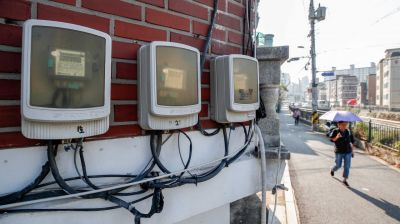 An electricity meter is installed in a residential area in Dobong-gu, Seoul, on the 30th, ahead of Korea Electric Power Corporation's announcement of the fuel cost adjustment unit price for electricity rates in the fourth quarter. Photo by Jinhyung Kang aymsdream@
[Asia Economy Sejong=Reporter Lee Jun-hyung] The government will raise both electricity and gas rates simultaneously in the fourth quarter. This is due to soaring international energy prices, which have driven up fuel costs as well as the import price of natural gas.
Korea Electric Power Corporation (KEPCO) announced on the 30th that it will increase electricity rates by an additional 2.5 KRW per kWh in the fourth quarter. When combined with the previously announced remaining fuel cost increase (4.9 KRW), electricity rates will rise by 7.4 KRW per kWh starting next month. With this increase, the electricity bill for a household of four with an average monthly consumption of 307 kWh is expected to rise by about 2,270 KRW. A KEPCO official explained, "We have raised electricity rates additionally to reflect the cost increase caused by the surge in international energy prices, provide price signals, and encourage efficient consumption."
Additional adjustment plans for electricity rates for large-volume business users were also announced. From the fourth quarter, KEPCO will increase electricity rates for industrial (Class B) and general (Class B) users as follows: High Voltage A by 4.5 KRW per kWh and High Voltage BC by 9.2 KRW per kWh. Considering that electricity rates for all consumers will increase by 2.5 KRW per kWh, the rates for High Voltage A and High Voltage BC will rise by 7 KRW and 11.7 KRW respectively starting next month.
KEPCO will also reform the electricity rate system for agricultural use. Starting January next year, large corporations designated by the Fair Trade Commission will be excluded from the agricultural electricity usage category.
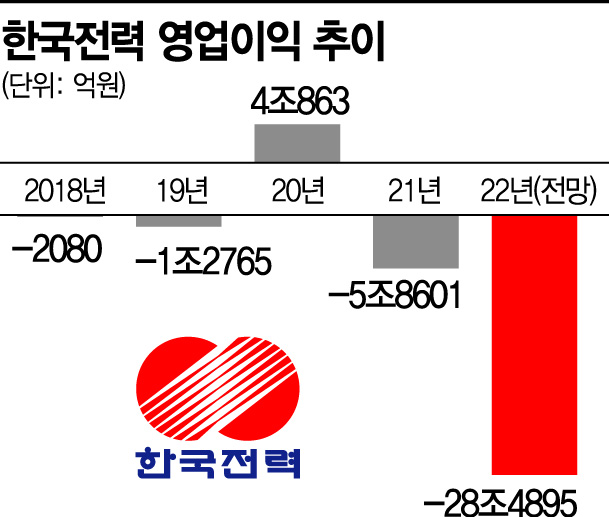
KEPCO maintains that the electricity rate increase and tariff system reform are inevitable. Due to supply chain instability, international energy prices have surged, causing the System Marginal Price (SMP)?the price KEPCO pays to power producers?to skyrocket. According to the Ministry of Trade, Industry and Energy, the spot price of natural gas in the third quarter of this year was $47 per million Btu (British thermal unit), nearly five times higher than $10 in the first quarter of last year. Consequently, the SMP reached a record high of 255.4 KRW per kWh on the 16th of this month. This is more than 2.5 times the average price of 94.3 KRW last year.
This is why both electricity and gas rates will rise starting next month. The Ministry of Trade, Industry and Energy announced that residential and general-use city gas rates for civilian use will increase by 2.7 KRW per MJ (megajoule) from next month. This reflects the settlement price (0.4 KRW) finalized after the revision of the ‘Natural Gas Supply Regulations’ in December last year, along with the increase in the base fuel cost (2.3 KRW).
Following the government's decision to raise gas rates, the residential rate will increase from 16.99 KRW per MJ to 19.69 KRW per MJ. The general-use rate will be adjusted to 19.32 KRW per MJ. The rate increase is 15.9% for residential use and between 16.4% and 17.4% for general use. Based on Seoul’s standards, the average monthly gas bill per household is expected to rise by about 5,400 KRW.
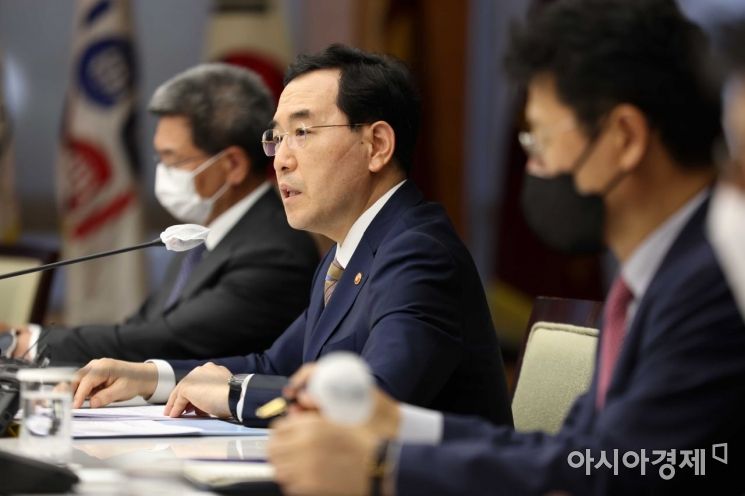 Minister Lee Chang-yang of the Ministry of Trade, Industry and Energy is speaking at the meeting of CEOs from the top 10 groups to respond to the global energy crisis, held on the 26th at the Korea Chamber of Commerce and Industry in Jung-gu, Seoul. Photo by Moon Ho-nam munonam@
Korea Gas Corporation’s (KOGAS) unpaid receivables have ballooned as gas rates have failed to keep pace with the import price of natural gas. Unpaid receivables occur when KOGAS cannot recover the cost of LNG imports from overseas through domestic rates. As of the second quarter, KOGAS’s unpaid receivables have already exceeded 5 trillion KRW, reaching 5.1 trillion KRW. The Ministry of Trade, Industry and Energy expects this year’s cumulative unpaid receivables to reach a record high.
An official from the ministry stated, "If unpaid receivables accumulate excessively, it will become difficult to secure funds for natural gas imports during the winter season, potentially disrupting the supply of natural gas. Therefore, we have inevitably decided to raise gas rates at the minimum necessary level."
© The Asia Business Daily(www.asiae.co.kr). All rights reserved.
![Clutching a Stolen Dior Bag, Saying "I Hate Being Poor but Real"... The Grotesque Con of a "Human Knockoff" [Slate]](https://cwcontent.asiae.co.kr/asiaresize/183/2026021902243444107_1771435474.jpg)













