Observed Over 3 Years in 7,109 People
"More Depressed and Vulnerable to Stress"
"As Large as 10-Year Cycle Fluctuations"
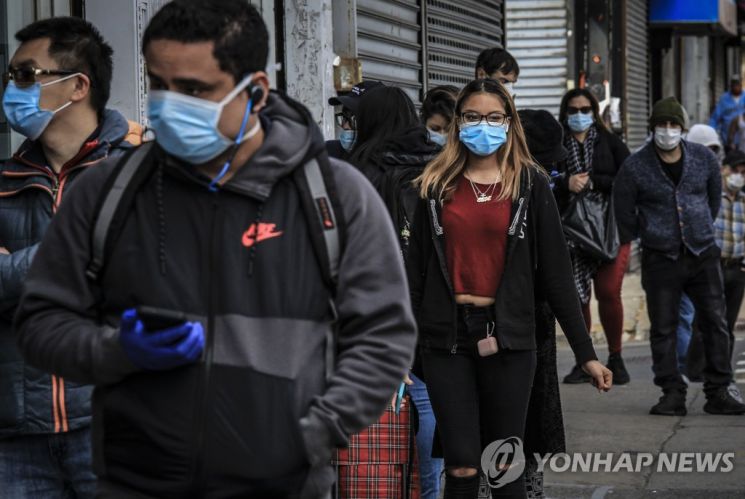 A study has found that young adults have become more depressed, more vulnerable to stress, less cooperative, and less trusting of others compared to before the COVID-19 pandemic. Photo by AP Yonhap News
[Asia Economy Reporter Kim Juri] A study has found that COVID-19 has had a negative impact on the personalities of young people.
On the 28th (local time), the UK Guardian reported, based on the evaluation results of the 'Understanding America Study,' an academic project that began before the COVID-19 pandemic, that the shock of the COVID-19 crisis was significant enough to change personalities.
According to the study, young adults in particular became more depressed and vulnerable to stress than before, and became less cooperative and less trusting of others, explained Professor Angelina Sutin of the University of Florida College of Medicine.
Psychologists have not found a direct link between collective stress events such as earthquakes or hurricanes and personality changes, but they believe personality changes occur due to grief or hardships caused by prolonged isolation.
Professor Sutin's team conducted individual tests on 7,109 participants registered in the 'Understanding America Study' for five traits: neuroticism, extraversion, openness, agreeableness, and conscientiousness.
These participants, ranging in age from 18 to 109, were tested on average three times: before the COVID-19 crisis, during its early stage, and in its later stage.
During the early stage of the COVID-19 crisis from March to December 2020, their personalities were relatively stable, and neuroticism was slightly reduced compared to before the pandemic.
However, in the second phase of the COVID-19 crisis (2021?2022), this reduction in neuroticism disappeared, and instead extraversion, openness, agreeableness, and conscientiousness were found to have decreased compared to pre-COVID-19 levels.
The magnitude of these changes was comparable to the typical fluctuations observed over a 10-year period.
These changes were especially pronounced among young adults.
Professor Sutin explained, "COVID-19 caused stress for everyone, but it particularly disrupted the daily lives of young adults in important areas such as education, employment, and social life, resulting in a greater shock."
© The Asia Business Daily(www.asiae.co.kr). All rights reserved.
![Clutching a Stolen Dior Bag, Saying "I Hate Being Poor but Real"... The Grotesque Con of a "Human Knockoff" [Slate]](https://cwcontent.asiae.co.kr/asiaresize/183/2026021902243444107_1771435474.jpg)
















