Korea Institute of Industrial Technology Develops Autonomous-Remote Controlled Robot Vacuum Cleaner
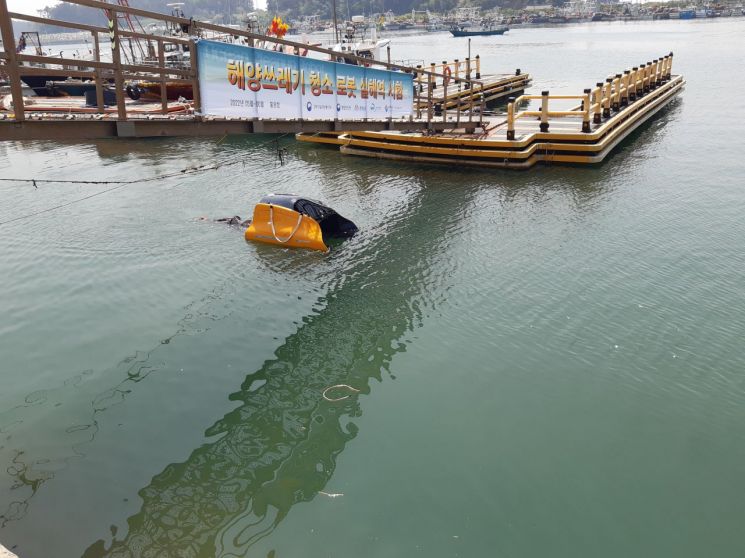
[Asia Economy Reporter Kim Bong-su] An unmanned cleaning robot that autonomously collects marine debris even in narrow ports, breakwaters, and between coastal rocks has been developed.
The Korea Institute of Industrial Technology announced on the 29th that it has developed an autonomous and remotely controlled marine floating debris collection robot that collects floating waste in the sea and successfully completed demonstration tests.
Most marine debris consists of floating waste such as plastic and styrofoam, which not only spoil the scenery but also settle underwater and disrupt marine ecosystems. However, the collection rate is less than 40%. Especially, marine debris carried by tides or waves into ports and harbors tends to accumulate between breakwaters, floating docks, and moored vessels, making it difficult for people or large collection ships to access.
Various systems have been developed to solve the marine floating debris problem, but no collection device specialized for ports and harbors existed. From the planning stage, the research team operated a Living Lab composed of local residents and local governments (Chungcheongnam-do) to gather opinions on the environment of ports and harbors, debris concentration areas and types, and collection methods, reflecting these in the system design. Notably, this is the first case where end-users directly participated in the development process to determine the specifications of a collection robot suited to the characteristics of domestic ports and harbors, and linked the results to maritime demonstrations for revisions and improvements.
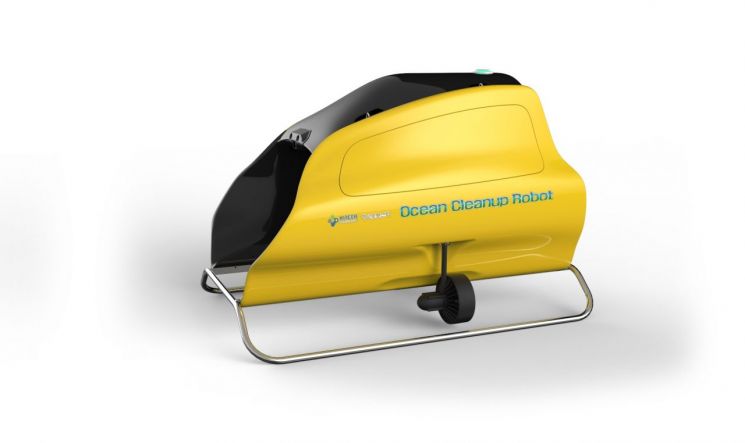
Based on feedback from local residents and local governments as end-users, the research team decided to develop a 250 kg class collection robot capable of operating for 4 to 6 hours at speeds of 1 to 2 m/s even in wavy conditions. First, they designed a test platform capable of both remote control and autonomous operation, and finalized the system design through performance tests in an engineering tank at the Marine Robotics Center. Depending on the operating environment, in narrow areas with concentrated debris, humans intervene to remotely control the collection robot, while in relatively wide areas, the robot autonomously navigates and performs tasks using a satellite navigation system (GPS) in a two-track approach.
For remote control, they developed remote control technology capable of operation from over 1 km away, applying a wireless controller that is easy to operate and low-cost to enhance user convenience. They designed autonomous driving algorithms based on the Robot Operating System (ROS), position estimation algorithms combining GPS and an Inertial Measurement Unit (IMU), and obstacle collision avoidance algorithms, developing autonomous control technology that allows the collection robot to move and operate within designated areas independently. The exterior is made of lightweight yet strong Fiber Reinforced Plastics (FRP) and shaped as a streamlined catamaran. The size is designed to fit on a 1-ton truck for ease of transport, and all equipment is installed internally to prevent the hull from getting caught in narrow and complex areas.
The developed collection robot prototype met all target performance criteria in weight, speed, operation time, and communication range during testing, and after demonstration tests at Hongwon Port in Seocheon, it was transferred to Chungcheongnam-do.
This achievement began with Chungcheongnam-do being selected for the ‘Resident Empathy Field Problem Solving Project’ led by the Ministry of Science and ICT and the Ministry of the Interior and Safety. Chungcheongnam-do already deployed this unmanned cleaner at the ‘Marine Debris Hunting Competition’ held on September 17 at Cheollipo Beach in Taean. Plans are underway to expand its use to collecting marine debris in blind spots such as island areas, cliffs, and caves.
© The Asia Business Daily(www.asiae.co.kr). All rights reserved.


















