"Clash with Central Banks, Undermining Monetary Policy, Worsening Inequality" Criticism
Roubini, NYU Professor: "Tax Cuts Led to UK Bailout Crisis"
Yellen, US Treasury Secretary: "Central Banks Should Focus on Price Stability"
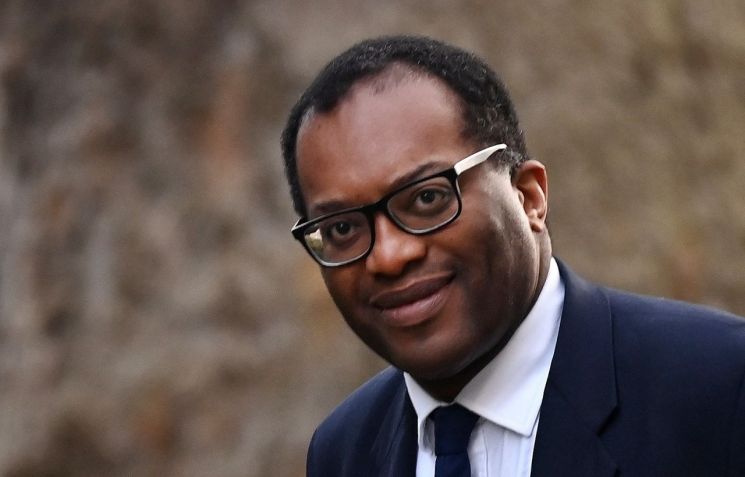
[Asia Economy Reporter Park Byung-hee] The International Monetary Fund (IMF) issued a statement on the 27th (local time) urging the UK government to reconsider the ?45 billion (approximately 69 trillion KRW) tax cut policy announced on the 23rd. This unusual intervention came as the global financial market became unstable, with the pound plummeting to an all-time low due to the UK's large-scale tax cut plan.
In the statement, the IMF said, "In a situation where prices are rising in several countries including the UK, the IMF does not advise indiscriminate and large-scale fiscal spending," adding, "It is important that the goals pursued by fiscal and monetary policies do not conflict."
On the 23rd, UK Chancellor of the Exchequer Kwasi Kwarteng announced a fiscal policy centered on tax cuts worth ?45 billion. The UK government plans to reduce the basic income tax rate from 20% to 19% starting next April and lower the top rate applied to high earners with incomes of ?150,000 from 45% to 40%. Following the announcement of the large-scale tax cut policy, the pound sharply fell and UK government bond yields surged, causing repeated turmoil in the financial market.
The IMF acknowledged that the UK government's tax cut policy aims to support households suffering from rising energy prices and to boost growth, but pointed out that large-scale fiscal policy conflicts with the central bank's monetary policy aimed at stabilizing prices. The IMF warned that, as a result, the UK's tax cut policy would undermine the Bank of England's (BOE) monetary policy to stabilize prices.
The IMF also noted that indiscriminate and large-scale tax cuts would deepen inequality in the UK. It added that the UK government should set a clear direction on which households and businesses to support rather than blindly increasing spending and drastically cutting taxes, and review the parts where high-income earners benefit.
Eswar Prasad, a Cornell University professor and former IMF chief economist, described the IMF statement as "a very strong criticism," saying, "The IMF's criticism of the UK's tax cut policy is close to saying it is irresponsible, imprudent, and poorly timed." Former US Treasury Deputy Assistant Secretary Mark Sobel also described the IMF's statement as unusually sharp.
The IMF's statement came amid widespread criticism and concerns over the UK's tax cut policy.
Professor Nouriel Roubini of New York University, who accurately predicted the 2008 global financial crisis, pointed out that the ?45 billion tax cut policy means the UK is on the path to a bailout, and this fear is dragging down the pound's value. The UK previously requested nearly $4 billion in bailout funds from the IMF in 1976.
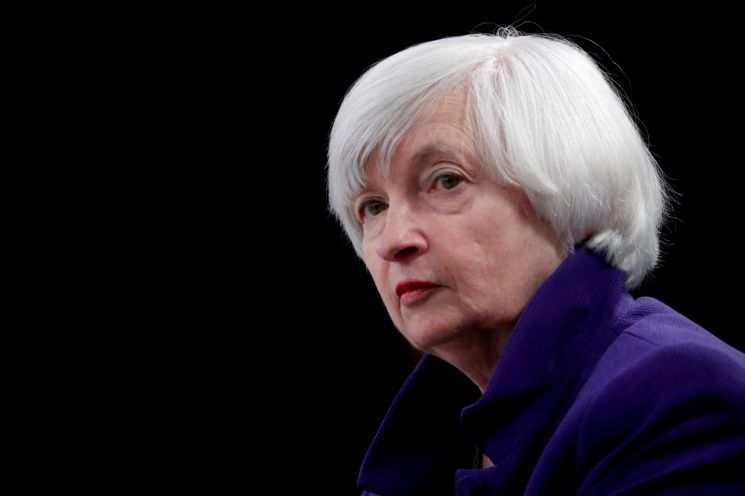
The US, which is rapidly raising benchmark interest rates to curb inflation, also appears uneasy about the UK government's actions that contradict the central bank's tightening measures. US Treasury Secretary Janet Yellen refused to comment on the merits of the UK tax cut policy, saying, "The UK and the US are experiencing serious inflation," and "Central banks need to focus on lowering prices."
Former US Treasury Secretary Larry Summers also criticized the UK government's tax cut policy on his Twitter, calling it completely irresponsible. Summers pointed out that the financial market has been more shocked than expected and that the pound's sharp fall shows the UK government has lost credibility.
Ray Dalio, Chief Investment Officer (CIO) of Bridgewater, the world's largest hedge fund, criticized the UK government as clumsy like an emerging market government.
Bloomberg reported that concerns over the UK government's large-scale bond issuance led the yield on 30-year UK government bonds to surpass 5% for the first time since 2002. The British pound showed some stability by slightly rising to around $1.07 per pound. The pound-dollar exchange rate had fallen to an all-time low of $1.035 per pound on the 26th.
As market turmoil continued, Chancellor Kwarteng appeared to take steps to manage the situation.
According to the Wall Street Journal (WSJ), Kwarteng said at a recent roundtable meeting with major bank executives that he meets daily with BOE Governor Andrew Bailey to cooperate closely with the BOE. Kwarteng stated that he is working very closely with the BOE and will comply with fiscal rules and prepare a credible fiscal plan through cooperation with the BOE. The day before, Kwarteng announced that he would present a medium-term fiscal plan on November 23. Since large-scale tax cuts and fiscal spending were announced, measures to stabilize fiscal deficits and other fiscal stability steps are expected.
Currently, the UK's inflation rate is 9.9%, the highest among the Group of Seven (G7) countries, and the BOE has recently decided on consecutive big rate hikes (0.5 percentage points) to rapidly raise the benchmark interest rate.
© The Asia Business Daily(www.asiae.co.kr). All rights reserved.
![User Who Sold Erroneously Deposited Bitcoins to Repay Debt and Fund Entertainment... What Did the Supreme Court Decide in 2021? [Legal Issue Check]](https://cwcontent.asiae.co.kr/asiaresize/183/2026020910431234020_1770601391.png)
















