Bloomberg Commodity Spot Index Hits Lowest in 8 Months...Concerns Over Demand Drop Amid Recession
'Commodity Price Decline → Trade Reduction → Economic Slowdown' Raises Fears of Vicious Cycle Leading to Strong Dollar
US and UK 10-Year Treasury Yields Surge...Simultaneous Adverse Factors Heighten Recession Risk
[Asia Economy Reporter Park Byung-hee, New York=Special Correspondent Jo Seul-gi] The commodity market is plummeting amid a strong dollar and fears of a global economic recession. Concerns are growing that commodity demand will decline as the global economy falls into a recession. The ultra-strong dollar not only increases the risk of a global economic downturn but also raises the cost of purchasing commodities, further driving down commodity prices. Warnings have emerged that the "Dollar Doom Loop" is beginning.
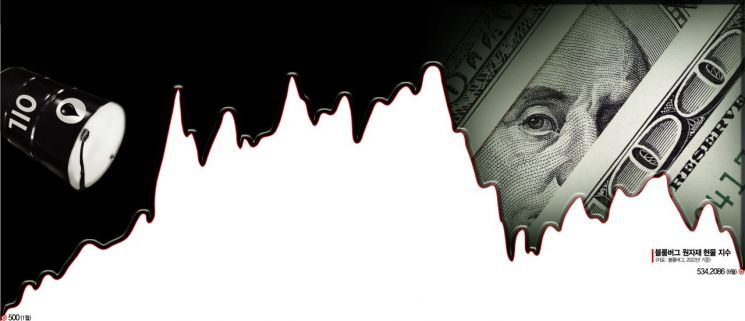
◆ Commodity Index Hits Lowest in 8 Months = On the 26th (local time), Bloomberg reported that the commodity market index plunged to its lowest level in eight months due to fears of a recession.
On that day, the Bloomberg Commodity Spot Index fell 1.6% to 534.2, marking its lowest point since January 24. The index has dropped 22% from its June peak, entering a bear market, erasing all gains made since the outbreak of the Ukraine war.
The price of crude oil, a representative commodity, fell to its lowest level since January 3. On the New York Mercantile Exchange, November delivery West Texas Intermediate (WTI) crude oil futures closed at $76.71 per barrel, down $2.03 (2.58%) from the previous trading day.
Analysts say the ultra-strong dollar is hitting commodity prices. Dollar strength lowers the value of other currencies, intensifying inflation worldwide. Inflation pushes the global economy into a recession phase, raising concerns that commodity demand will fall, which in turn drags down commodity prices.
The strong dollar itself also reduces commodity demand. Since commodity purchase contracts are settled in dollars, a strong dollar means higher costs for buying commodities.
The price of copper, a representative industrial commodity, also fell to a two-month low. On the London Metal Exchange (LME), copper futures fell 0.8% to $7,375 per ton, the lowest since July 21 when it recorded $7,292.5. As of that day, LME copper inventories surged 25% in about 10 days to 129,000 tons since the 15th.
Aluminum prices also dropped to $2,139 per ton, marking an 18-month low. Aluminum prices have slid by half from the all-time high of $4,073.50 per ton recorded after the outbreak of the Ukraine war.
◆ King Dollar Weighs on the World... Bond Yields Surge Amid Chaos = The ultra-strong dollar continued on this day. In particular, the foreign exchange market saw the British pound fall sharply to a historic low of $1.03, amid ongoing turmoil.
This followed the UK government's announcement of the largest tax cut policy in 50 years, which sparked a wave of pound sell-offs due to concerns over fiscal deterioration. Even verbal intervention by the Bank of England (BOE), the UK's central bank, failed to stem the tide. BOE Governor Andrew Bailey said, "We will not hesitate to raise the base interest rate." However, the market, which expected immediate action through an emergency meeting, was instead disappointed by this statement.
The UK’s The Times reported, "The pound has fallen 22% against the US dollar this year, and concerns are growing that by year-end, 1 pound will equal 1 dollar."
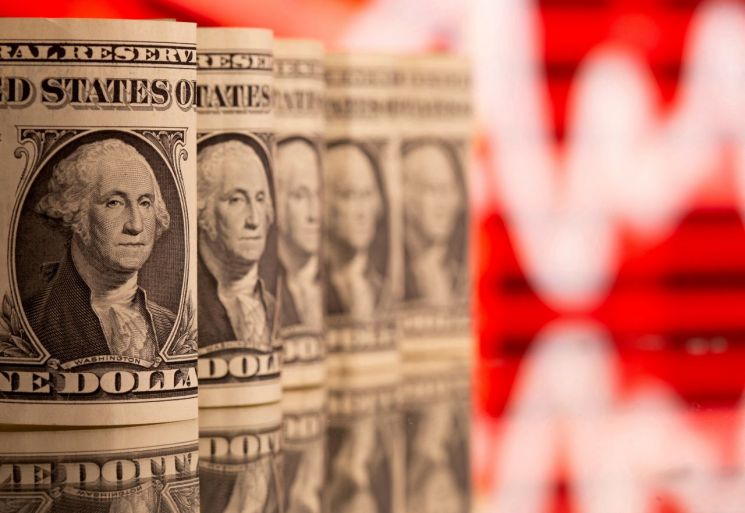
The pound's collapse further fueled the ultra-strong dollar. The Dollar Index, which measures the dollar's value against six major currencies, surpassed 114.6 intraday, reaching its highest level in 20 years.
The Bloomberg Dollar Spot Index (BBDXY) also hit a record high. Bloomberg reported, "The dollar is showing strength against all major single currencies," adding that the so-called "Dollar Doom Loop" is beginning.
The Doom Loop warning centers on a vicious cycle where a strong dollar slows global manufacturing, leading to falling commodity prices → reduced global trade → recession fears → further strengthening of the dollar as a safe-haven asset.
In the bond market, government bond yields surged. Due to financial market instability originating in the UK, the UK's 10-year government bond yield jumped by 42 basis points (1 bp = 0.01 percentage points). The US 10-year yield exceeded 3.9%, reaching its highest level since 2010.
Hawkish remarks supporting the strong dollar continued. Susan Collins, President of the Federal Reserve Bank of Boston, supported further rate hikes despite slowdown risks. Loretta Mester, President of the Cleveland Fed, also confirmed the need for prolonged monetary tightening.
Experts are concerned that simultaneous high-intensity tightening by various countries, combined with negative factors like the strong dollar, is increasing recession risks. Michael Wilson, Chief Equity Strategist at Morgan Stanley, warned, "Historically, dollar strength has led to financial or economic crises," adding, "If there is a time to be wary of what might collapse, it is now."
© The Asia Business Daily(www.asiae.co.kr). All rights reserved.


















