[Asia Economy Reporter Choi Seok-jin, Legal Affairs Specialist] The Supreme Court has ruled that the imposition of comprehensive real estate tax on a housing cooperative that only received a unique identification number under the Value-Added Tax Act but did not register as a business operator is lawful.
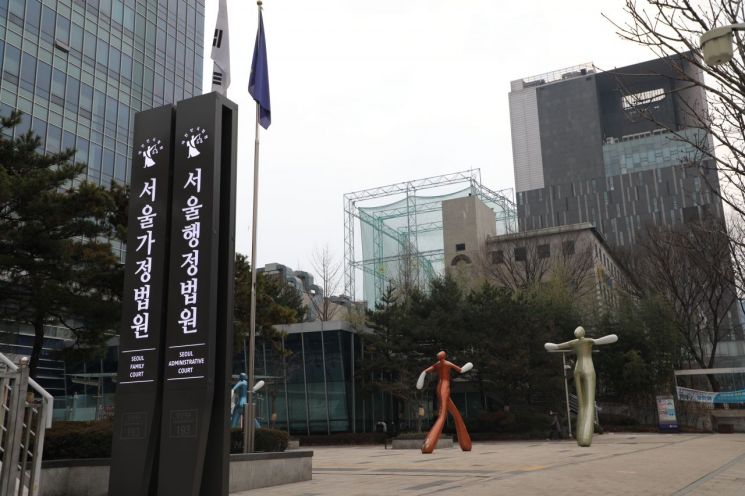
According to the legal community on the 26th, the Seoul Administrative Court Administrative Division 2 (Presiding Judge Shin Myung-hee) ruled against plaintiff A Corporation, an asset trust company, in a lawsuit seeking cancellation of the comprehensive real estate tax imposition filed against the Samsung Tax Office chief.
In April 2019, A Corporation entered into a real estate collateral trust contract for 54 unsold apartment units with the B Regional Housing Cooperative in Eumseong, Chungbuk.
By June 1, 2020, the tax base date for the comprehensive real estate tax, 23 of the apartments under the trust contract remained unsold.
In November 2020, the Samsung Tax Office regarded these unsold apartments as subject to the combined tax base for comprehensive real estate tax and imposed 25.19 million KRW in comprehensive real estate tax and 5.03 million KRW in special rural tax on A Corporation, citing that the combined official price as of June 1 of the same year exceeded 600 million KRW.
A Corporation filed a tax appeal with the Tax Tribunal but, after it was dismissed, initiated an administrative lawsuit.
In court, A Corporation argued that the tax base for comprehensive real estate tax should be examined based on the principal (B Housing Cooperative), not the trustee (itself), to determine whether the unsold apartments qualify as "unsold houses constructed and owned by a housing construction business operator" excluded from the combined tax base under the Comprehensive Real Estate Tax Act.
The defendant did not dispute this point, and the court also acknowledged it.
Under the former Comprehensive Real Estate Tax Act at the time of taxation, unsold houses exempt from the comprehensive real estate tax had to meet conditions such as ▲ being registered as a business operator as of the tax base date ▲ obtaining project approval under Article 15 of the Housing Act to construct and own the relevant houses ▲ and being unsold houses for which five years had not elapsed since the first day of the tax obligation for housing property tax after January 1, 2005, in the case of trust property.
A Corporation claimed that business registration under the comprehensive real estate tax law is not limited to business registration under the Income Tax Act or Corporate Tax Act but also includes business registration under the Value-Added Tax Act. In the case of B Housing Cooperative, although there is no obligation for business registration under the Restriction of Special Taxation Act, it was approved as an "entity regarded as a corporation" under the Framework Act on National Taxes and its enforcement decree and was assigned a unique identification number, which is equivalent to a business registration number.
In other words, A Corporation's position was that the unsold apartments in this case should have been excluded from the combined tax base when imposing the 2020 comprehensive real estate tax, and since this was not done, the Samsung Tax Office's tax imposition was illegal.
However, the court's judgment was different.
The court stated, "The Value-Added Tax Act grants different rights and obligations between those who have registered as business operators and those who have only been assigned a unique identification number," adding, "Simply assigning a unique identification number does not mean that the business operator is essentially the same as one who has registered as a business operator."
It further added, "If a regional housing cooperative becomes the subject of income attribution under the Corporate Tax Act or Income Tax Act but maintains only a unique identification number without registering as a business operator, there is a risk of tax evasion."
The court also cited the historical background of the expression "business registration under Article 168 of the Income Tax Act or Article 111 of the Corporate Tax Act" used in the former Comprehensive Real Estate Tax Act, which was replaced by the abbreviated term "business registration" during amendments, as one basis for this judgment.
Moreover, the court concluded, "According to Paragraph 2 of Article 168 of the Income Tax Act and Paragraph 2 of Article 111 of the Corporate Tax Act, a business operator registered under the Value-Added Tax Act is deemed to have registered under the Income Tax Act or Corporate Tax Act, so business registration under the Value-Added Tax Act is included. However, the housing cooperative in this case, which was only assigned a unique identification number under the Framework Act on National Taxes, cannot be regarded as a business operator registered under the Value-Added Tax Act."
© The Asia Business Daily(www.asiae.co.kr). All rights reserved.

















