'Guksu' Depicting People's Resistance Also a Masterpiece... Historical Reflections on Corrupt Officials and Signs of Japanese Invasion
[Asia Economy Reporter Lee Jong-gil] Kim Seong-dong, a writer who renewed the meaning of seeking the Way (求道) through autobiographical experience, passed away on the 25th after battling cancer. He was 75 years old.
Born in 1947 in Boryeong, Chungnam, the late writer's life closely resembled Beopun, a character in his representative work "Mandala." His father was executed along with ideological offenders in a mountain valley after being active as a member of the South Korean Workers' Party during the liberation period.
Judging that normal social life was impossible due to the shackles of the guilt-by-association system, he dropped out of Seorabeol High School in Seoul in 1964 and entered Cheonchuksa Temple on Dobongsan Mountain, walking the path of a practitioner for 12 years.
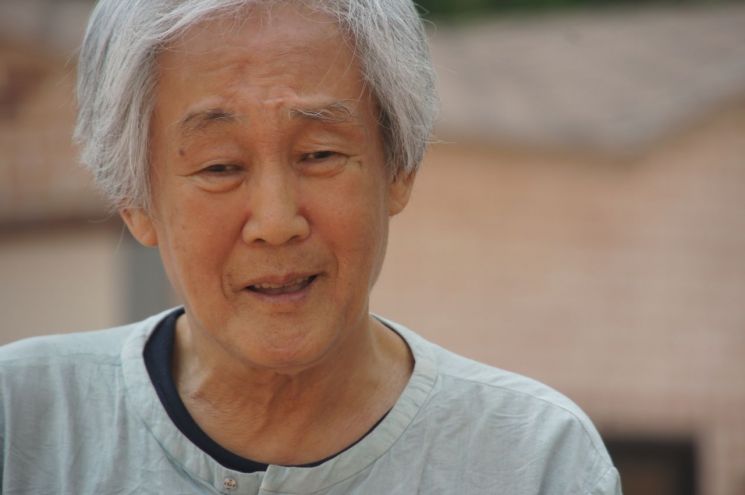
In 1976, he debuted with his first short story "Moktakjo" selected by "Weekly Religion." However, he was misunderstood as maliciously slandering and insulting the Buddhist community and was expelled from the monk registry. That autumn, he descended from the mountain and devoted himself to literature, winning the "Korean Literature" Newcomer Award in 1978 for "Mandala." The following year, he revised and published it as a novel, gaining significant attention from the literary world.
The work emphasizes that true asceticism and enlightenment are achieved through encounters with the human world. It points to the attitude of a seeker who steps away from orthodox Buddhist meditation aimed at resolving life's problems through religious contemplation and instead plunges into reality, humbling oneself infinitely. It presented a new interpretation of meditation, sparking controversy from the time of its publication. It was also translated and published in French in 1992.
Regarding Buddhism during his lifetime, he stated, "Strictly speaking, it is not a religion subordinating to an absolute being but a self-power faith that harshly pursues oneself and confronts oneself."
"When spiritual hunger grows, the last hope is found in the mountains and the temples in the mountains, which should be accepted not as a specific religion but as the primordial substance of our spirit walking the path of enlightenment."
Another representative work is "Guksu (國手)." Set around the 1890s in Naepo, Chungcheong Province, it deals with the hardships of the people, the tyranny of corrupt officials, and the signs of Japanese imperialist invasion. It narrates how the people's resistance and uprisings unfolded through historical reflection.
He was recognized for realistically portraying the division of Korea and family history, receiving awards such as the Shin Dong-yup Creative Fund Award (1985), the Lee Tae-jun Literary Award (2016), and the Modern Buddhist Literature Award (2002, 1998). The funeral is being held at Konkuk University Chungju Hospital Funeral Hall, Room 5, with the funeral service on the 27th.
© The Asia Business Daily(www.asiae.co.kr). All rights reserved.

















