Passed away on the 25th after battling cancer... aged 75
Described the attitude of humbling oneself by diving into reality
Realistically depicted the division of the Korean Peninsula and popular resistance and uprisings
'Mandala' is a novel that depicts the issues of true salvation and enlightenment within a religious context. Beobun's father was executed for being a leftist, and his shocked mother ran away from home. Beobun stayed at his great-grandmother's mountain lodge and listened to the sermons of Monk Jiam. Seeking to achieve true spiritual pursuit, he became a monk and wandered across the country.
He met the renegade monk Jisan at Byeokunsa Temple. Jisan was a monk who disregarded Buddhist precepts, indulging in alcohol and women. He had intended to become a judge but became disillusioned with the contradiction of humans judging humans and thus entered the mountain temple. However, he broke his vows because of a woman whose eyes met his just once. Beobun witnessed his death and even contemplated suicide but reflected that his previous practice was an escape to the other shore. He realized that true spiritual pursuit lies not in precepts or the other shore but in the secular world.
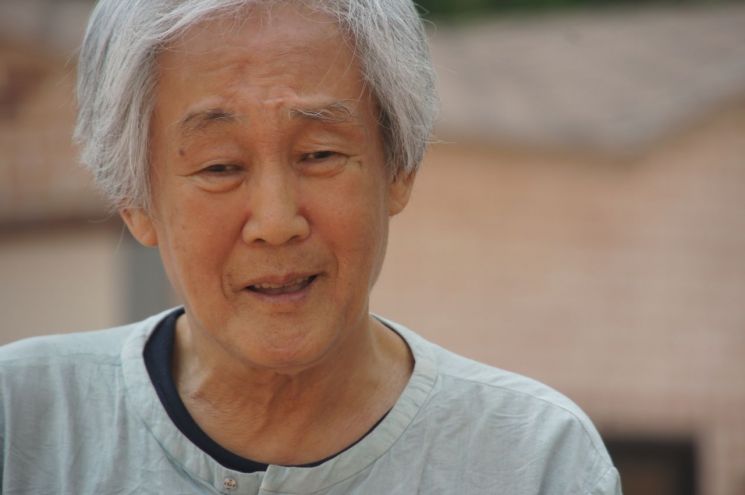
Author Kim Seongdong, who renewed the meaning of spiritual pursuit through autobiographical experience, passed away on the 25th after battling cancer. He was 75 years old.
Born in 1947 in Boryeong, Chungnam, the late author walked a path similar to Beobun’s. His father was executed along with about 2,000 ideological prisoners in a mountain valley for being a member of the South Korean Workers' Party during the liberation period. The author judged that normal social life was impossible due to the shackles of the guilt-by-association system. He dropped out of Seoul Seorabeol High School in 1964. He became a monk at Cheonchuksa Temple on Dobongsan Mountain and walked the path of a practitioner for 12 years before choosing literature as a new escape route.
He debuted in 1976 with his first short story "Moktakjo" winning an award in 'Weekly Religion.' However, he was misunderstood as maliciously slandering and insulting the Buddhist community and was expelled from the monk registry. After leaving the mountain that fall, he received the 'Korean Literature' Newcomer Award in 1978 for 'Mandala.' The following year, he revised it into a full-length novel and published it, gaining significant attention from the literary world.
The work emphasizes that true asceticism and enlightenment are achieved through encounters with the human world. It points to an attitude of spiritual pursuit that steps away from orthodox Buddhist meditation, which seeks to resolve life’s problems through religious contemplation, and instead plunges into reality, humbling oneself infinitely. It presented a new interpretation of meditation and caused a stir from the time of its publication. It was also translated into French and published in 1992.
Regarding Buddhism, the author said during his lifetime, "Strictly speaking, it is not a religion subordinating to an absolute being but a self-power faith that harshly pursues and confronts oneself." He added, "When spiritual hunger grows, the last hope is the mountain and the temple on the mountain, which should be accepted not as a specific religion but as the primordial substance of our spirit walking the path of enlightenment."
In his later works such as 'Mother and Frog,' 'Star,' and 'Waning Moon,' he depicted his longing for his absent father. The wounds of the Korean War and others were expressed through his mother’s stomach pains and suffering. Through records of painful life, he clearly revealed what lies at the root of today’s devastated lives. In 2019, he published a collection of autobiographical short stories confessing his family history, including his parents’ involvement in leftist movements during the liberation period and the suffering caused by the guilt-by-association system.
Another representative work of his is 'Guksu (國手).' Set in the Naepo region of Chungcheong Province around the 1890s, it deals with the hardships of the common people, the tyranny of corrupt officials, and the signs of Japanese imperialist invasion. It narrates how the people’s resistance and uprisings unfolded through historical examination. Regarding the title Guksu, he explained, "It does not only mean the highest master of Go (the board game) but is a tribute like a bouquet from the people to those with the highest talents in fields such as medicine, painting, sound, dance, and music."
The author was recognized for realistically portraying the division of Korea and family history, receiving awards such as the Shin Dong-yeop Creative Fund Award (1985), the Lee Taejun Literary Award (2016), and the Modern Buddhist Literature Award (2002, 1998). The funeral is being held at Konkuk University Chungju Hospital Funeral Hall Room 5, with the funeral service on the 27th. It will be conducted as the 'Korean Literary Funeral for Novelist Kim Seongdong,' jointly organized by literary organizations including the Korean Writers' Association, the Korean PEN Center, and the Korean Novelists' Association.
© The Asia Business Daily(www.asiae.co.kr). All rights reserved.
![User Who Sold Erroneously Deposited Bitcoins to Repay Debt and Fund Entertainment... What Did the Supreme Court Decide in 2021? [Legal Issue Check]](https://cwcontent.asiae.co.kr/asiaresize/183/2026020910431234020_1770601391.png)
















