Digital Sex Crimes Including Illegal Filming Increase Annually
Jeon Joo-hwan, 'Sindang Station Staff Murderer,' Also Involved in Illegal Filming
'Nth Room Prevention Law' Does Not Apply to Overseas Servers
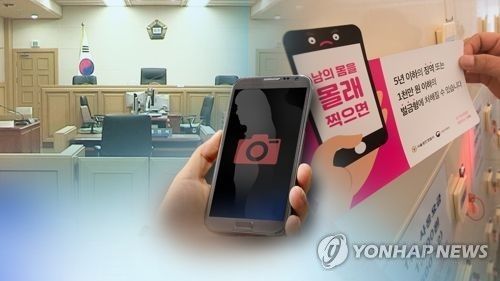 Amid the surge in digital sex crimes such as illegal filming, there are calls for the improvement of related legislation. [Image source=Yonhap News]
[Asia Economy Reporter Kim Jung-wan] It has been three years since the 'n번방 incident' came to light, but as illegal filming crimes continue to occur, criticism arises that social awareness of digital sex crimes remains low. Although the 'n번방 Prevention Act' has been in effect since the end of last year, there are concerns about its inadequacy as illegal footage is distributed through overseas servers beyond the reach of the law, such as Telegram.
According to the police on the 23rd, the Gwangsan Police Station in Gwangju announced that it has booked and is investigating A (18), a third-year student at a local private high school, on charges of illegally filming parts of a female teacher's body (using a camera under the Special Act on Sexual Violence). It is known that A secretly filmed by hiding his mobile phone with the video recording function turned on in places such as the teacher's desk in the classroom over the past year. The school's own investigation revealed that about 150 photos and videos suspected of illegal filming were found on A's mobile phone.
Such illegal filming crimes continue to occur. On the 19th, a medical student at Ajou University was also investigated by the police for secretly installing a camera in the campus changing room and illegally filming. According to the Suwon Southern Police Station in Gyeonggi Province on that day, B, a 20-something medical student at Ajou University, is suspected of installing a smartphone-shaped camera in a corner of an open locker inside a makeshift changing room in the Ajou University Medical School building on the morning of June 24 and illegally filming students.
Jeon Ju-hwan (31), the perpetrator of the recent 'Sindang Station clerk stalking murder' case, is also known to have installed a camera in the station restroom for illegal filming. On the evening of the 14th, around 9 p.m., Jeon, who is accused of stabbing and killing a female clerk who was his colleague at Seoul Metro inside the restroom of Sindang Station on Seoul Subway Line 2, was previously on trial for illegal filming and stalking charges against the victim. It was revealed that the day of the incident was the day before the first trial sentencing for those charges was scheduled.
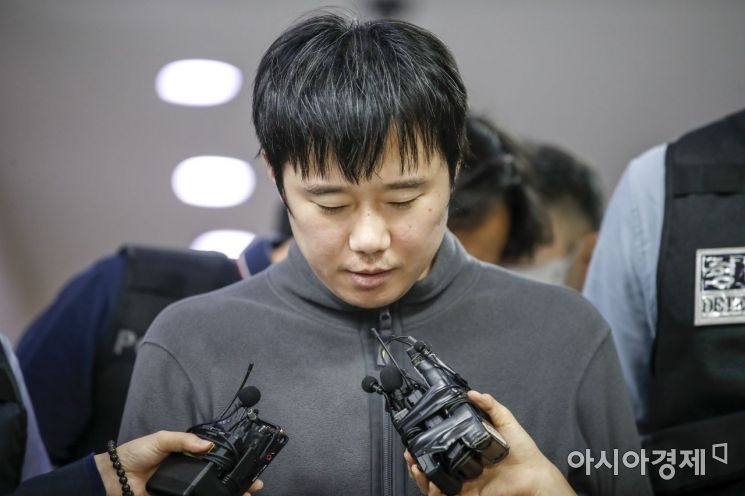 Suspect Jeon Juhwan in the 'Sindang Station Stalking Murder' case is being transferred from the Namdaemun Police Station detention center in Jung-gu, Seoul to the prosecution on the 21st. Photo by Moon Honam munonam@
Victims of digital sex crimes through illegal filming are increasing every year. According to the '2021 Digital Sex Crime Victim Support Report' prepared by the Korea Women's Human Rights Institute, the number of digital sex crime victim cases reported to support centers has been increasing annually, with a total of 188,083 cases last year, about 1.1 times more than the previous year.
So-called 'body cam phishing' victims, who are blackmailed with threats to distribute illegal footage to extort money, have also surged. According to data on cyber financial crimes from 2017 to 2021 submitted by Justice Party member Jeong Woo-taek of the National Assembly's Public Administration and Security Committee to the National Police Agency, the damage amount from body cam phishing last year was 11.95 billion won, a 66.4% increase from 7.27 billion won the previous year. The number of cases also rose from 2,583 to 3,026.
Since the 'n번방 incident,' judicial authorities have strengthened their stance on punishing digital sex crimes, but there are criticisms that overall social gender sensitivity remains low. According to a survey conducted last year by the Seoul Foundation of Women and Family targeting 4,012 children and adolescents aged 11 to under 19, 73.8% of females who experienced sexual harassment online responded that they felt 'unpleasant and angry,' whereas 48.5% of males answered that they 'thought it was no big deal,' showing a difference in perception.
Although the so-called 'n번방 Prevention Act' (amendments to the Telecommunications Business Act and the Information and Communications Network Act) was enacted at the end of last year to block the distribution of digital sex crime videos, it is criticized as a 'half-measure law' because it cannot be applied to illegal sexual exploitation materials distributed on social networking service (SNS) platforms with overseas servers such as Telegram and Discord. The responsibility of internet service providers to prevent the distribution of illegal footage only targets publicly accessible online spaces for filtering, and since information in private chat rooms cannot be filtered, the law can be circumvented.
Meanwhile, President Yoon Suk-yeol announced plans during his presidential campaign in February to expand the installation of digital sex crime victim support centers under local governments nationwide as part of crime prevention and victim relief pledges. However, it is reported that the government's budget proposal for the Ministry of Gender Equality and Family for next year does not separately allocate funds for the expanded operation of 'digital sex crime victim support centers.'
© The Asia Business Daily(www.asiae.co.kr). All rights reserved.
![Clutching a Stolen Dior Bag, Saying "I Hate Being Poor but Real"... The Grotesque Con of a "Human Knockoff" [Slate]](https://cwcontent.asiae.co.kr/asiaresize/183/2026021902243444107_1771435474.jpg)

















