[Seoul District News] Dongdaemun-gu, Multi-faceted Analysis of Public and Private Data on Single-person Household Status, Optimal Welfare Facilities, and Safety Vulnerable Areas & Focused Support for Women and Elderly Single-person Households & Utilization for Crime Prevention and Welfare Blind Spot Resolution ... Gangbuk-gu Develops Epidemiological Investigation Program Using Big Data ... Seongdong-gu Inspects Landslide Vulnerable Areas Using Drones
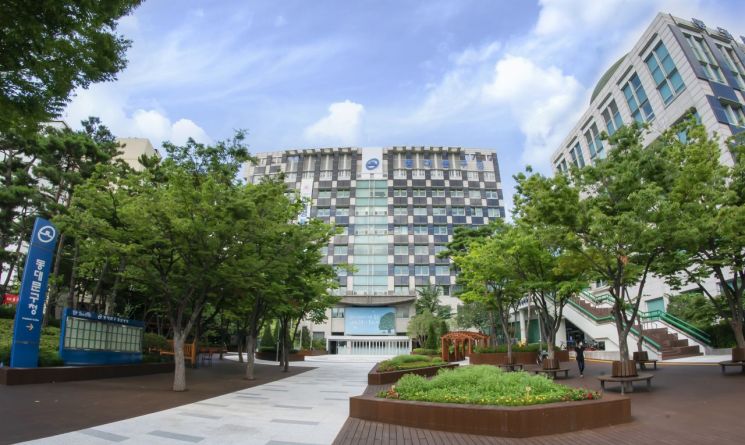
[Asia Economy Reporter Park Jong-il] Dongdaemun-gu (Mayor Lee Pil-hyung) is promoting customized policies using big data for the steadily increasing number of single-person households.
The district collected various public and private data to conduct multifaceted analyses including ▲the status and trends of single-person households by region, gender, and age ▲the status of vulnerable single-person households ▲demand areas for welfare facilities ▲safety-vulnerable areas for single female households and vulnerable groups ▲economic characteristics of single-person households.
The analysis results will be used to promote policies for women and elderly households among single-person households who are in more urgent need of support, and will be utilized to prevent crime and eliminate welfare blind spots.
First, safety-vulnerable areas for vulnerable groups will be identified to install additional security CCTV and select optimal locations for crime prevention projects such as women’s parcel lockers and safe return scouts.
Also, based on the analysis of welfare facilities and vulnerable groups, the most suitable areas for welfare facilities such as senior centers will be discovered, and 60 candidate areas for managing vulnerable groups will be selected to implement proactive welfare administration aimed at eliminating welfare blind spots.
Jung Eun-sook, Director of the Smart City Division, said, “The number of single-person households is steadily increasing, and their welfare needs are also rising. We aimed to discover customized policies using big data,” adding, “We will continue to do our best to proactively respond to district issues through scientific administration as well as big data analysis.”
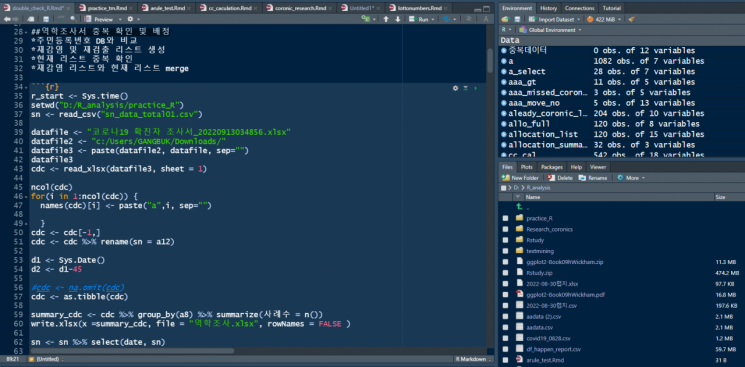
Gangbuk-gu (Mayor Lee Soon-hee) announced that it has developed a program to quickly detect COVID-19 reinfected cases and is conducting rapid and accurate epidemiological investigations.
According to the district, as of the end of August, Gangbuk-gu’s COVID-19 reinfection rate recorded about 7.33%, showing a continuous upward trend.
As reinfection cases increase, the time required for epidemiological investigations is also increasing.
This is because to estimate COVID-19 reinfection, additional investigations are needed such as the date of the first confirmed case, the date of the first confirmed reinfection, the elapsed period until the next confirmed case, the currently estimated infection route compared to the first confirmation, and clinical symptoms.
However, the district stated that using the self-developed big data epidemiological investigation program can drastically shorten this time.
This program was developed without budget by Kwang-il Choi, an official at Gangbuk-gu Public Health Center, using the open-source software R in July, and after pre-testing, it has been used since August to quickly classify COVID-19 reinfected cases.
The reinfection detection process proceeds by inputting confirmed patient information into the program, which compares it with the confirmed patient database established by Gangbuk-gu to collectively identify reinfected cases. This process allows skipping the Korea Disease Control and Prevention Agency’s COVID-19 information management system verification and telephone confirmation of the patient’s statement.
According to a test conducted by the district on August 24, it took only 16 minutes to extract 48 reinfected cases out of 1,000 confirmed cases. Compared to the approximately 27 hours required before the program’s introduction to confirm reinfection cases, this saved about 98% of the time.
Additionally, the district reported that the program also shows excellent performance in detecting omitted confirmed cases.
Omitted cases mainly occur when confirmed patients receive home treatment in other local governments different from their registered resident address. The program easily finds omitted cases by cross-checking the ‘Confirmed Case Occurrence Report’ and ‘Confirmed Case Investigation Report’ (epidemiological investigation report) submitted by hospitals or public health centers to the Disease Control Agency upon confirmation.
The district plans to use the constructed database to produce population and geographic statistics as a basis for establishing scientific quarantine measures.
Lee Soon-hee, Mayor of Gangbuk-gu, said, “Although the COVID-19 outbreak has somewhat stabilized, reinfected cases are increasing due to the prolonged pandemic,” adding, “We will do our best to ensure there are no gaps in quarantine until COVID-19 is completely eradicated.”
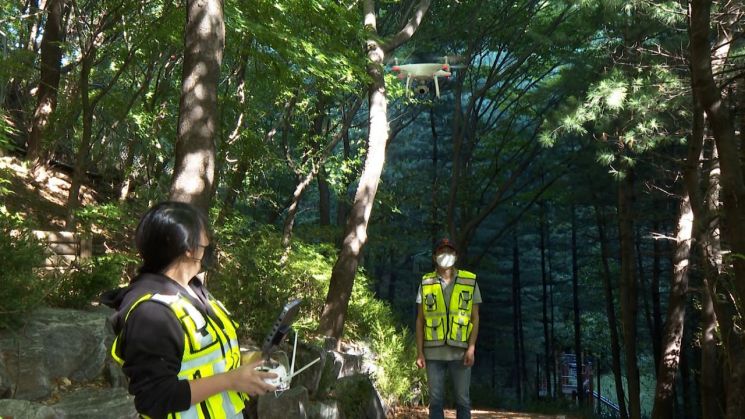
Seongdong-gu (Mayor Jung Won-oh) announced that during the Korea Safety Transformation (formerly National Safety Diagnosis) intensive safety inspection period, it promoted inspections using advanced technology equipment (drones) to enhance the thoroughness of inspections in major disaster-vulnerable areas.
On the 21st, Seongdong-gu conducted drone aerial photography inspections targeting five locations vulnerable to landslides within the district where physical access by inspection personnel is difficult, including Maebongsan, Daehyeonsan, and Eungbongsan.
For this, an inspection team composed of public officials and external experts, with support from the Advanced Technology Safety Inspection Association, deployed two drones to landslide-vulnerable areas. After aerial photography focusing on blind spots such as steep slopes, geotechnical experts will conduct detailed analyses of risk points to identify hazards, take safety measures, prepare safety inspection reports, and manage them. Additionally, the district is carrying out landslide prevention projects such as stone stacking, wooden fence installation, and drainage construction in these areas to prepare for emergencies.
The Safety Transformation project has been conducted annually since 2015 by setting an intensive inspection period to inspect aging hazardous facilities threatening safety such as old buildings and construction sites within the district, aiming to prevent safety accidents among residents and establish a safety culture awareness.
Seongdong-gu is conducting the project from August 17 to October 14, selecting 131 sites including old buildings, traditional markets, construction sites, steep slopes, landslide-vulnerable facilities, and large retail facilities as inspection targets.
Jung Won-oh, Mayor of Seongdong-gu, said, “Safety Transformation is a project involving the government, citizens, and public institutions, and we hope residents actively participate to carefully check if there are any factors threatening safety around them,” adding, “Safety can never be overemphasized, and through this drone-based inspection of vulnerable areas, we will do our best to create a Seongdong-gu without blind spots.”
© The Asia Business Daily(www.asiae.co.kr). All rights reserved.
![Clutching a Stolen Dior Bag, Saying "I Hate Being Poor but Real"... The Grotesque Con of a "Human Knockoff" [Slate]](https://cwcontent.asiae.co.kr/asiaresize/183/2026021902243444107_1771435474.jpg)


















