"Regulation Lifted, but Transaction Freeze Likely to Persist"
Gangnam Says "No Expectations"... Residents Focused on Interest Rates and Taxation

[Asia Economy Reporters Kyungjo Noh, Taemin Ryu, Seoyul Hwang] Sejong City and four areas in Incheon?Yeonsu, Namdong, Seo Districts?have remained as adjusted target areas but have been removed from the speculative overheating zones. This means that when purchasing a house in these areas, the loan-to-value ratio (LTV) and debt-to-income ratio (DTI) can be applied up to 50%, increased from the previous 40%. The number of lottery-based subscription units will also increase.
On the other hand, the entire Seoul area remains under existing regulatory zones. Among the 28 cities and 3 counties in Gyeonggi Province, only Anseong, Pyeongtaek, Yangju, Paju, and Dongducheon cities have been removed from the adjusted target areas; otherwise, there are no changes.
Ham Young-jin, head of Zigbang Big Data Lab, said on the 21st regarding the government's decision, "This measure reflects the government's intention to reduce the burden on buyers who buy and sell houses," adding, "It seems that the areas where regulations were lifted are judged to have relatively low concerns about overheating in future sales and leasing markets."
◆Sejong and Incheon: "Adjusted target areas should also be eased... Interest rate hikes are a stumbling block"
Although Sejong City has been removed from the speculative overheating zone after about five years, market reactions were generally calm. A representative from A Real Estate Agency in Areum-dong said, "It is not enough to lift only the speculative overheating zone. The adjusted target area should also be eased to expect some improvement," adding, "Loan barriers are high for everyone due to interest rate hikes, and the adjusted target areas also face tax regulations."
According to the Korea Real Estate Agency, apartment sale prices in Sejong City have fallen by 7.11% up to the second week of this month, marking the largest drop nationwide this year. According to the Ministry of Land, Infrastructure and Transport's real transaction disclosure system, an 84㎡ unit in Saeteum Village 1 Complex in Saerom-dong, which was transacted at 750 million KRW at the beginning of this year, is now being sold around 650 million KRW in the second half of the year.
In Incheon, no major turnaround is expected amid the transaction freeze. Apartment prices in Yeonsu and Seo Districts have fallen by 3.89% and 2.62% respectively over the year. Particularly, Yeonsu District, known as the "Gangnam of Incheon," saw a larger drop despite being adjacent to Songdo New City. An 84㎡ unit in 'e-Pyeonhansesang Songdo' in Songdo-dong changed hands for 800 million KRW on the 7th of this month. Excluding direct transactions, it dropped 145 million KRW in three months from 945 million KRW in June.
The head of B Real Estate Agency in Songdo-dong, Yeonsu District, said, "It's fortunate that regulations have been lifted," but added, "I don't know if buying demand will follow. It seems difficult as long as interest rates keep rising." Although listings are coming out, he questioned who would take out a loan to buy a house unless they are 'cash-rich.' The early construction of the GTX B line, one of the local benefits, is also facing setbacks, so a correction market is expected to continue for the time being.
◆Divergent reactions between Gangnam and Gangbuk... Gangnam 3 Districts: "What regulation lifting?"
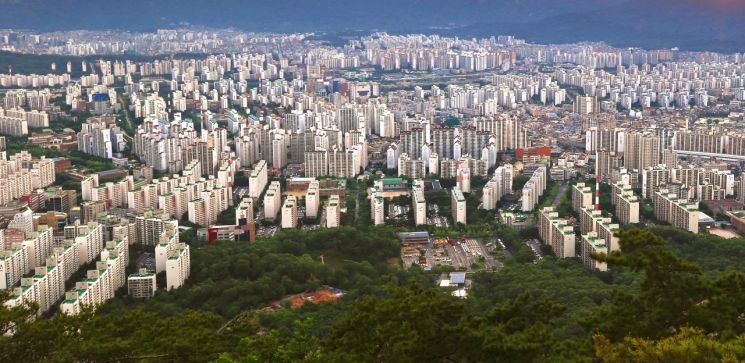
In Seoul, there was a significant temperature difference between Gangbuk and Gangnam. Real estate agents in Nowon, Dobong, and Gangbuk areas, where buying demand has sharply declined, expressed some disappointment. The head of C Real Estate Agency in Wolgye-dong, Nowon District, said, "From an agent's perspective, it would be good if the regulatory zones were lifted," adding, "This week, there are almost no inquiries, let alone transactions."
The head of D Real Estate Agency in Chang-dong, Dobong District, said, "There are few unsold units in the metropolitan area, and I think there is still room for price increases, so I understand the cautious approach," but added, "Even when ultra-low-priced units appear, buyers think prices will fall further, so contracts are not being concluded."
On the other hand, real estate agents in the Gangnam 3 Districts (Gangnam, Seocho, Songpa) responded with "We didn't even expect it." A representative from E Real Estate Agency in Apgujeong-dong, Gangnam District, said, "From the field perspective, actual transaction prices have not fallen, so discussing the lifting of speculative overheating zones in Seoul seems premature," adding, "I think it is right to confirm a clear signal that actual transaction prices have fallen before lifting."
In fact, in the Gangnam area, despite suspicions of self-dealing, recent record-high transactions have been reported mainly in riverside or reconstruction apartments. Compared to the sharp rise over the past few years, many view that house prices have not fallen numerically. There were also responses that the situation is more difficult due to the designation of land transaction permission zones rather than speculative overheating or adjusted target areas.
◆Gyeonggi: "Not a big windfall"... Regulation lifting → Possible further decline
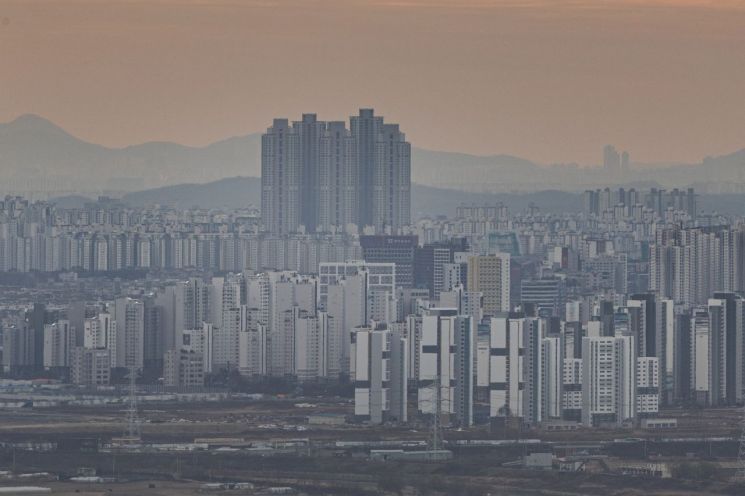 A view of Unjeong New Town and Ilsan New Town from the border area of Paju-si, Gyeonggi Province.
 [Photo by Yonhap News]
Five outer areas of Gyeonggi Province were the only ones in the metropolitan area to be removed from the adjusted target areas. Nevertheless, market reactions were relatively calm.
The head of F Real Estate Agency in Jihaeng-dong, Dongducheon City, said, "In Dongducheon, transactions stopped abruptly after being designated as an adjusted target area last year, causing difficulties," adding, "If it becomes a non-regulated area, sales transactions may revive, and with eased loan regulations, rental demand might shift to sales."
On the other hand, the head of G Real Estate Agency in Yadang-dong (Unjeong New City), Paju City, said, "Although transactions will increase compared to before after being removed from the regulatory zone, I don't have high expectations," explaining, "Since the housing market is generally cooling down recently, it is uncertain whether this will act as a huge windfall."
Like other areas, there was also an observation that transaction volume will not increase unless interest rates fall. A representative from H Real Estate Agency in Jije-dong, Pyeongtaek City, said, "It is good that the adjusted target area was lifted, but since interest rates are so high, activating transactions will not be easy," adding, "Most residents seem more interested in whether taxes and regulations such as capital gains tax or residence obligations apply."
Meanwhile, concerns were raised that lifting regulatory zones could act as a negative factor. Song Seung-hyun, CEO of Urban and Economy, said, "Areas where regulations were lifted during a house price correction period can be interpreted as signals that price rebounds will be difficult," explaining, "Even if transactions become active in those areas, if transactions are mainly focused on urgent sales, it is highly likely to lead to further declines."
© The Asia Business Daily(www.asiae.co.kr). All rights reserved.



















