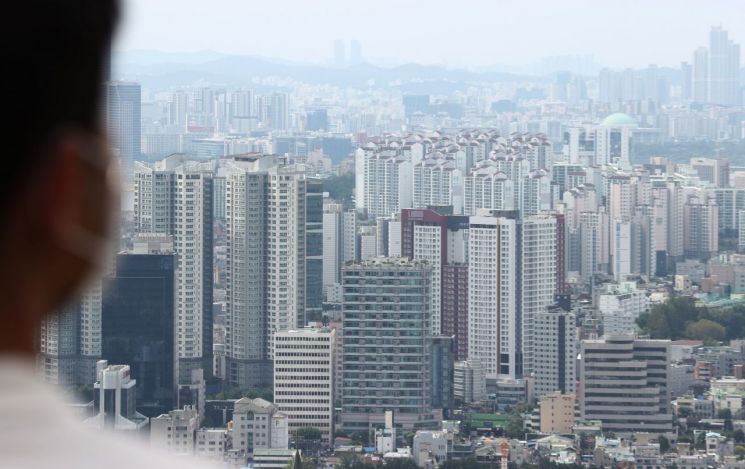
The number of vacant units in purchased rental housing supplied by the government to vulnerable housing groups has nearly tripled over the past five years. There are calls to adjust the government’s support rates, which fall far short of market prices, and to supply quality housing primarily in areas with high residential preference.
Purchased rental housing refers to public rental housing where LH (Korea Land & Housing Corporation) buys existing homes in urban areas and supplies them to non-homeowners such as young people and newlyweds at rental rates lower than market prices. Compared to newly constructed public rental housing, it has the advantage of being able to provide housing to actual demanders more quickly due to a shorter supply lag.
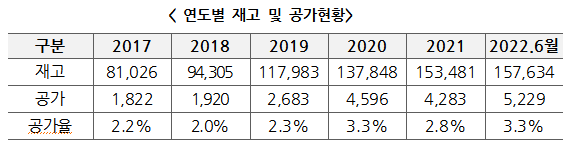
According to data on the status of vacant purchased rental housing units submitted by LH to Hong Gi-won, a member of the National Assembly’s Land, Infrastructure and Transport Committee from the Democratic Party of Korea, as of June this year, 5,229 purchased rental units have been vacant for more than six months. This is about 2.9 times the 1,822 units recorded five years ago in 2017. The vacancy rate, which is the proportion of vacant units among the total stock of purchased rental housing, increased from 2.2% to 3.3% during the same period.
Of the vacant purchased rental units this year, 47% were located in Seoul and other metropolitan areas. By region, Gyeonggi had the highest number of vacant purchased rental units at 1,600, followed by Seoul and Incheon with 723 and 126 units, respectively. The vacancy rates were highest in Chungnam (8.8%), Busan (5.9%), Sejong (5.9%), and Chungbuk (5.7%).
Assemblyman Hong Gi-won said, “Following construction rental housing, the support rates for purchased rental housing are also detached from reality, making it practically difficult to purchase quality housing. The fact that vacancies occurred even during past periods of rapid housing price increases indicates that the supply failed to meet demand and was therefore neglected.”
Meanwhile, this year’s support prices for youth-type purchased rental housing are approximately 253 million KRW for Seoul, 250 million KRW for Newlywed Couple I (multi-family and row houses), and 454 million KRW for Newlywed Couple II (mainly apartments). These amounts are insufficient even to purchase villas and officetels in Seoul. According to KB Real Estate statistics, the average sale prices in August for row houses and officetels in Seoul were 348.88 million KRW and 304.74 million KRW, respectively, exceeding the support prices. For the Newlywed Couple II type, which can include apartments, the average apartment sale price in Seoul last month was 1.27879 billion KRW.
© The Asia Business Daily(www.asiae.co.kr). All rights reserved.
![Clutching a Stolen Dior Bag, Saying "I Hate Being Poor but Real"... The Grotesque Con of a "Human Knockoff" [Slate]](https://cwcontent.asiae.co.kr/asiaresize/183/2026021902243444107_1771435474.jpg)












