7 Amendments to the Telecommunications Business Act to Prevent Big Tech Free Riding on Networks
Legislative Momentum Builds in the Science and ICT Committee
Concerns Over 'K-Content Contraction' in the Culture, Sports and Tourism Committee
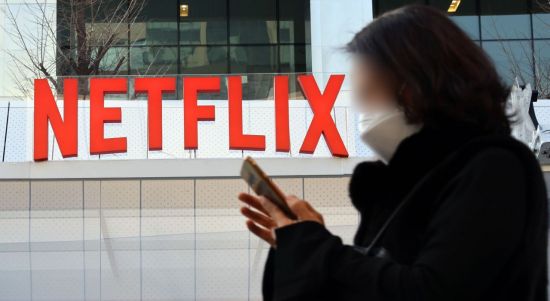
[Asia Economy Reporter Cha Min-young] The National Assembly's Science, Technology, Information and Broadcasting and Communications Committee and the Culture, Sports and Tourism Committee are at odds over the so-called "Network Free Riding Prevention Act" (Amendment to the Telecommunications Business Act), which aims to prevent big tech companies like Google and Netflix from free riding on network usage fees. On the morning of the 20th, both committees will simultaneously hold a public hearing and a discussion session related to the Network Free Riding Prevention Act. In particular, since the two committees hold differing positions on the issue of "network free riding," confusion within the related industries is expected to continue.
According to industry sources on the 19th, members of the Science and Technology Committee plan to hold a "Public Hearing for the Review of the Amendment to the Telecommunications Business Act Regarding Payment of Information and Communications Network Usage Fees" at 10 a.m. on the 20th, where they will discuss seven similar amendment bills related to the Network Free Riding Prevention Act. On the same day, Lee Sang-heon, a member of the Culture, Sports and Tourism Committee from the Democratic Party, will host a "Discussion on the K-Content Industry and Desirable Network Usage Policy Directions" starting at 9:30 a.m., countering the Science and Technology Committee's stance. The well-known IT YouTuber "Itsseop" will moderate the session.
The Network Free Riding Prevention Act to be discussed in the Science and Technology Committee collectively refers to seven similar amendments to the Telecommunications Business Act, including a bill that mandates network usage contracts for value-added communication service providers above a certain scale. This public hearing, prepared five months after the bill's approval was deferred at the committee's bill review subcommittee earlier this year, is interpreted as a preliminary legislative step. The core issue is determining the responsibility for sharing network usage fees between Internet Service Providers (ISPs) such as telecom companies and Content Providers (CPs) like Netflix.
Regarding the same issue, the Culture, Sports and Tourism Committee has expressed opposition, citing concerns that the rapidly growing K-content industry could be stifled. Lee Sang-heon, who is hosting the discussion on the 20th, shared the news on social media, stating, "The U.S. government views our network usage fee bill as effectively taxing American companies to benefit domestic telecom companies." He added, "Therefore, if the network usage fee bill passes the National Assembly, the U.S. government is likely to impose network usage fees on our content companies as well." He also expressed concern, saying, "K-content is gaining popularity worldwide, and I worry this could pour cold water on that momentum."
Lee previously held a seminar titled "Network Policy for the Global Expansion of K-Content" in July with Kim Seung-soo, a ruling party member from the same committee, where they made similar arguments. Yang Jeong-sook, a member of the Science and Technology Committee who was part of the committee at that time, attended and countered by saying, "We understand the social impact of the bill and will ensure that the legislation is not overly restrictive," adding, "There will be no one-sided, forceful legislation." However, it was reported that Yang was not originally on the attendance list.
The telecommunications and content industries are closely watching the progress of this issue. This is because the appellate and counterclaim trials between Netflix and SK Broadband are ongoing. The first trial effectively ruled in favor of SK Broadband, but Netflix's appeal has prolonged the dispute. Netflix's legal representatives initially argued in the first trial that SK Broadband's demand for payment violated network neutrality, but in the second trial, they shifted their strategy to acknowledge the legitimacy of paid network usage. Both parties have continued to contest whether there was an "implicit agreement" regarding network usage fee payments up to the fifth hearing held in August.
Although SK Broadband, a subsidiary of SK Telecom, is the direct party in conflict, KT and LG Uplus are also involved in the issue. Domestic IT companies such as Naver and Kakao are reported to pay telecom companies between 70 billion and 100 billion KRW annually in network usage fees, raising concerns about reverse discrimination. Global OTT providers like Disney Plus(+) and Apple TV+ also pay network usage fees to domestic telecom companies through contracts with Content Delivery Network (CDN) providers.
Internationally, as network investment costs have increased exponentially, conflicts between telecom industries and big tech companies have grown, drawing attention to the Korean case. The Global System for Mobile Communications Association (GSMA), a group of 750 telecom operators worldwide, has been discussing cost-sharing plans for big tech's network investments since early this year. Dr. Roslyn Layton, Senior Vice President of telecom consulting firm Strand Consulting, criticized the big tech companies' selfishness, stating, "Ignoring SK Broadband's request for network usage fee payments is a move by Netflix that only considers its own profits."
© The Asia Business Daily(www.asiae.co.kr). All rights reserved.

















