China's Rice Imports Surge in July-August... Rice Imports Increase by 42.5% Until August
Likely Increased Rice Imports Significantly as a Preemptive Measure Against Inflation
[Asia Economy Senior Reporter Cho Young-shin] It has been revealed that China's rice imports have surged. Amid the sharp rise in international food prices such as wheat following Russia's invasion of Ukraine, attention is focused on the background behind China's massive increase in rice imports.
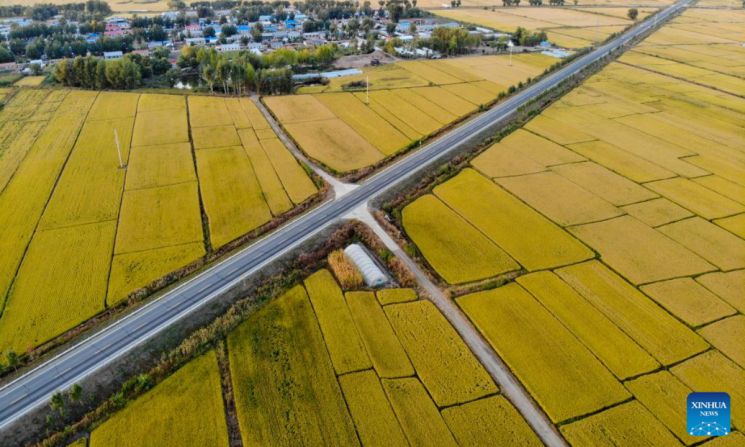
Chinese media outlets such as Xinwenwang and Global Times, citing statistics from the General Administration of Customs, reported on the 19th that from January to August this year, China imported 4.56 million tons of rice, a 42.5% increase compared to the same period last year.
China's rice imports sharply increased starting in July. In July alone, rice imports reached 499,000 tons, a whopping 73.7% increase compared to the same month last year, and in August, rice imports rose by 34.8% to 480,000 tons.
Regarding the surge in China's rice imports, Chinese media explained that the increase was due to rice imported for feed rather than for food consumption, noting that international rice prices are not as high as those of other grains, which led to the rise in rice imports.
Li Guoxiang, a researcher at the Chinese Academy of Social Sciences, emphasized, "The significant increase in China's rice imports is not because of a shortage in domestic harvests but because international rice prices are lower compared to other grains like wheat." He added, "The average price of rice imported in July was $400.86 per ton, which is an 11.76% decrease compared to the same month last year."
Zhao Shanwei, editor-in-chief of the Chinese grain specialist media 'cngrain.com,' also explained, "This year's increase in China's rice imports is not related to natural disasters such as droughts," and added, "Most of the imported rice will be used as feed grain."
However, China's increase in rice imports appears to be related to India's rice export restrictions. India is the world's largest rice exporter, with an annual rice export volume of 21.5 million tons (as of 2021). As domestic rice production declined due to abnormal weather, the Indian government recently imposed export taxes on rice and restricted exports of certain types of rice. The rice restricted from export by India is broken rice, which is mainly used for animal feed and is primarily imported by China and Africa.
Feng Qiao, head of the Rural Research Center under China's Ministry of Agriculture and Rural Affairs, said, "China is the world's largest rice importer but imports only 3.4% of its total production," and added, "India's rice export restrictions do not affect China's economy."
Although Chinese media emphasize that the increase in rice imports is unrelated to domestic rice shortages, considering import prices and other factors, it is expected that China will proactively increase rice imports. The dominant analysis is that the rise in feed rice prices could lead to higher livestock prices, prompting an increase in imports before India's rice export restrictions became apparent.
It also appears that China considered the inevitable impact of India's rice export taxes and restrictions on international prices. This includes the 13% decrease in India's rice cultivation area, which accounts for 40% of global rice exports, the sharp rise in consumer prices within India, and the inevitable increase in international rice prices due to export taxes.
Within India, the export price of white rice is currently expected to rise from $350 per ton (FOB - Free On Board) to over $400 per ton.
© The Asia Business Daily(www.asiae.co.kr). All rights reserved.

















