August Seoul Metropolitan Area Officetel Sale Price Index Falls 0.05%
Seoul Stable at 0.01%... Downturn Outlook Strengthens
Investment Shrinks Due to Interest Rate Hikes... Smaller Units See Steeper Price Declines
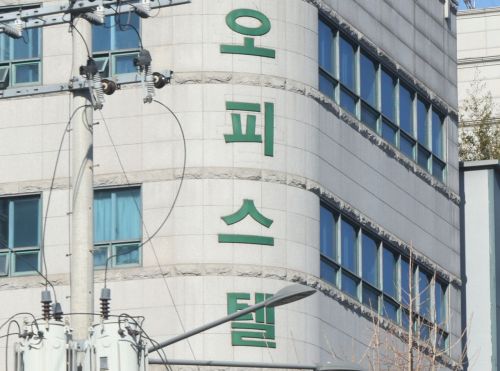
[Asia Economy Reporter Ryu Tae-min] As the housing market freezes, the officetel market, which had been popular as an alternative to apartments, is also turning downward. The metropolitan area officetel market, which had been steadily rising, turned to a decline last month, and even Seoul recorded a flat trend. In particular, the decline is deepening mainly in small officetels with limited space, which have a lower apartment substitution effect.
According to the Korea Real Estate Board on the 19th, the officetel sales price index in the metropolitan area fell by 0.05% compared to the previous month. This is the first decline in the metropolitan area officetel sales price index in 1 year and 9 months since November 2020. The average officetel sales price in the metropolitan area slightly decreased from 232.59 million KRW in July to 232.51 million KRW in August.
By region, Incheon showed a notable decline. Last month, Incheon’s officetel sales price index dropped by 0.17% compared to the previous month, marking the largest decline in the metropolitan area. Incheon has continued to decline since the beginning of this year, with a cumulative decrease of 0.88%.
In Seoul, last month recorded a 0.01% increase, effectively entering a flat trend. By district, the northeast area, including Nowon, Dobong, and Gangbuk districts, recorded -0.08%, the only area in Seoul to decline. The Seoul officetel sales price index surged to 0.18% in May but the growth rate decreased in June (0.13%) and July (0.07%). If the current trend continues, it is expected to turn to a decline like other metropolitan areas.
Residential officetels have attracted demand due to the balloon effect of apartment regulations. They have similar internal structures to apartments, are less expensive, and are relatively free from various housing regulations. According to the Ministry of Land, Infrastructure and Transport’s actual transaction statistics, the number of officetel sales nationwide last year was 60,385, an increase of 11,617 (23.78%) from 48,768 the previous year. This is the highest record since related statistics began in 2006.
Investment Shrinks Due to Interest Rate Hikes... Price Decline More Severe for Small Units
However, due to the recent interest rate hikes, the overall housing market has slowed, and demand in the officetel market is also weakening. In speculative overheated districts such as Seoul and the metropolitan area, mortgage loans for apartment purchases are limited to 40% of the house price, but for residential officetel purchases, loans of up to 70% are possible. The increased interest burden due to recent interest rate hikes is actually increasing the burden on investors holding multiple officetels.
Polarization by area size is also emerging. In Incheon, the sales price index for small officetels of 40㎡ (exclusive area) or less and those over 40㎡ up to 60㎡ decreased by 0.21% each last month. This contrasts with the sales price index for officetels over 85㎡, which are popular as apartment substitutes, which rose by 0.01%. The same trend was seen in Seoul, where small officetels of 40㎡ or less fell by 0.02%, while officetels over 60㎡ up to 85㎡ rose by 0.06% last month.
Song Seung-hyun, CEO of City and Economy, explained, "Unlike medium and large officetels that were popular as apartment substitutes, small units have relatively lower preference among buyers. With the increased burden of loan interest repayments due to interest rate hikes, the advantage of rental yield is also diminishing."
© The Asia Business Daily(www.asiae.co.kr). All rights reserved.
![Clutching a Stolen Dior Bag, Saying "I Hate Being Poor but Real"... The Grotesque Con of a "Human Knockoff" [Slate]](https://cwcontent.asiae.co.kr/asiaresize/183/2026021902243444107_1771435474.jpg)
















