Politician Who Had Pension Reform Willingness Leaves the 'Stage'
Government and Ruling Party Still Hesitant to Commit to Reform
[Asia Economy Reporter Naju-seok] ‘Putting a bell on a cat’s neck’
The political circle often uses this phrase when mentioning pension reform. It is something that must be done by someone, but it is not easy to step forward willingly. After the last presidential election, the political circle once again made a ‘determination’ to reform the pension system.
President Yoon Seok-yeol presented pension reform as one of the three major reform tasks along with labor reform and education reform, and the National Assembly also formed a special committee on pension reform.
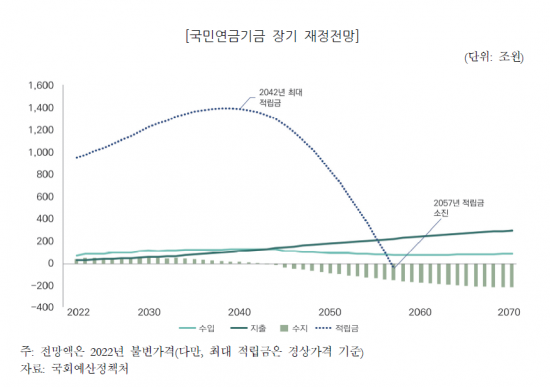
The discussion on pension reform is based on the judgment that the current pension system is unsustainable. The National Pension Service currently boasts a large fund of 882.7 trillion won (as of the end of June 2022) on a global scale.
However, the story changes when looking at the long-term outlook.
In the 2018 National Pension financial calculation, the fund depletion point was projected to be 2057. In the 2020 financial forecast conducted by the National Assembly Budget Office, the fund depletion point was brought forward by two years to 2055. However, due to factors such as COVID-19 and a sharp decline in birth rates, the depletion point is expected to be shortened even further. The National Pension Service began financial projections on the 10th of last month. The results are expected to be released in March next year.
If it becomes clear that the accumulated fund is actually a bottomless jar, naturally countermeasures should be taken, but the political circle has been cautious about this issue. In the last presidential election, where President Yoon Seok-yeol won and Lee Jae-myung of the Democratic Party of Korea was the runner-up, pension reform was an early topic of discussion.
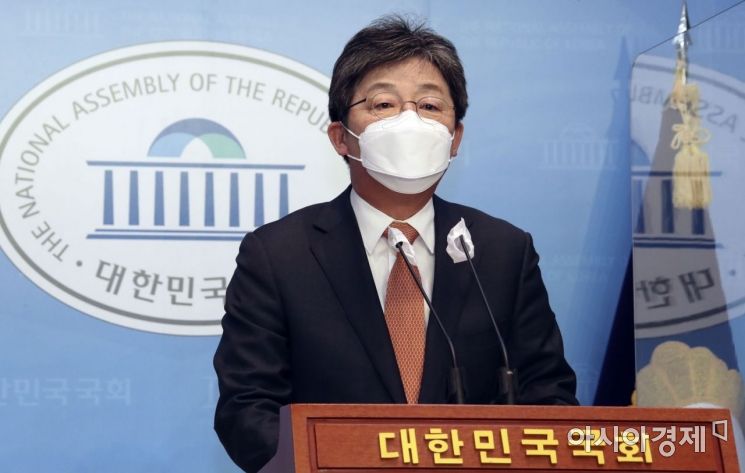 Former lawmaker Yoo Seung-min is holding an official press conference to announce his candidacy for the Gyeonggi Province governor in the June 1 local elections at the National Assembly Communication Office on the 31st. Photo by Yoon Dong-joo doso7@
Former lawmakers Yoo Seung-min and Yoon Hee-sook, who ran as presidential candidates from the People Power Party, each advocated for pension reform. However, what is noteworthy is that they expressed a solemn determination when discussing pension reform.
For example, former lawmaker Yoo said when announcing his pension reform pledge, "While others were making sweet promises to give everything away, there were opposing opinions asking why a candidate seeking votes in the presidential election should make such an unpopular pledge, (...) I thought we must at least prevent our youth from paying money but not receiving pensions later," and "With skyrocketing housing prices, young people have given up on owning a home and tried investing in coins and stocks, but it is really unacceptable that even the National Pension they are diligently paying from their monthly salary might not be available to them later."
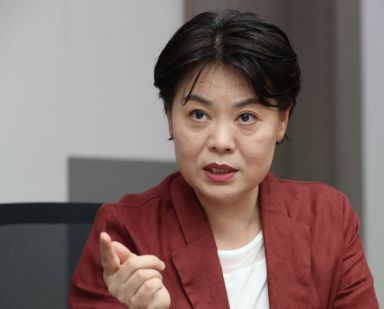
Former lawmaker Yoon also promised pension reform. In an interview with this publication at the time, he said, "In the last election, former President Moon Jae-in said he would reform the pension. Experts prepared a plan, but it was sent back because it did not meet the public’s expectations. The pension is on the verge of disappearing, but if people don’t want to raise insurance premiums and reject it, it means no reform will happen. It is the leader’s job to persuade the public and make reform possible. The finances have worsened over the past four years. Insurance premiums should have been raised before the baby boom generation retired, but the depletion point has come earlier. If you are deceived by leaders who do not talk about what needs to be fixed, greater suffering awaits. We must elect leaders who repeatedly and honestly talk to the people," he said.
There was a reason why they were solemn when talking about pension reform. When asked about specific pension reform measures, former lawmaker Yoo said, "It is necessary to extend the retirement age, have people in their early 60s work longer, delay the start of National Pension benefits, raise insurance premiums, or inject taxes in advance."
The painful meaning of this is that raising insurance premiums means that, from the perspective of salaried workers, actual monthly income decreases after taxes and other deductions. The more the already unpopular National Pension insurance premiums increase, the healthier the pension fund becomes, but the individual salary worker’s income decreases. Extending the retirement age means working longer and paying National Pension premiums for a longer period. Delaying the pension benefit start means postponing the age at which one can start receiving the National Pension from 60 to a later age.
Through the agenda-setting by former lawmakers Yoo and Yoon, Ahn Cheol-soo, then the presidential candidate of the People’s Party (now a member of the People Power Party), persuaded other candidates to agree on pension reform during presidential debates, and an agreement was reached for the time being.
However, pension reform remains in a state of suspended operation.
Democratic Party lawmaker Kim Sung-joo, who serves as the secretary of the party’s pension special committee, said, "Compared to President Yoon and Ahn’s declarations on pension reform, the government and ruling party’s will does not seem very strong," adding, "Although the National Assembly formed a pension special committee, it has never convened since its formation. It inevitably feels like the will is weak despite the words."
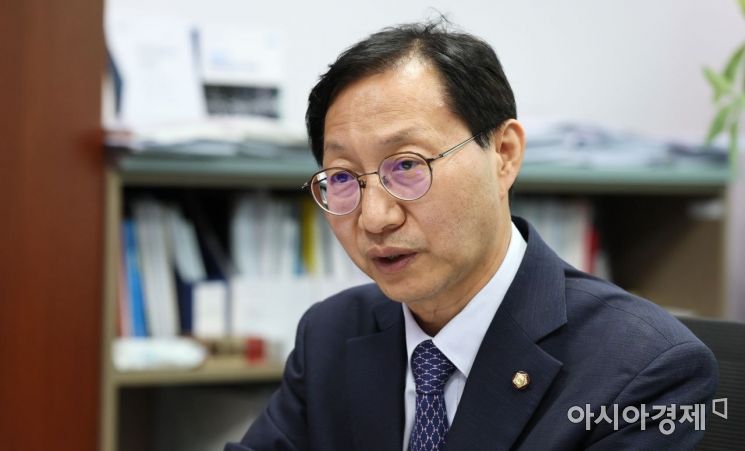
Lawmaker Kim said, "At first, during the presidential campaign and the transition committee period, there was will, but when asked through government questioning, they said, ‘We will not establish a government body but substitute it with the National Assembly special committee,’ and ‘If the government plan comes out, we will submit it to the National Assembly,’ which makes me think the government’s will has weakened," he conveyed the atmosphere.
However, he said that even the opposition party intends to take the lead on this issue. Lawmaker Kim said, "It is not right for the opposition to wait and express their position after the ruling party, just because the ruling party is passive," and "If the ruling party is like that, the opposition should take the lead in raising the issue of pension reform and lead social discussions," he said.
© The Asia Business Daily(www.asiae.co.kr). All rights reserved.



















