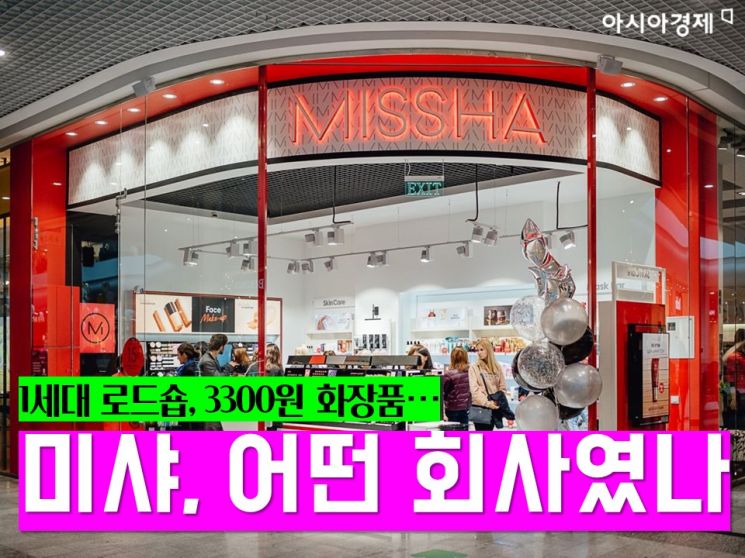
 The operator of the mid-to-low-priced cosmetics brand Missha, Able C&C, has been put up for sale in the merger and acquisition (M&A) market. / Photo by Song Hyundo, Asia Economy intern reporter
[Asia Economy Reporter Lim Ju-hyung, Intern Reporter Song Hyun-do] The native cosmetics brand Missha has been put up for sale in the mergers and acquisitions (M&A) market. Missha once emerged as a leading company in the domestic cosmetics market with a focus on mid-priced products, but its performance sharply declined following the deployment of the Terminal High Altitude Area Defense (THAAD) system on the Korean Peninsula in 2016 and the subsequent Chinese ban on Korean cultural content (Hallyu ban).
Private equity firm IMM Private Equity (IMM PE) selected foreign investment bank Credit Suisse and Shinhan Investment Corp. as lead managers on the 15th to sell 'Able C&C,' the operator of Missha. The sale target is the 59.2% stake held by IMM PE. As of the closing price on that day, Able C&C's market capitalization was 156.2 billion KRW.
Missha originated from the cosmetics online shopping mall 'Beauty Net,' established in 2000. Seo Young-pil, former chairman and a former researcher at Pigeon, a fabric softener manufacturer who founded Beauty Net, focused on the situation where most cosmetics with low manufacturing costs were sold at high retail prices. He adopted a mid-priced product strategy with '3,300 KRW cosmetics' that removed the 'bubble.' Receiving great response from consumers, he opened the first Missha brand offline direct store in front of Ewha Womans University in 2002.
Missha is also known as a 'first-generation cosmetics road shop.' It opened stores in busy downtown areas and aggressively attracted customers. Centered on mid-priced brands and a road shop strategy, Missha led the Korean cosmetics market in the early 2000s and soon grew into a competitor with companies like Amorepacific and LG Household & Health Care.
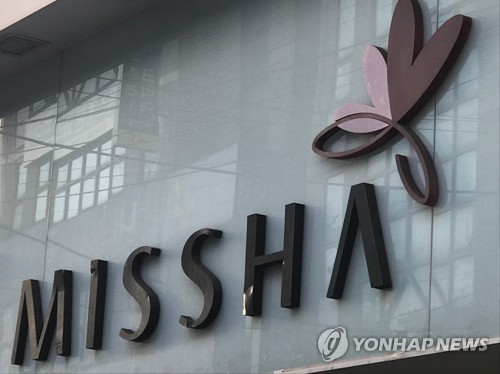 Missha experienced rapid growth in the early 2000s with its low-priced cosmetics around 3,300 won and a busy street shop launch strategy. / Photo by Yonhap News
However, Missha's growth did not last long. The number of low-priced cosmetics brands centered on road shops surged, intensifying competition in the market and worsening performance. Missha, which had recorded steady sales growth since its founding, faced a crisis in 2013, 11 years after its launch, when its operating profit plummeted 75.4% to 13.2 billion KRW.
To make matters worse, the Hallyu ban imposed by China after the 'THAAD conflict' in 2016 also hampered Missha. As Chinese consumers' purchasing sentiment for Korean beauty products froze, Missha's operating profit turned to a loss. It slightly improved the following year, but in 2020, when the COVID-19 pandemic broke out, it recorded an operating loss of 67.9 billion KRW, followed by a deficit of 22.4 billion KRW last year.
Meanwhile, IMM PE acquired a 25.5% stake held by former chairman Seo in 2017 for 188.2 billion KRW. Since then, it has invested a total of 303.9 billion KRW through public tender offers and paid-in capital increases. IMM PE has been promoting digital transformation by reducing Missha's offline stores from 700 to about 300 and developing an online application (app).
© The Asia Business Daily(www.asiae.co.kr). All rights reserved.


















