Golf Rules So Numerous and Complex They Total 100 Detailed Provisions
Even Professional Players Face 'Disqualification' for Not Properly Understanding Penalty Regulations
[Asia Economy Reporter Lee Seohee] "I lifted the rock and moved it, but it’s not a penalty?"
Interest in the ‘penalty rules’ within golf courses is rising following the ‘Ogu Play’ incident involving player Yoon Ina. According to the Royal & Ancient Golf Club of St Andrews (R&A), which governs golf rules, there are as many as 100 detailed provisions, making the rules complex. Because of this, not only amateur golfers but even professional players sometimes enter competitions without fully understanding the penalty rules, leading to unfortunate outcomes. At times, many players skillfully use the rules to escape crises. Here, we introduce some penalty rules that are easy to overlook in golf rules that make golfers both laugh and cry.
"You have to carefully check distance measuring devices too?" Disqualification for illegal equipment use

In July, during the first round of the KLPGA Tour Hoban Seoul Shinmun Women’s Classic held at H1 Club in Icheon, Gyeonggi Province, Song Ga-eun (22), who won the Hana Financial Group Championship and Rookie of the Year last year in her debut season, performed well with two bogeys and one birdie for a 1-over-par 73. However, after the game, the result she accepted was ‘disqualification.’ The reason was ‘illegal use of equipment.’
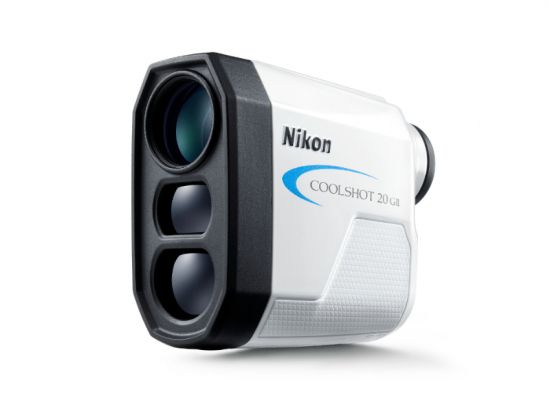
The problem was the ‘distance measuring device’ Song Ga-eun used during the game. The KLPGA allowed the use of distance measuring devices during play starting this season. However, the device can only be used to obtain information about distance or direction. Devices equipped with slope measurement functions that measure actual distance considering elevation changes are prohibited.
On that day, Song Ga-eun used a distance measuring device with slope function turned off, but after the game, she voluntarily reported this fact to the tournament committee chair and was disqualified. According to KLPGA regulations, even if the elevation measurement function is not activated, using a device equipped with such a function violates the rules. After the game, Song Ga-eun stated, “When the management inquired with the tournament committee, I was told it was allowed to use a distance measuring device with slope function. It seems there was a communication mistake. It was my fault for not properly understanding the rules.”
Another player who had to leave the tournament site in frustration due to illegal equipment use was Ahn Sun-ju, active on the Japan Ladies Professional Golf Association (JLPGA) Tour. In 2013, during the second round of the Nichi Ladies at Sodegaura Country Club in Chiba Prefecture, Japan, she was disqualified due to her house caddie's illegal equipment use. Just before Ahn Sun-ju’s second shot on the 5th hole, the house caddie used a ‘compass’ to check the wind direction, which became the cause.
Article 14, Section 3 of the Japanese professional golf rules states that players cannot use a compass to help judge wind direction or grass grain direction during a round. The tournament venue providing the house caddie did not properly educate them about this rule in advance. Due to the caddie’s careless mistake, Ahn Sun-ju had no choice but to leave the tournament site on the second day.
‘Even if unintentional,’ 2 penalty strokes for improving the lie affecting the shot
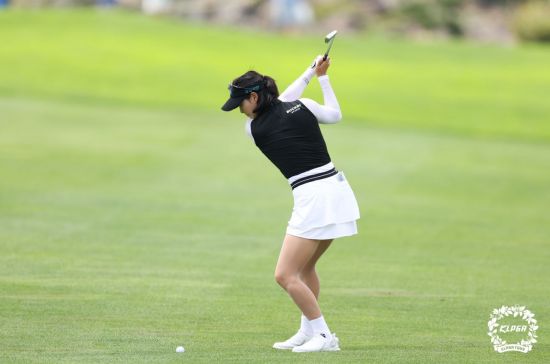
There are cases where players receive penalties for ‘improving the lie’ unintentionally.
In July, during the final third round of the KLPGA Tour McCol Mona Park Open held at Birch Hill Golf Club in Yongpyeong, Pyeongchang-gun, Gangwon Province, Park Gyeol (26) hit her third shot on the 15th hole (par 4), but the ball landed right in front of a steep bunker lip. Her right foot, placed inside the bunker to set up her stance, kept slipping along with the soft sand. Park Gyeol stomped on the sand several times to firm it up before taking the shot. The result was a ‘2-stroke penalty.’ Park Gyeol made a quintuple bogey (5 over par) on the 15th hole alone and was eliminated from the winning competition.
According to R&A Golf Rule 8.1A 6, players must not alter the ground to create a stance. Since golf is a sport played in harmony with nature, maintaining the ‘as-is’ condition is very important. However, if the club inevitably hits branches or bushes during the swing, it is not considered a violation. Even then, pretending to take a practice swing while touching the terrain is considered a violation and results in a penalty.

Some golfers have suffered losses by abusing the golf rule that restricts actions during practice swings. Patrick Reed (32) from the United States, known as the ‘bad boy on the field,’ is a representative case.
In 2019, at the Hero World Championship, Patrick Reed pretended to take a practice swing and twice brushed away sand behind the ball located in a waste area (an area mostly filled with sand but not classified as a bunker), receiving a 2-stroke penalty for improving the lie. When allegations arose, Reed argued it was due to camera angles, but the broadcast clearly showed him brushing away sand while pretending to backswing. Because of this, Reed carried the stigma of ‘poor sportsmanship’ for a long time.
On the other hand, there are cases where players skillfully used the rules. The legendary ‘loose impediment’ incident involving Tiger Woods during the final round of the 1999 PGA Tour Phoenix Open is one such example.
Tiger Woods’ tee shot on the 13th hole flew over 300 yards and landed in front of a large rock in a desert sand area. Because the rock blocked the ball, he was supposed to declare the ball unplayable. However, Woods’ judgment was different. He claimed the rock was a ‘loose impediment.’ Loose impediments refer to course obstacles not embedded in the ground, such as twigs, leaves, small stones, or animal droppings. According to golf rules, players can remove loose impediments that interfere with play.
The tournament official accepted Woods’ claim, and dozens of spectators rushed over to lift and move the huge rock together. This was a famous scene showing Woods’ prime, who attracted crowds wherever he went, and demonstrated how important it is for players to thoroughly understand golf rules.
‘One word’ can cost you the championship

Golf is the only sport played without referees, so the player’s conscience and transparency are crucial. Players must continuously inform and show their fellow players and caddies the ball in play and the drop location.
In golf, where transparency is important, failing to say ‘one word’ to a fellow player caused a player to miss out on a tournament three-peat. In August last year, Park Min-ji (24), who was challenging a tournament three-peat and her seventh win of the season, received a 4-stroke penalty in the first round of the KLPGA Tour Daeyu Winia MBN Women’s Open held at Daeyu Montvert Country Club in Pocheon, Gyeonggi Province, for not declaring a ‘provisional ball’ to a fellow player.
The incident began when Park Min-ji’s ball on the 6th hole (par 5) went deep into the forest. Judging the ball lost, Park Min-ji took a one-stroke penalty for the lost ball and placed a new ball at that spot to play again. From then on, the newly dropped ball becomes the ball in play. Because Park Min-ji did not say to her fellow player, “I will play a provisional ball,” the original ball is considered out of bounds (OB) regardless of whether it actually went out (1-stroke penalty).
However, the original ball Park Min-ji first hit unexpectedly bounced off a tree and rolled to a playable position. The caddie found the ball, and Park Min-ji played the original ball again (Ogu 2-stroke penalty). Then, while walking to the green, she picked up the second ball, which she now considered unnecessary (1-stroke penalty). Thus, Park Min-ji received a total of 4 penalty strokes on the 6th hole alone, failed to achieve the tournament three-peat, and ultimately missed the cut.
© The Asia Business Daily(www.asiae.co.kr). All rights reserved.



















