[Seoul District News] Mapo-gu's Comprehensive Organizational Redesign to Strengthen Welfare, Communication, and Civil Administration; Ensuring Execution and Efficiency for Core Project Success ... Mapo-gu Formally Requests Seoul City Council to Withdraw Incinerator Construction on the 7th ... Gwanak-gu Holds Naming Contest for Nangok-Nanhyang Urban Regeneration Community 'Nangok Jaesaeng Hyeollyeokso' ... Gangbuk-gu Opens Samyang-dong Youth Hangout 'Sonamu791'
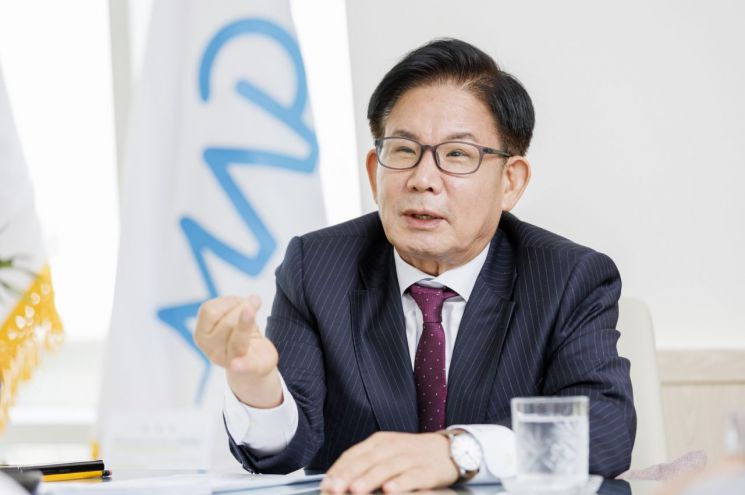
[Asia Economy Reporter Park Jong-il] Mapo-gu (Mayor Park Kang-su) has carried out the first organizational restructuring of the 8th elected administration, officially starting the district administration vision of ‘New Mapo, Better Mapo.’
This organizational restructuring focused on securing execution capability for the speedy promotion of core projects of the 8th elected administration and improving organizational efficiency.
In particular, reflecting Mayor Park Kang-su’s administrative philosophy, a comprehensive redesign of the organization was carried out in the direction of strengthening communication, welfare, and civil complaint administration through separation, consolidation, and transfer of departments.
Strengthening district administration operation ‘in step with welfare’
First, this organizational restructuring fully embodies the 8th elected administration’s policy of ‘walking together with the socially vulnerable.’ The existing Welfare and Education Bureau was renamed the ‘Welfare Companion Bureau,’ and the order of bureaus was adjusted for the second time to expand organizational functions to respond to diverse welfare demands and provide meticulous welfare services.
Notably, to proactively respond to the increasing elderly population and to utilize expertise in disability welfare, the existing Elderly and Disabled Division was split into the ‘Senior Companion Division’ and the ‘Disabled Companion Division.’ Through this, a foundation was laid for the smooth promotion of major welfare projects of the 8th elected administration, such as meal services for residents aged 75 and over and the establishment of a Disabled Committee directly under the mayor.
Establishment of ‘New Mapo Officer’ as the control tower for district administration
Additionally, a performance-oriented organizational system was established to support the execution of core projects of the 8th elected administration. Under the Deputy Mayor, the ‘New Mapo Officer’ was newly established to meticulously manage major issues and pledged projects of the district. The New Mapo Officer will serve as the central point for overall district administration by creating a future vision blueprint and establishing development plans to materialize it. Furthermore, in line with the administrative philosophy emphasizing communication, the officer will be responsible for operating the 365 Citizen Communication Phone and the on-site visiting mayor’s office, aiming to create more realistic and timely policies through gathering public opinion.
Formation of dedicated teams for successful promotion of pledged projects
Another notable change is the formation of dedicated organizations for the focused promotion of core pledged projects of the 8th elected administration. Leveraging the advantage of having the longest Han River frontage among Seoul’s autonomous districts, the ‘Mapo Circular Train Team’ was newly established within the Tourism Policy Division to make Mapo-gu a cultural tourism hub.
Also, to support pregnant women and encourage childbirth, the ‘Sunlight Center Team’ was newly established within the Health Center for the construction of the ‘District Sunlight Center.’ To support low-income residents disadvantaged during development processes, the ‘Compensation Housing Team’ was newly established within the Housing Coexistence Division, creating an organizational environment to intensively promote major pledged projects.
Increasing organizational efficiency through consolidation of similar and overlapping functions
Functions that have been reduced or are similar are consolidated. Projects with reduced functions such as cooperation governance, resident participatory budgeting, and the 5 million trees project are integrated or transferred to teams with similar functions. Tasks directly related to residents’ safety, such as major disasters and civil defense, are transferred to the Resident Safety Division. The Architectural Safety Center Team, responsible for building safety management, is transferred to the Architectural Support Division to strengthen collaboration and work efficiency within departments.
Also, the Job Support Division was renamed the ‘Youth Job Division,’ and youth-related tasks previously under the Youth and Adolescent Team were transferred to support systematic youth policies such as employment and entrepreneurship support for young people, which is one of the measures to improve work efficiency.
Names of bureaus, divisions, and teams were also newly changed. The Administrative Management Bureau became the Administrative Support Bureau, the Welfare and Education Bureau became the Welfare Companion Bureau, the Tourism and Jobs Bureau became the Tourism Economy Bureau, and the Planning and Finance Bureau became the Financial Management Bureau. In total, 23 divisions and 62 teams had their names changed to reflect internal and external environmental changes and the policy direction of the 8th elected administration.
Additionally, following policies to strengthen civil complaint administration, the Welfare 1 and 2 Teams at the Community Service Centers were integrated into the ‘Resident Welfare Team,’ and a new ‘Integrated Civil Complaints Team’ was established to specialize in civil complaint services, aiming to further improve the quality of civil services.
Mayor Park Kang-su of Mapo-gu stated, “With the organizational foundation established to realize the vision of the 8th elected administration, we will continue bold challenges and innovations to create a newer and changing Mapo.”
This organizational restructuring was reviewed and approved at the Mapo-gu Council’s extraordinary meeting on the 5th and is scheduled to be implemented on October 7.
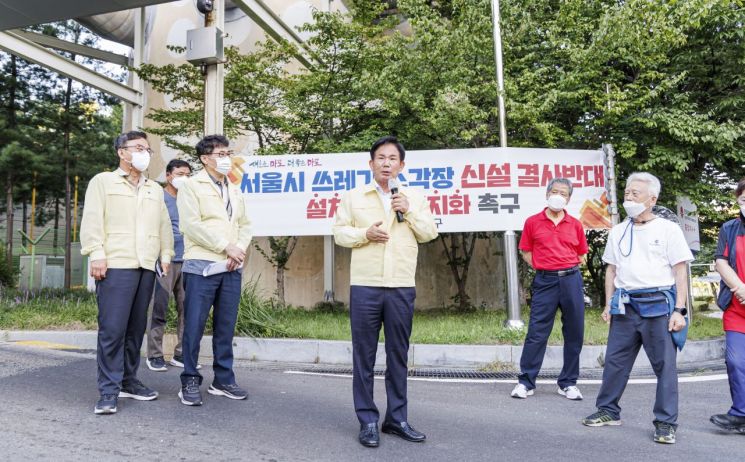
In response to Seoul City’s announcement on August 31 to build a new metropolitan resource recovery facility (waste incineration plant) in Sangam-dong, Mapo-gu, which is taking a strong stance demanding ‘complete cancellation and withdrawal,’ has formally requested active cooperation and support from the Seoul Metropolitan Council and council members.
On the 7th, Mapo-gu (Mayor Park Kang-su) announced that it directly delivered an official letter requesting cooperation for the withdrawal of the metropolitan resource recovery facility site selection to the Seoul Metropolitan Council and council members.
The letter stated, “Seoul City’s decision is unfair, violating ‘regional equity,’ and was a unilateral and arbitrary decision made without prior consultation or opinion gathering with our district. We strongly oppose this decision and urge the withdrawal of the site selection,” and requested “active cooperation and support from the Seoul Metropolitan Council and council members.”
It reiterated Mapo-gu’s position, “We strongly urge the complete cancellation and withdrawal of the unfair and unjust site selection for the Seoul metropolitan resource recovery facility.”
Furthermore, it listed ▲ procedural unfairness due to lack of resident opinion gathering and prior consultation with the relevant autonomous district ▲ unfairness caused by overlapping installation of undesirable facilities ▲ inappropriate composition of the site selection committee members, criticizing Seoul City’s unfair and unilateral administration.
Mayor Park said, “Building another incineration plant in Mapo threatens the life and safety of all Mapo residents beyond just Sangam-dong,” and added, “This issue transcends political party lines or ideological logic and requires all Mapo residents to unite and respond strongly. Therefore, I earnestly ask for the active and sincere cooperation and support of the Seoul Metropolitan Council and council members representing the region.”
Mapo-gu has formed a task force immediately after Seoul City announced the new metropolitan resource recovery facility site selection to review the unfairness, injustice, and procedural defects of the site selection.
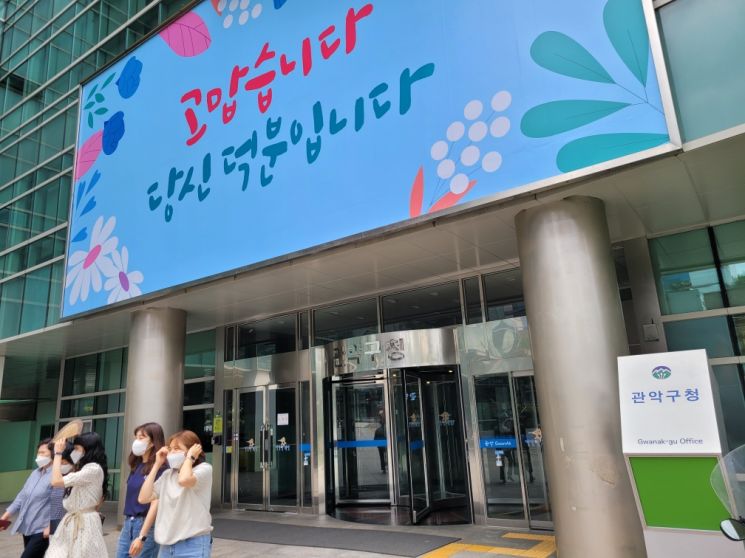
Gwanak-gu (Mayor Park Jun-hee) is holding a naming contest for the resident shared facility ‘Nangok Jaesaenghyeongnokso’ located within the Nangok and Nanhyang-dong urban regeneration New Deal project area.
‘Nangok Jaesaenghyeongnokso,’ scheduled for completion at the end of September, is a four-story building with one basement floor and a total floor area of 831㎡, equipped with facilities such as a village caf?, shared kitchen, and performance hall. It serves as a hub for the resident community, providing an urban regeneration space for cultural, artistic, and economic activities.
Through this naming contest, the district aims to find a fresh and friendly name proposed directly by residents that reflects the purpose of ‘Nangok Jaesaenghyeongnokso’ as a community space where residents gather to revitalize the area.
The contest accepts submissions until the 14th at the Nangok Urban Regeneration Field Support Center, and anyone residing or living in the Nangok and Nanhyang areas can participate.
The selected name will be announced on the 16th and notified individually. Detailed information can be found on the Nangok Urban Regeneration Field Support Center blog and the Nangok Urban Regeneration Resident Council Band.
In addition, the district is making multifaceted efforts to create a better living environment for residents by promoting nine projects including old house renovation support, creating a 365 Safe and Secure Village Nangok, establishing a co-living alley environment, and constructing a smart public parking lot to restore the community through urban regeneration.
Mayor Park Jun-hee said, “I hope ‘Nangok Jaesaenghyeongnokso’ becomes a resident community space that serves as the center of the area,” and added, “We will continue to do our best to breathe vitality into the city with residents and create a ‘sustainable city Gwanak.’”
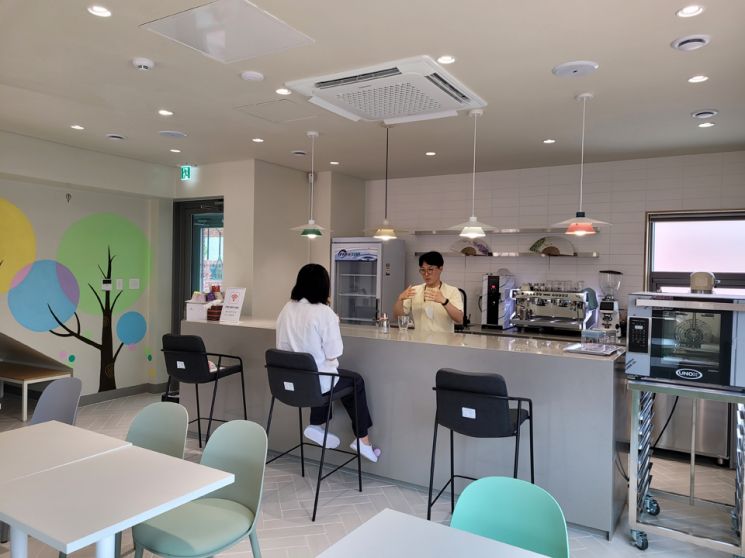
Gangbuk-gu (Mayor Lee Soon-hee)’s youth hangout ‘Sonamu791’ in Samyang-dong opened its doors on the 1st.
Built as part of the Samyang-dong village regeneration project, the youth hangout (located at 43-5 Insu-bong-ro 6-gil, Mia-dong, Gangbuk-gu) has a total floor area of 178.64㎡, with one basement floor and two above-ground floors. Seoul City transformed an abandoned house into a complex community facility.
The hangout is located in Sonamu Cooperative Village at 791 Mia-dong, hence the name ‘Sonamu791.’ The number 791 also symbolizes being like ‘a close friend’ to youth.
The hangout is a space for youth, and anyone, not just Gangbuk-gu youth, can enjoy their time there. The basement floor houses the ‘Playground,’ a fun play culture space where youth can enjoy indoor sports such as VR games and table tennis, and dance while listening to music with friends.
The first floor is ‘Space 791,’ featuring a caf? and shared kitchen. Youth can study while listening to music in a relaxed atmosphere and receive barista certification training.
Various programs are also planned, including baking classes for youth preparing to start a caf? business and ‘Let’s Eat Home-cooked Meals,’ where participants cook and share meals together in the shared kitchen.
The second floor ‘Lalala Studio’ is a space for friends to gather. They can lie down and rest, read books, or use it as a meeting or gathering space. Youth can freely do what they want here.
Additionally, to provide a foundation for youth’s self-directed activities, the hangout is recruiting participants for ▲ Youth Planning Group ▲ Dance Club ▲ Barista Certification Class, each with about six members. Detailed information is available on the Samyang-dong Youth Hangout website.
Alongside, the Gangbuk-gu Our Neighborhood Care Center No. 3 (located at 39 Insu-bong-ro 6-gil, Mia-dong), created as part of the vacant house utilization complex community facility project, opened on the 1st. To alleviate parking difficulties for nearby residents, a public parking lot was also established in the basement space.
Mayor Lee Soon-hee of Gangbuk-gu said, “We are continuously increasing youth spaces where young people can freely enjoy and rest,” and added, “I hope the Samyang-dong youth hangout becomes a youth space where young people stressed by academic pressure can experience various cultures and activities.”
© The Asia Business Daily(www.asiae.co.kr). All rights reserved.



















