Over 10 Certification Issuers but Standards Vary
100,000 Private Certifications... Low Barriers Lead to Lack of Expertise
[Asia Economy Reporter Seohee Lee] “There is no separate certification, and this person used to coach players in the United States.”
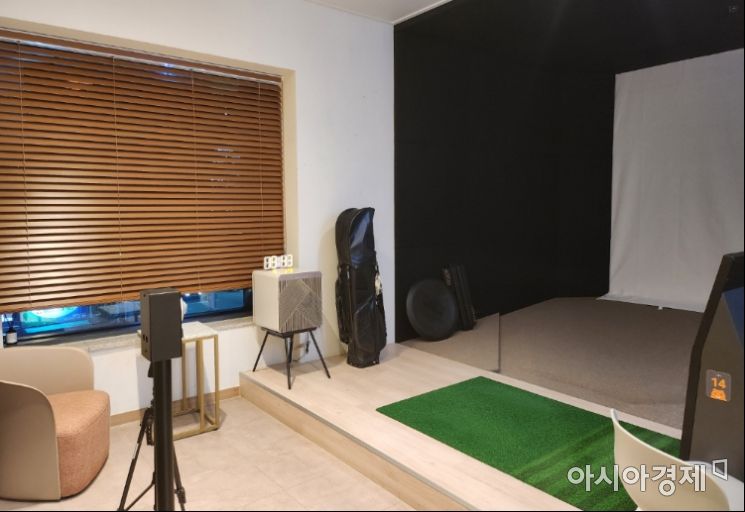
On the afternoon of the 4th at a golf practice range in Anyang-si, Gyeonggi-do, when asked about the instructor’s background during a personal coaching consultation, this was the staff’s response.
There are five instructors affiliated with this golf practice range. Reviewing their backgrounds, the titles varied, including 'KPGA Pro', 'USGTF Teaching Pro', and 'KSPGA Semi-Pro'. Some instructors mentioned they completed swing training in countries like the United States and the United Kingdom without holding separate certifications.
Lesson fees varied slightly by instructor, but according to the golf range, the cost was about 180,000 KRW for a one-hour lesson, including 150,000 KRW for the lesson fee and 30,000 KRW for the bay fee. Calculating the monthly tuition based on twice a week sessions, the total easily exceeded 1.4 million KRW.
Low Barriers Lead to Private Companies... Ambiguous Certifications Proliferate
As the golf population grows, especially among younger people, related instructor certifications have become popular. Since there are no age restrictions for participation and once obtained, the certification does not require lifetime renewal, it is recently regarded among middle-aged and older adults as a 'second career' for retirement preparation.
Notably, more people are turning to private organizations rather than the Korea Professional Golfers' Association (KPGA) or the Korea Ladies Professional Golf Association (KLPGA). Domestic golf instructors do not have a separate nationally certified license. Instead, membership cards from KPGA and KLPGA, certified by the Korea Golf Association and the Ministry of Culture, Sports and Tourism, are considered the most prestigious qualifications domestically. However, since the annual selection exams are held only 2 to 3 times with a limited number of 100 to 150 successful candidates, obtaining these certifications is difficult.
Given this situation, private companies with relatively low barriers to certification acquisition are enjoying an unexpected boom.
A representative private certification organization is the United States Golf Teachers Federation (USGTF). USGTF expanded its professional selection exams from four regions nationwide to five regions?Capital Area, Central Area, Eastern Area, Southern Area, and Honam Area?starting last year due to increased demand. A USGTF Korea branch official explained, “Compared to before COVID-19, participation in the teaching pro selection exams has surged by 130% to 140%,” adding, “About 600 candidates pass annually.”
“Can I Become a Pro by Paying 2.4 Million KRW?” Amid Flood of Certifications, Professionalism is Questionable
Including the USGTF, there are about 10 organizations nationwide issuing instructor certifications, such as the Korea Sports Professional Golf Association (KSPGA) and the Korea Professional Teaching Golf Association (KTPGA).
On the 7th, the reporter investigated the certification issuance status of eight private institutions. Although there were differences among organizations, the average number of annual selection exams was 15 to 20, with 500 to 600 successful candidates per organization. Some organizations allowed unlimited participation in all selection exams by paying only about 250,000 KRW in participation fees. This means candidates can take the exams multiple times annually until they pass, simply by paying the fee.
Another characteristic is that once a certification is obtained, it is maintained without additional evaluation as long as the annual membership fee is paid. The initial certification acquisition fee ranges from 2 million to 2.5 million KRW, and the annual membership fee is about 200,000 KRW. By paying this annual fee, one can continue to work as a professional instructor regardless of any career interruptions.
Former KPGA committee member Kim Jaegun pointed out that the professionalism of teaching pros has declined due to the proliferation of certifications issued by various private companies.
Kim said, “KPGA has about 7,000 cumulative members, but general private companies have over 100,000 cumulative members,” adding, “They are issuing an enormous number of certifications every year, essentially running a 'certification business.'”
Expert: “Nationally Certified Licenses Needed to Protect Citizens from Harm”
Although certification issuance standards vary widely, novice golfers lacking related knowledge are likely to choose instructors without understanding the background. This is because there are many organizations issuing certifications, and each uses different titles for their members.
Kim emphasized the need for a government-managed golf instructor license. He stated, “With the current system, it is impossible to cultivate professional instructors,” and added, “The Ministry of Culture, Sports and Tourism should intervene to manage everything from the education curriculum to the selection process by establishing a nationally certified license.”
© The Asia Business Daily(www.asiae.co.kr). All rights reserved.
![Clutching a Stolen Dior Bag, Saying "I Hate Being Poor but Real"... The Grotesque Con of a "Human Knockoff" [Slate]](https://cwcontent.asiae.co.kr/asiaresize/183/2026021902243444107_1771435474.jpg)
















