Loan Interest Rates Rise, Monthly Interest Costs Increase by Tens of Thousands of Won
Bank of Korea Shows Continued Willingness to Raise Base Rates
Yeongkkeuljok to Face Greater Interest Burden Ahead
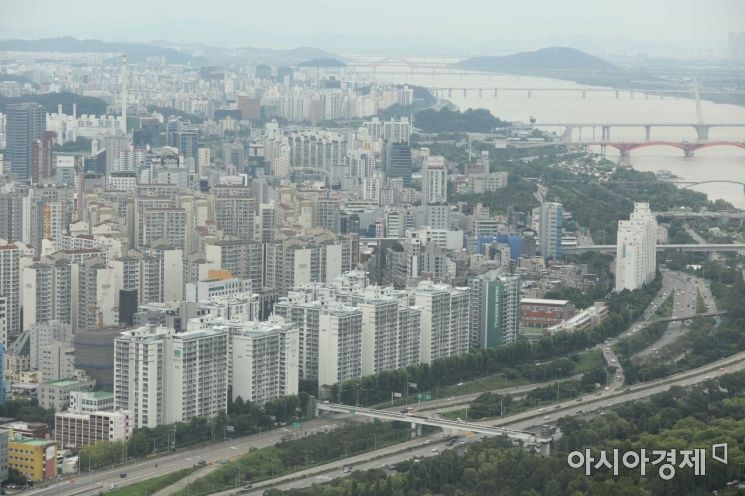
"I overstretched myself to buy a house, and now I can't handle the interest payments. Before the house price drops further, I want to sell the apartment to make a capital gain, then move into a jeonse (long-term deposit lease). If the price falls more, I can just buy another apartment later. But my wife is against it. She says 'owning one house is a safe asset' and suggests we cut living expenses even more. These days, we argue about the house issue all the time. We have a child, so we can't just live on ramen noodles."
Choi Eun-ho (37), who lives in Gangbuk-gu, Seoul, took out a 400 million KRW mortgage loan with a variable interest rate two years ago when buying an apartment. At that time, the interest rate was 2.71%, and the monthly interest cost was 900,000 KRW. However, last month, the bank notified Choi that the rate had risen to 4.72%. The monthly interest has surged to 1,480,000 KRW, increasing by about 600,000 KRW in just two years. Choi lamented, "After the repayment date on the first of each month passes, I’m scared to even look at my bank account balance."
In fact, real estate industry analysis shows that young borrowers who feel the burden of rising interest rates are increasingly selling their homes, especially in the outskirts of Seoul. According to the Korea Real Estate Board, the proportion of sellers aged 30 or younger among Seoul’s collective housing sales rose continuously for four months, from 13.31% in March to 16.04% in July this year.
Loan interest rates above 4% have become the norm. Just a year ago, most financial consumers were paying rates in the 2% range, so this represents a 2 percentage point (P) increase. It has become common for mortgage or jeonse loan borrowers who borrowed tens of millions of KRW from banks to see their monthly interest costs rise by hundreds of thousands of KRW.
According to data published on July 5 by the Bank of Korea’s Economic Statistics System, the share of new household loans from domestic deposit banks with interest rates between 4% and 5% was 44.7%, the highest in 9 years and 6 months since February 2013 (26.9%). Loans with rates between 3% and 4% accounted for 32.5%, while those below 2% were only 6.5%.
Actual market bank loan rates are even higher. As of August 2, the variable mortgage loan rates at the four major commercial banks (KB Kookmin, Shinhan, Hana, Woori) ranged from 4.39% to 6.37%. Credit loan rates (6-month term) were between 4.95% and 6.13%. A representative from a commercial bank explained, "The Bank of Korea raised the base rate on July 25, and shortly after, the U.S. Federal Reserve signaled its intention to raise rates. Since last week, the financial bond rates that banks use to raise loan funds have sharply increased, causing loan interest rates to rise rapidly."
Deposit interest rates are also on the rise. In July, the share of new fixed deposits at domestic deposit banks with interest rates between 3% and 4% was the highest at 45%, followed by 41.7% for 2% to 3%, and 13.3% below 2%. Compared to a year ago, when 99.9% of deposits were below 2%, the share of deposits with 3% to 4% interest rates has significantly increased.
The rise in interest rates is prompting capital movement. As the stock and real estate markets stagnate, savings and time deposits are increasing. Last month, fixed deposits and savings at the five major commercial banks (KB, Shinhan, Hana, Woori, NH Nonghyup) increased by about 18 trillion KRW. This phenomenon is due to the consecutive base rate hikes pushing deposit interest rates higher. As interest burdens grow, household loans decreased by 1 trillion KRW last month, marking eight consecutive months of decline.
© The Asia Business Daily(www.asiae.co.kr). All rights reserved.

















