Among 1.24 Million Criminals Last Year, Only 61.6% Were Mentally 'Normal'
Out of 716 Murderers, 407 Had Mental Disorders, Weakness, or Intoxication Impairing Their Minds

[Asia Economy Reporter Yoo Byung-don] “I heard auditory hallucinations. We request a psychiatric evaluation of the defendant.”
This is the defense attorney’s argument for Choi Mo (42), a Chinese national who was arrested and indicted for repeatedly assaulting elderly pedestrians in Guro-gu, Seoul, resulting in one death. Choi, who assaulted a passerby on the street after using methamphetamine, causing the person’s death and extorting money, admitted to all charges. However, Choi’s defense attorney submitted a written opinion to the court requesting a psychiatric evaluation and a sentencing investigation. The reason for requesting the psychiatric evaluation was not disclosed.
A woman in her 20s, A, who was sentenced to one year in prison in the first trial for assaulting a citizen on Subway Line 9 and is currently undergoing an appeal, also claimed during the trial that she had suffered from depression continuously. While admitting all charges, A pleaded for leniency, stating, “I was bullied for a long time in the past,” and “Recently, I have had depression and anger control disorder but did not consider receiving treatment.”
Cases of major crime defendants claiming ‘diminished mental capacity’ during investigations or trials are increasing.
According to the National Police Agency on the 31st, among 1,247,680 criminals apprehended last year, only 768,714 (61.6%) were recorded as having a ‘normal’ mental state at the time of the crime. Nearly 4 out of 10 were in a ‘diminished mental capacity’ state.
In particular, more than half of suspects in major crimes, including violent crimes, were found to be in a ‘diminished mental capacity’ state. Among murder suspects, 56.8% (407 out of 716) were in a state of mental illness, mental weakness, other mental disorders, or intoxication at the time of the crime. The same ratio applied to rape suspects, while 54.5% of forced molestation suspects and 56.9% of assault suspects were also in a diminished mental capacity state.
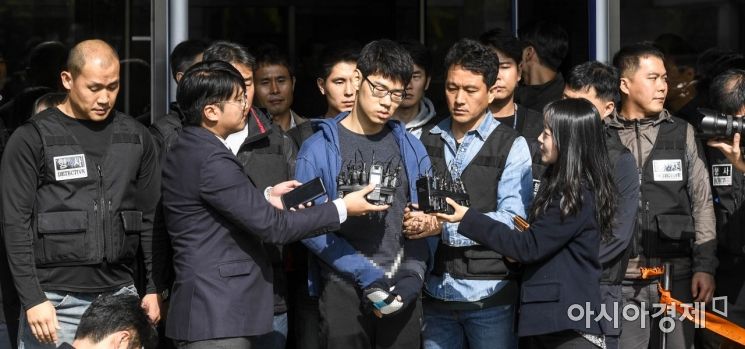 Kim Seong-su (29), who is accused of murdering a part-time worker at a PC room in Gangseo-gu, is leaving Yangcheon Police Station in Seoul on the 22nd to undergo a psychiatric evaluation. Meanwhile, the Gangseo Police Station in Seoul held a review committee and disclosed Kim Seong-su's personal information. Photo by Kang Jin-hyeong aymsdream@
Article 10, Paragraph 2 of the Criminal Act stipulates that acts committed by persons who lack the ability to distinguish objects or have impaired decision-making ability due to mental disorders may result in reduced punishment. Those who suffer from mental illness or are in a diminished mental capacity state due to alcohol, drugs, or other psychotropic substances may be eligible for mitigation. However, this provision is discretionary, and whether to recognize mitigation due to diminished mental capacity is up to the court’s judgment.
To be recognized as having diminished mental capacity, it must be proven that the individual lacked the ability to recognize the illegality of their actions and the ability to make decisions. For this, psychiatric evaluation procedures such as interviews with specialists and questionnaire tests are conducted. Controversies over this issue have continued for some time.
Recently, in Gimpo-si, Gyeonggi Province, a patient with schizophrenia injured a 14-month-old baby by knocking the child down without reason, prompting the baby’s mother to post an earnest plea online for stricter punishment and legal reform regarding crimes committed by mentally ill individuals.
This controversy was also part of the main platforms during the last presidential election. Ahn Cheol-soo, then the presidential candidate of the People’s Party, advocated for the “complete abolition of intoxication-based sentence reductions,” while the People Power Party argued that “for heinous crimes, it is necessary to strengthen the conditions under which claims of diminished mental capacity are accepted.”
© The Asia Business Daily(www.asiae.co.kr). All rights reserved.


















