Monthly Rent Listings Increase 88% Compared to Two Years Ago... Returning to Pre-Lease Law Enforcement Levels
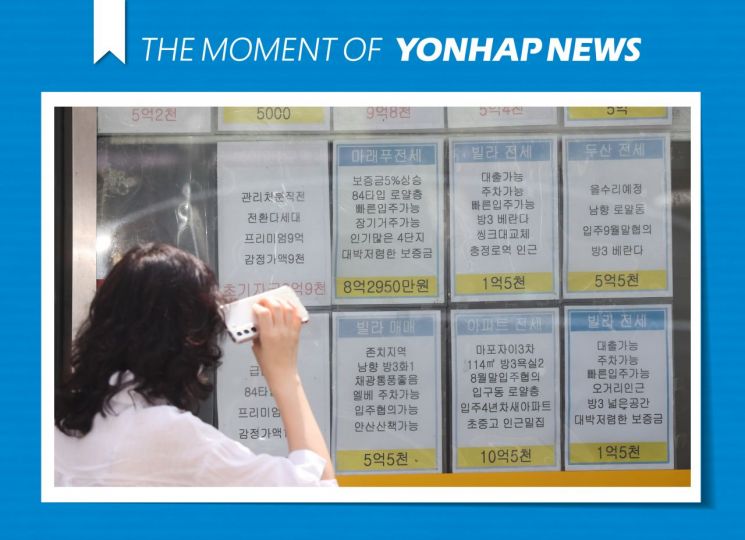
[Asia Economy Reporter Kim Min-young] As the decline in apartment prices in Seoul has begun in earnest recently, the jeonse (long-term lease) market is also experiencing a sluggish atmosphere. Typically, in the fall, which is considered the peak moving season, the number of jeonse listings increases, but demand is not keeping up. Due to interest rate hikes and a downturn in the real estate market, it seems difficult for moving demand to rise significantly even during the fall moving season.
According to real estate big data company Asil on the 28th, as of the 27th, the total number of jeonse and monthly rental listings for apartments in Seoul was 55,114, an 8.0% increase compared to a month ago. This is the fourth largest increase nationwide following Jeju (16.0%), Gwangju Metropolitan City (9.0%), and Gyeonggi Province (8.6%). Listings in major metropolitan areas such as Busan (8.0%), Incheon, and Daegu (5.8%) also increased compared to a month ago. Contrary to initial expectations that the implementation of the Lease 2 Act would cause a jeonse crisis, the number of listings has returned to the situation before August 2020. Pure jeonse listings have increased by 118%, more than doubling from 15,828 two years ago to 34,496 currently.
During the same period, monthly rental listings increased by 53%, from 13,467 to 20,616, but the increase in jeonse listings is more than twice that. Even in the past month, jeonse listings in Jongno-gu increased by 23.7% to 411, and in Mapo-gu by 20.8% to 2,010. Additionally, double-digit increases were seen in Guro-gu (19.4%), Gwangjin-gu (17.7%), Gwanak-gu (16.8%), Gangseo-gu (14.8%), and Seongbuk-gu (13.5%). Among the 25 districts in Seoul, Gangbuk-gu (480 listings, -1.3%) was the only area where jeonse and monthly rental listings decreased in the past month.
While listings have increased, demand has not kept pace, causing jeonse prices to weaken. According to the Korea Real Estate Board, Seoul apartment jeonse prices, which rose 6.48% last year, fell 0.46% up to July this year. Prices have declined for six consecutive months since February. This is believed to be influenced by increased interest burdens due to interest rate hikes and loan regulation measures. As the interest rate on jeonse loans approached 4%, surpassing the monthly rent conversion rate (typically 3.5%), demand for semi-jeonse contracts, where tenants pay monthly rent instead of increasing the deposit, has increased.
There are also concerns about the 'reverse jeonse crisis,' where landlords cannot return deposits after lease expiration. Some areas in the Seoul metropolitan area, such as Gyeonggi and Incheon, are already experiencing side effects from this crisis, and it is likely to intensify in Seoul as well. According to real estate agencies, even in the Gangnam area, it has become difficult to find tenants, with jeonse prices needing to be lowered by at least 100 million to 200 million KRW below market value to secure contracts.
© The Asia Business Daily(www.asiae.co.kr). All rights reserved.

















