Professor Kwon Sang-jin's Team Proposes Optimal Operation Plan for Heat Shelter in Nam-gu, Ulsan
Considering Heat-Vulnerable Groups' Locations and Shelter Capacity, 'Shuttle' Operation Routes Also Added
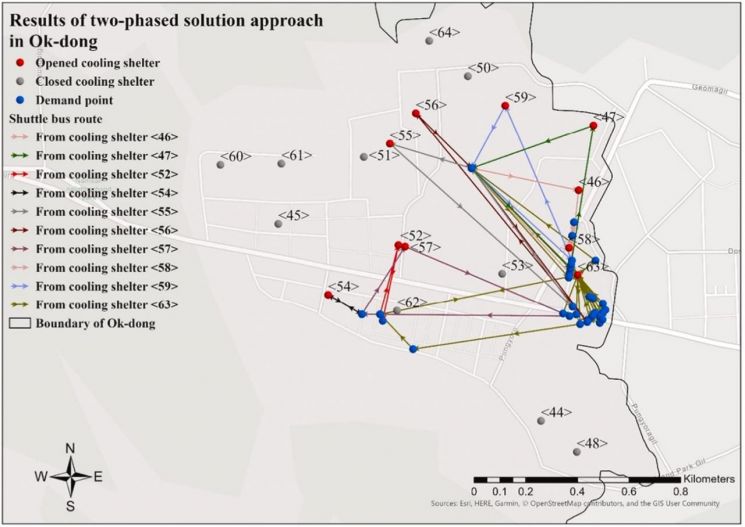 A research illustration depicting the optimal operation plan for heat relief shelters in Ok-dong, Nam-gu, Ulsan.
[Asia Economy Yeongnam Reporting Headquarters Reporter Kim Yong-woo] Is there a prime spot even for ‘Heatwave Shelters’ that help escape the heat?
A community-based study has attracted attention as local governments aim to effectively use budgets while preventing heatwave damage to vulnerable residents such as the elderly by determining how many shelters to place and where in neighborhoods to maximize protection from heatwave damage.
This study finds the optimal locations and appropriate number of ‘Heatwave Shelters’ tailored to neighborhoods. Including shuttle bus routes, it reduces operating costs while benefiting more people.
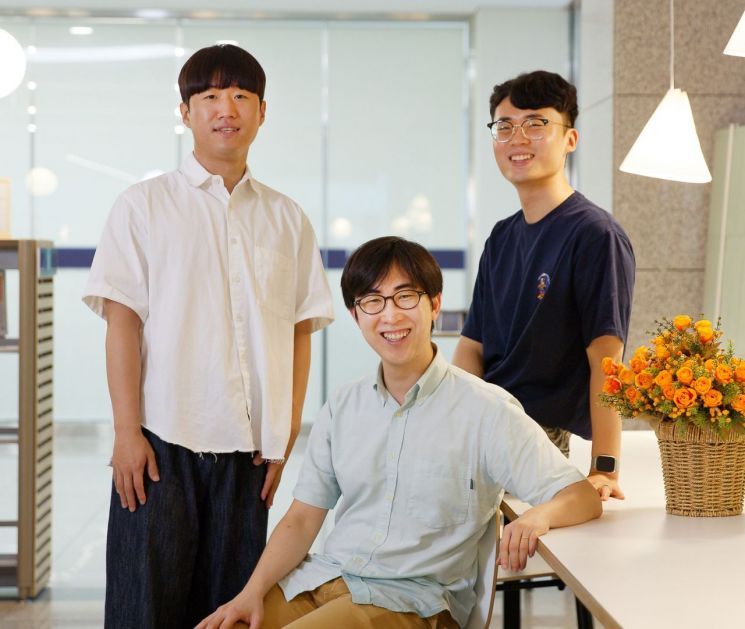
The research team led by Professor Kwon Sang-jin from the Department of Industrial Engineering at Ulsan National Institute of Science and Technology (UNIST), with participation from Woo Seung-ok, Yoon Seok-ho, and Kim Jae-sung, conducted a study targeting Nam-gu, Ulsan, and developed a method to find the optimal operation plan for heatwave shelters.
Using this method, one can obtain the optimal locations considering both the positions of heatwave-vulnerable groups and the capacity of heatwave shelters, as well as the optimal shuttle bus routes for people’s movement.
Heatwave shelters are designated places where people vulnerable to heatwaves can rest to avoid the heat.
Community centers, village halls, and resident centers nearby are utilized as heatwave shelters so that vulnerable groups can easily access and frequently use them. Cooling and operating costs are supported at these locations.
Professor Kwon’s team has been researching where heatwave shelters should be located to achieve maximum effect within limited budgets.
This involves comprehensive use of various data such as population data of heatwave-vulnerable groups, shuttle bus operating costs, and the capacity of heatwave shelters.
Researcher Yoon Seok-ho from UNIST’s Department of Industrial Engineering introduced the research purpose, saying, “If shuttle buses operate to help vulnerable groups move to heatwave shelters, fewer shelters can provide services to more people than currently.”
He also explained, “This study derived results through a highly complex optimization study that simultaneously sets ‘where and how many heatwave shelters to place’ and ‘shuttle bus routes.’”
Professor Kwon’s team designed a sophisticated mathematical model based on the ‘Location Routing Problem’ and proposed a ‘heuristic algorithm’ that can solve it quickly and precisely.
This algorithm simultaneously considers the capacity and operating costs of heatwave shelters and shuttle buses, as well as the location and number of vulnerable groups, enabling rapid derivation of the optimal plan encompassing shelter locations and shuttle bus routes.
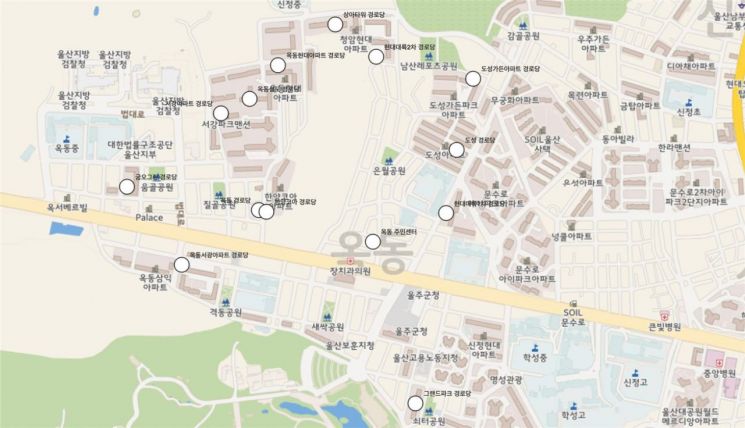
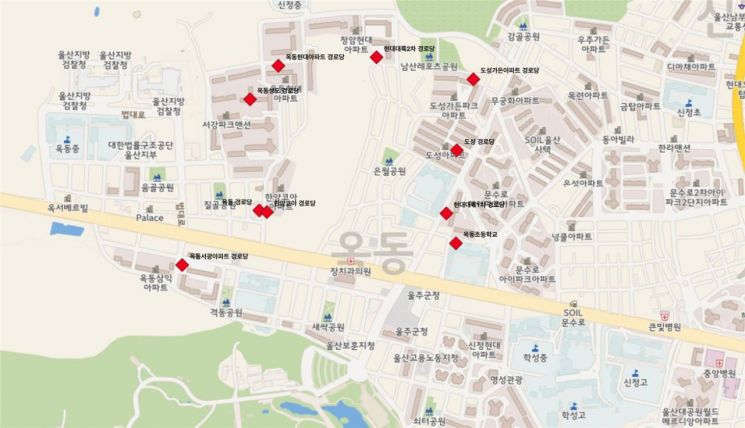
In the case of heatwave shelters in Ok-dong, Nam-gu, Ulsan, the number of shelters was reduced from 14 to 10, saving operating costs while providing services to more people.
According to the research results, the plan is to designate Ok-dong Elementary School as a new shelter in addition to the existing nine shelters. The shuttle bus route would operate as ‘Ok-dong Elementary School → Gyeongdong Park → Ulsan Veterans Affairs Office → Ulju County Office → Sinjeong Hyundai Apartment → Munsu-ro I-Park Apartment → Ok-dong Elementary School.’
Researcher Yoon Seok-ho said, “Ok-dong Elementary School is designated as a temporary shelter for disaster victims and has the justification to be used as an evacuation center during heatwaves classified as disasters.”
He added, “Considering various data comprehensively, adding Ok-dong Elementary School instead of other heatwave shelters is the optimal solution that saves costs while providing services to more people, and we also proposed the optimal shuttle bus route accordingly.”
This study also proposed optimal operation plans for heatwave shelters under varying conditions such as shuttle bus capacity and operating costs.
The research team explained that the new algorithm can sufficiently reflect uncertainties in real-world conditions and produce accurate results accordingly.
Professor Kwon Sang-jin said, “This research outcome will be a concrete example of how advances in data science and big data utilization can solve Ulsan’s heatwave problems more comprehensively and precisely.”
He also said, “The newly developed algorithm can be used not only in Ulsan but also by various local governments to scientifically establish efficient heatwave response policies.”
This research was supported by the National Research Foundation of Korea and published in the international academic journal ‘Urban Climate.’

© The Asia Business Daily(www.asiae.co.kr). All rights reserved.



















