US Foreign Policy Journal: "China's Water Shortage May Be More Shocking Than COVID-19 and the Ukraine War"
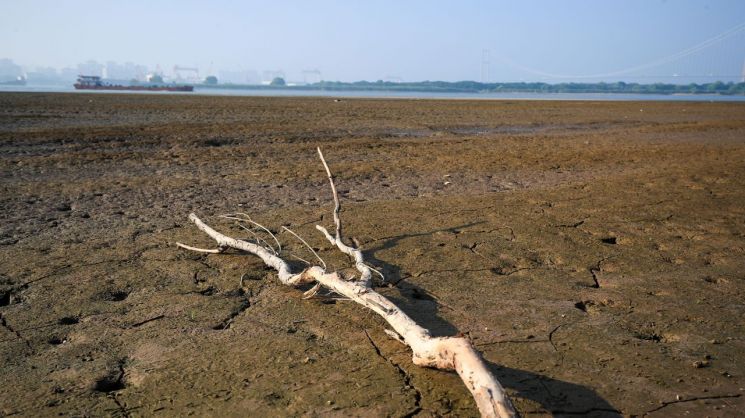
[Asia Economy Reporter Park Byung-hee] "China's severe water shortage could have a much greater impact on the global food and raw materials supply than the shocks caused by COVID-19 and the Russia-Ukraine war."
The American foreign affairs magazine Foreign Affairs recently issued this warning regarding the impact of the worldwide heatwave on the global economy. China holds an overwhelming share in the global grain and raw materials markets, and if water shortages damage China's grain and raw materials production, it could deliver a massive shock to the world economy.
These concerns are becoming reality. According to the British BBC, the Volkswagen factory, a German automobile company located in Chengdu, the capital of Sichuan Province, China, and Foxconn, Apple's contract manufacturer, have recently halted operations. This is due to Sichuan authorities implementing planned power outages as power generation has decreased amid China's severe drought. Sichuan Province has extended the planned power outage period twice, initially from the 20th to the 25th, and then again until the 27th.
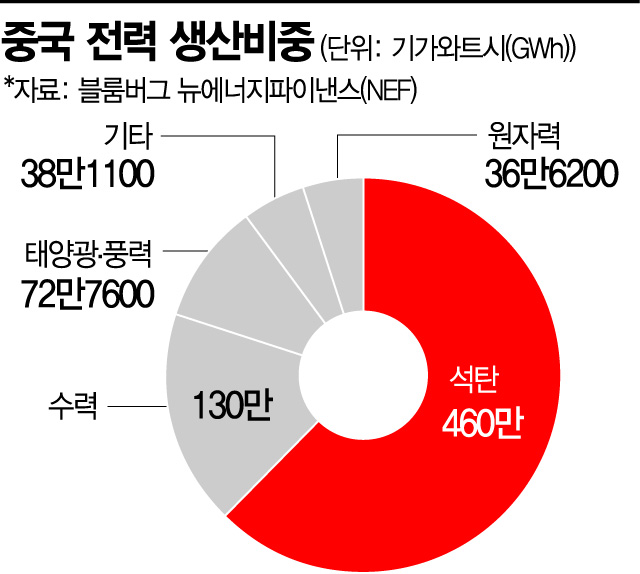
According to Bloomberg New Energy Finance, as of 2020, hydropower in China ranks second in power generation after coal, accounting for 18% of the country's total electricity production. Particularly, in Sichuan Province, the manufacturing hub of China, hydropower accounts for 80% of electricity generation. Due to the recent severe drought causing the Yangtze River, a major water source in China, to dry up, Sichuan's power production has dropped by half.
The situation in Europe is similar. Water levels in major European rivers such as the Rhine in Germany and the Po in Italy have dropped to their lowest, disrupting coal transportation by sea and reducing power generation not only from hydropower but also from nuclear power plants that require cooling water, leading to a sharp decline in electricity production. This has compounded the energy price surge caused by the Russia-Ukraine war that broke out in February.
Electricity prices in major European countries like Germany and France are hitting record highs daily, pushing their economies toward recession risks. The Bank of England (BOE), the UK's central bank, has warned that the British economy will enter a prolonged recession from the fourth quarter through the end of next year.
Foreign Affairs pointed out that water is an irreplaceable resource essential not only for grain and raw material production but also for human drinking water, warning that water shortages will be a major disaster. In particular, China's severe water shortage could be a significant long-term problem for the global economy.
As of 2020, the amount of water available per capita in the densely populated northern Hebei Plain region of China is only 253 cubic meters. The amount of water available in major cities such as Beijing, Shanghai, and Tianjin is at a similar level. This is only half the level defined by the United Nations as acute water scarcity. The UN classifies countries as water-scarce if the amount of water available per capita falls below 1,000 cubic meters. China's daily water consumption is 10 billion barrels, which is 700 times its daily oil consumption.
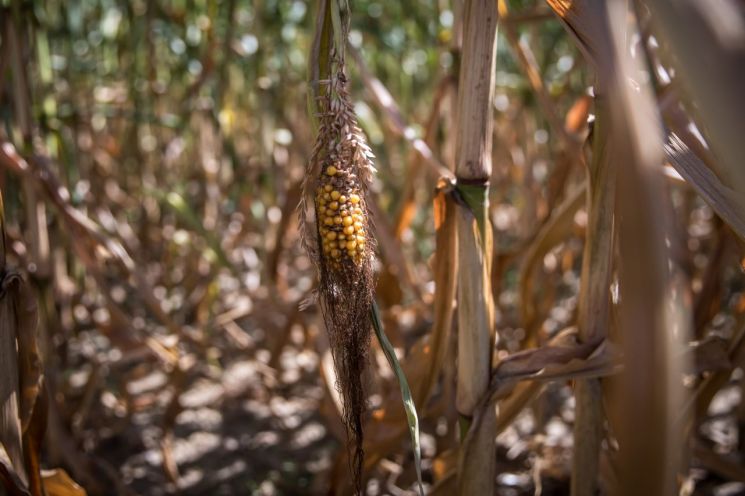
The Hebei Plain region, severely affected by water shortages, produces about 60% of the wheat, 45% of the corn, 35% of the cotton, and 64% of the peanuts consumed in China. Foreign Affairs estimated that if crop yields in the Hebei Plain decrease by 33% due to water shortages, China would need to import 20% of the world's corn trade volume and 13% of the wheat trade volume, potentially triggering a global food crisis.
The global raw materials market is also inevitably impacted. China is the world's largest producer of numerous metal minerals and rare earths, including aluminum, lead, manganese, magnesium, and zinc, and over 65% of the electricity consumed in China is used for industrial purposes.
Recently, lithium prices surged as a lithium plant in Sichuan Province halted operations, approaching 497,000 yuan per ton recorded in March. Susan Zhou, an analyst at Rystad Energy, said, "The driving force behind the rise in lithium prices is expected to continue for some time," adding, "The price of lithium carbonate will soon surpass 500,000 yuan per ton." When China experienced widespread power outages at the end of last year, a smelter in Shanxi Province stopped operations, causing magnesium prices to jump sevenfold compared to the beginning of the year. China accounts for 50% of global magnesium production.
Foreign Affairs also pointed out that there is a forecast that by 2030, China's water supply may only meet 25% of demand, emphasizing the need for measures to resolve China's water shortage.
© The Asia Business Daily(www.asiae.co.kr). All rights reserved.



















