[Seoul District News] Dobong-gu, Emergency Welfare Support and Public Benefit Services for Mr. A Near Starvation, Hospitalization Treatment Linkage, Active Resident Reporting Promotion & Seasonal Vulnerable Group Identification, Comprehensive Survey of Housing-Vulnerable Groups, Revisit Planned for Survey-Refusing Households ... Gwangjin-gu, Home Repairs for Vulnerable Groups in Welfare Blind Spots with Residents
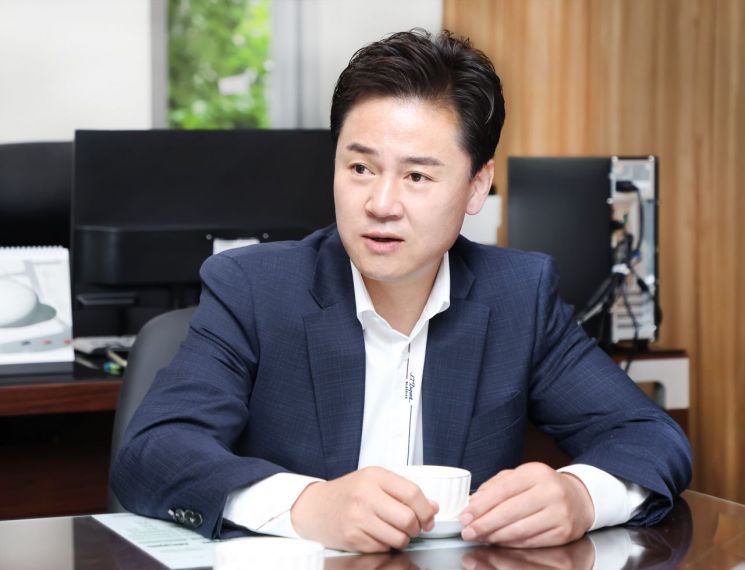
[Asia Economy Reporter Park Jong-il] Dobong-gu (Mayor Oh Eon-seok) has rolled up its sleeves to find hidden vulnerable households through proactive discovery investigations by establishing various discovery systems through public-private cooperation amid an increase in households facing crisis situations due to COVID-19 and the rise of single-person households.
On August 11, 2022, Dobong-gu discovered Mr. A, in his 60s, who was on the verge of starvation due to social isolation despite economic difficulties, through a report from an employee at a lodging business. Mr. A’s resident registration had been deleted four years ago, with his last registered address in another region.
The district provided emergency relief supplies and urgent welfare support through consultations with social welfare officers (hereafter ‘welfare planners’), and after resolving the deletion of his resident registration through sponsorship, connected him to hospitalization for health recovery. Currently, the application for public benefits is underway.
A district official explained, “This case of Mr. A demonstrates the effect of actively promoting welfare blind spot discovery investigations not only in the public sector but also enabling workers in daily industries and residents to find and report subjects.”
Dobong-gu has conducted investigations on 34 types (scheduled to expand to 39 types from September 2022) of crisis information target households through the welfare blind spot discovery system, focusing on discovering vulnerable groups during heatwaves and cold spells and conducting full surveys of housing-vulnerable groups together with welfare planners and local welfare communities.
In particular, the ‘Full Survey of Middle-aged Single-person Households Living in Housing-vulnerable Areas’ scheduled for October this year will be advanced to start in September, considering COVID-19 and heavy rains.
This full survey aims to carefully re-examine the living environments of individual households that refused the survey during the 2021 investigation to discover crisis and vulnerable households and connect them to customized welfare services.
The survey will be conducted by welfare planners visiting the households directly to check simple living conditions such as housing status and surrounding environment and determine the need for support. If judged as crisis or vulnerable households, customized welfare services will be linked through ‘welfare counseling.’
Additionally, the district plans to strengthen Dobong-type local welfare by establishing public-private cooperative welfare services through Dobong Healing School for preventing solitary deaths among reclusive single-person households and pilot projects for solitary death prevention and management.
Dobong-gu has also increased the emergency welfare support amount to 1,536,300 KRW for a four-person household from July to provide immediate support upon sudden crisis requests and prevent new poverty among recipients. It is promoting temporary relaxation of asset criteria (raising the exemption limit for residential assets and increasing the deduction rate for living preparation funds).
Mayor Oh Eon-seok of Dobong-gu said, “Through this full survey, we aim not to miss a single person in need of help, discover them preventively, and support them with public resources as much as possible. We will continue to cooperate with the private sector to build a dense Dobong-type local welfare system like a net and do our best to ensure real-time support.”

The Junggok 1-dong Community Service Center (Dongjang Shin Bong-su) and Junggok 1-dong Residents’ Autonomy Committee (Chairperson Joo Young-soon) in Gwangjin-gu are becoming a strong shield preventing neighbors’ isolation by carrying out home repairs for vulnerable groups in the area.
The Junggok 1-dong Community Service Center urgently decided and began implementing the ‘Home Repair Project for Vulnerable Groups in Welfare Blind Spots’ to improve the living spaces of neighbors who have become more difficult due to unusual heavy rains and steep price increases.
The first home repair started on the 23rd at the semi-basement home of Mr. Park, a single-person household with physical difficulties.
Public officials and members of the Residents’ Autonomy Committee worked hard moving furniture, removing mold-covered walls and old flooring, and helped replace the sink. The costs were supported by the district’s subsidies.
Mr. Park said, “I suffered from mold due to humidity all summer and my health worsened, so I struggled alone, but thanks to the help of neighbors, I am really happy and grateful to be able to live in a clean place,” showing a broad smile.
The ‘Home Repair Project for Vulnerable Groups’ plans to support up to seven households in welfare blind spots by November this year. For more details, contact the Junggok 1-dong Community Service Center.
Gwangjin-gu Mayor Kim Kyung-ho said, “It is very meaningful to discover and help hidden difficulties of subjects together with residents who know neighbors’ situations best. We will continue to actively discover and support subjects to prevent tragedies among marginalized residents and make Gwangjin-gu a good place for everyone to live.”
Regarding home repairs for vulnerable groups, the district is also promoting various policies such as the ‘Single-person Household Minor Repair Service Project,’ which pays for minor repairs of single-person household residences, and the ‘Housing Improvement Support Project’ to improve living environments and reduce cooling and heating costs for low-income households.
© The Asia Business Daily(www.asiae.co.kr). All rights reserved.


















