Cultural Heritage Administration Announces '1st Basic Plan for Preservation, Management, and Utilization of Traditional Landscaping'
Develops Standard Module for 'Korean Traditional Gardens'... Establishes Traditional Landscaping Center
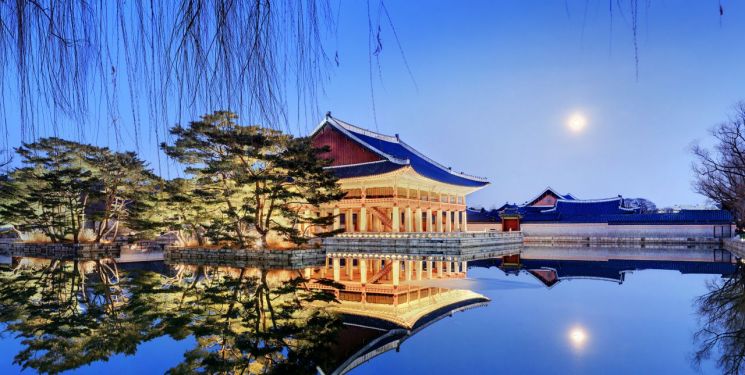
Traditional landscaping, decorated using traditional techniques in palaces, royal tombs, and private houses, will be preserved and managed as cultural heritage. The Cultural Heritage Administration announced the '1st Basic Plan for the Preservation, Management, and Utilization of Traditional Landscaping,' to be implemented by 2026, on the 24th. By 2024, related laws, ordinances, and regulations will be revised to reflect new concepts, and management standards and scopes will be established to build the domain of traditional landscaping as cultural heritage.
The Cultural Heritage Administration defined the concept of traditional landscaping as "creating outdoor spaces using traditional techniques, such as planting trees or arranging buildings and facilities, based on Korea's unique culture, thought, and behavioral patterns, encompassing history, culture, and ideology." The targets include palaces, royal tombs, seowon and hyanggyo (Confucian academies), private houses, temples, villas, and structures such as nu, jeong, and dae (pavilions, gazebos, and platforms). Valuable potential resources will be discovered to expand institutional support, and specialized personnel will be trained to carry out traditional landscaping policies and practices. Various guidelines for sustainable preservation and management will also be prepared.
A Cultural Heritage Administration official stated, "By next year, we plan to create 'Traditional Landscaping Restoration and Maintenance Standards,' which categorize representative types of traditional landscaping and organize standardized preservation and management techniques, and to present customized management plans by type." They added, "We also plan to prepare safety management guidelines to respond to climate change, which has recently emerged as a social issue."
Traditional landscaping has received less attention compared to other cultural heritages, including traditional architecture. In fact, a survey conducted last July and August among about 100 landscaping professionals and related experts showed that approximately 70% agreed on the need for designation criteria for traditional landscaping.
To promote the value of traditional landscaping, the Cultural Heritage Administration will develop a standard module for 'Korean Traditional Gardens' starting in 2025 and will promote the establishment of a Traditional Landscaping Center (tentative name). Additionally, it plans to hold international traditional landscaping expos to raise social interest.
© The Asia Business Daily(www.asiae.co.kr). All rights reserved.
![Clutching a Stolen Dior Bag, Saying "I Hate Being Poor but Real"... The Grotesque Con of a "Human Knockoff" [Slate]](https://cwcontent.asiae.co.kr/asiaresize/183/2026021902243444107_1771435474.jpg)
















