Confirmed deaths of 657 including additional 105... Serious human rights violations by public authority
Forced detention, labor, deaths recognized... National official apology and victim recovery measures recommended
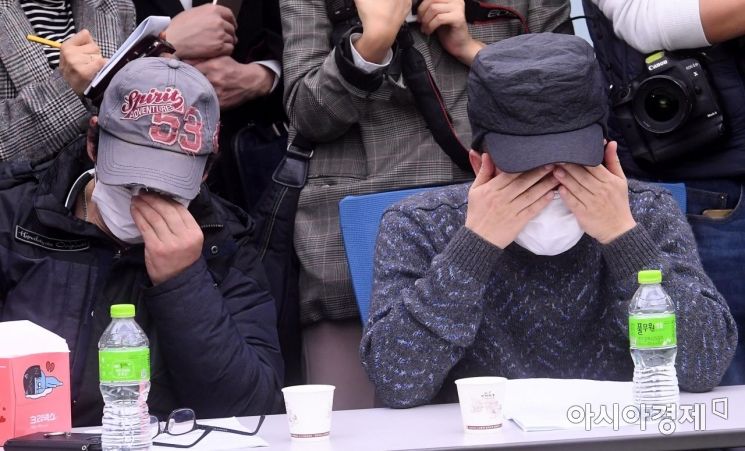 Victims of the Hyeongjebokjiwon facility shed tears on the 27th while listening to Prosecutor General Moon Moo-il's remarks at the Yeouido Irum Center in Yeongdeungpo-gu, Seoul. Photo by Hyunmin Kim kimhyun81@
[Asia Economy Reporter Yoo Byung-don] The number of deaths in the Busan Brothers Home incident, known as the "Korean Auschwitz" and considered one of the worst human rights abuses during the past military regime, has been found to be much higher than previously reported. The investigation revealed that the state actively supported the establishment and operation of the Brothers Home and even tacitly condoned human rights violations.
The 2nd Truth and Reconciliation Commission for Past Affairs (Truth and Reconciliation Commission) held its 39th meeting at 10 a.m. on the 24th at the Namsan Square Building in Jung-gu, Seoul, and officially announced the investigation results through a press conference titled "Truth Verification Decision Announcement on the Brothers Home Human Rights Violation Incident."
The Truth and Reconciliation Commission judged the "Brothers Home Human Rights Violation Incident" as a "serious human rights violation caused by the state's unjust exercise of public authority" and made a truth verification decision. This came one year and three months after the investigation began in May last year. The truth verification targeted 191 applicants out of a total of 544 applicants received by February 2021.
On this day, the Truth and Reconciliation Commission explained that after 35 years, it uncovered △ the unconstitutionality and illegality of the vagrant crackdown regulations △ the illegality of the Brothers Home admission process △ serious human rights violations during the operation of the Brothers Home △ medical issues and suspicions regarding the handling of deaths △ the government's awareness of the Brothers Home incident and attempts at systematic reduction and concealment.
105 Additional Deaths Confirmed... Total Deaths Reach 657
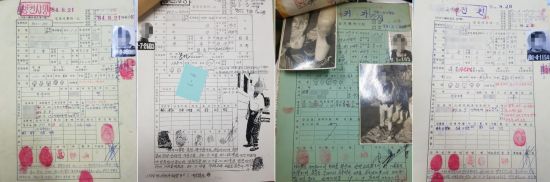
First, the truth verification found that the number of deaths at the Brothers Home was 657, which is 105 more than the previously known 552. The Truth and Reconciliation Commission stated that this was confirmed after comprehensively reviewing 14 documents, including the first-ever secured death statistics and death lists. Notably, in 1986 alone, the number of deaths at the Brothers Home was 135, which was 13.5 times higher than the general population death rate of 0.318% at the time, reaching 4.30%. Among these, the tuberculosis death rate was 0.41%, 29.2 times higher than the general population tuberculosis death rate of 0.014% at the time.
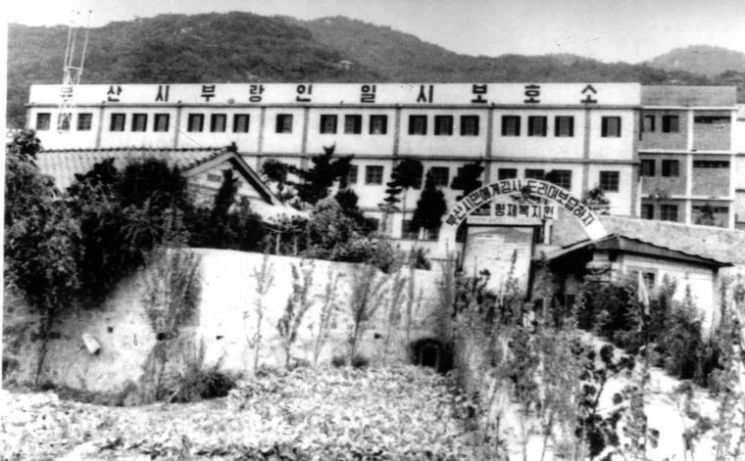
Among the Brothers Home detainees, suspicious deaths such as DOA (Dead On Arrival) during emergency transfers occurred, and there was evidence of forged death certificates. From 1975, when the Brothers Home signed a "Vagrant Custody and Protection Consignment Contract" with Busan City, until 1986, the total number of detainees was about 38,000, with a peak of 4,355 in 1984.
 [Image source=Yonhap News]
Evidence of Psychiatric Drug Overdose 'Chemical Restraint'
There was also evidence that psychiatric drugs were overdosed on Brothers Home detainees, resulting in "chemical restraint." In 1986, the Brothers Home purchased a total of 250,000 tablets of chlorpromazine (a symptom-relieving drug for schizophrenia patients), enough for 342 people (out of a total of 395 psychiatric hospital residents at the time) to take twice daily for a year.
In 1986, the "psychiatric patient medicine expenses" in the Brothers Home accounting amounted to about 12.67 million won, which was more than the general patient medicine expenses of about 10.15 million won. The psychiatric drug purchase list obtained by the Truth and Reconciliation Commission included psychiatric specialty drugs such as haloperidol for schizophrenia and bipolar disorder, diphenylhydantoin and valium for epilepsy and arrhythmia treatment, and controlled psychotropic substances like barium and dalmadom. The Truth and Reconciliation Commission reports that the Brothers Home arbitrarily administered drugs to maladjusted or rebellious detainees and used the psychiatric hospital as a so-called "disciplinary unit."
During the investigation, the Truth and Reconciliation Commission also revealed that the Brothers Home failed to pay or embezzled self-reliance savings earned by detainees through forced labor. The average deposit per person in 1986 was 550,819 won, but the average payout per person was only 204,729 won. The difference of 346,090 won per person led the Commission to conclude that the savings were not properly paid and were embezzled. This was uncovered by analyzing the "Donation Income Resolution" and "Donation Cashbook" seized by prosecutors during the investigation of Director Park.
Unjust Use of Public Authority... Confirmation of Forced Detention Process
Furthermore, the unconstitutionality and illegality of the Ministry of the Interior Ordinance No. 410, titled "Guidelines on Reporting, Crackdown, Detention, Protection, Repatriation, and Post-Management of Vagrants," which was the basis for indiscriminate vagrant crackdowns and detention at the Brothers Home, were confirmed. This ordinance stipulated that people identified as vagrants could be sent to detention facilities indefinitely without any criminal procedure by a joint vagrant crackdown team composed of city, county, district offices, and police. The Truth and Reconciliation Commission's investigation found that this ordinance violated the principles of legal reservation, clarity, prohibition of excess, due process, warrant requirement, and systemic legitimacy.
The Commission also secured documents from the Republic of Korea Army Security Command (hereafter Security Command) confirming that the Security Command closely managed the Brothers Home. The Security Command infiltrated agents disguised as staff to monitor Kim, a repatriated fisherman abducted to the North (aged 29 at the time), who was detained at the Brothers Home. On May 8, 1986, this investigative operation was named and approved as the "Applause Operation." The Security Command regarded the Brothers Home as a "group with a high possibility of organized collective action by subversives" and "a place with stricter discipline and control than prisons." The Security Command received a pledge from Director Park of the Brothers Home and established a continuous management system.
It was also revealed that individuals violating the National Security Act, National Defense Security Act, and Anti-Communist Act were classified as persons of special interest and forcibly detained and monitored at the Brothers Home. The government at the time managed 15 public security offenders under the Social Safety Act and the Regulation on the Coordination of Surveillance Subjects. The Truth and Reconciliation Commission confirmed this by obtaining surveillance and security disposition-related materials from the Military Security Support Command's personnel files and lists of security disposition targets from the Busan District Prosecutors' Office Public Security Division.
For the first time, a Security Command document was disclosed showing that the National Security Planning Department (hereafter Anki-bu) convened a meeting of related agencies to discuss measures regarding the Brothers Home. On March 24, 1987, a "Related Agencies Countermeasure Meeting on the Brothers Home" was held in the Anki-bu meeting room, chaired by the head of Anki-bu's 2nd Bureau. This was the day after about 30 detainees escaped collectively and exposed the conditions of the Brothers Home. Two days later, high-ranking officials including the Blue House Senior Secretary for Political Affairs, the head of Anki-bu's 2nd Bureau, the Deputy Minister of the Ministry of the Interior, the Deputy Prosecutor General, the Chief of the National Police Agency, the Chief Secretary to the Prime Minister, and the Deputy Mayor of Busan City discussed plans to reform the Brothers Home.
Truth and Reconciliation Commission: "The State Must Officially Apologize to Victims and Bereaved Families"
Based on the investigation results, the Truth and Reconciliation Commission concluded that this incident involved comprehensive human rights violations, including the active involvement of police and other public authorities in indiscriminately cracking down on unspecified civilians without due process and detaining them for extended periods at the Brothers Home. The Commission emphasized, "The state must officially apologize to the victims and bereaved families of forced detention at the Brothers Home and prepare measures for victim recovery and trauma healing." It also stressed, "Strict management and supervision must be implemented to prevent human rights violations of detainees during detention and operation at various facilities, and the National Assembly should promptly ratify the UN Convention for the Protection of All Persons from Enforced Disappearance, which passed the Cabinet meeting on June 21, 2022."
© The Asia Business Daily(www.asiae.co.kr). All rights reserved.


















