Global Surplus Used as Supplementary Budget Funds 8 Times in 10 Years
Increased Spending After Minimizing National Debt Repayment
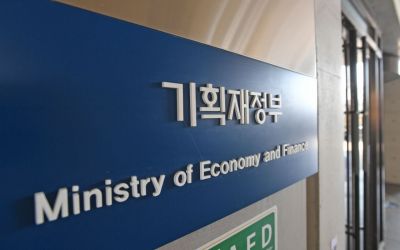
[Asia Economy Sejong=Reporter Kwon Haeyoung] It has been revealed that the government has used the global surplus eight times in supplementary budgets (추경) over the past decade. The global surplus is the sum of excess tax revenue and the remaining balance after expenditures within a year. The government has transferred the global surplus to the next year's revenue only once. As the government pushes to shift to a 'sound fiscal' policy in next year's budget formulation, there are urgent calls for the passage of legislation in the National Assembly to strengthen the obligation to use the global surplus for national debt repayment.
According to the National Assembly Budget Office on the 24th, in the past 10 years (2012?2021), the general account global surplus was not used as supplementary budget funds only in 2013 and 2019, when the surplus was less than 100 billion won. The only case where the global surplus was transferred to the next year's revenue was in 2013. In 2019, the entire global surplus was settled as local allocation tax.
When a global surplus occurs, the government first settles local allocation tax and grants, then uses at least 30% of the remaining funds sequentially for repayment of public funds, government bonds, and other national debts. After that, the remaining balance can be used at discretion as supplementary budget funds. Because the global surplus has been habitually used for supplementary budgets, the national debt has only been repaid at the legally mandated minimum rate of 30% of the balance over the past five years.
Contrary to the original plan, the government has increased expenditures by using leftover funds or excess tax revenue as supplementary budget funds within the legally allowed maximum limit, rather than tightening the national finances by repaying national debt or transferring them to the next year's revenue.
This fiscal management has further worsened the national finances. National debt increased by approximately 105.7% over about 10 years, from 489.8 trillion won in 2013 to 1,007.5 trillion won at the end of the first half of 2022. The ratio of national debt to gross domestic product (GDP) rose from 32.6% to about 50% during the same period.
However, bills aimed at strengthening fiscal soundness by increasing the repayment ratio of the global surplus toward national debt have yet to pass the National Assembly. Currently, five proposed bills focus on raising the mandatory repayment ratio of national debt to 50% of the global surplus or requiring that the entire global surplus be used for national debt repayment if the national debt ratio exceeds 45% of GDP. An official from the Budget Office said, "Considering the recent speed and trend of the increase in national debt, it is necessary to review raising the statutory repayment ratio of the general account global surplus for national debt."
Professor Kim Woochul of the Department of Taxation at the University of Seoul emphasized, "Just as the legal requirements for supplementary budgets have become obsolete, the obligation to repay national debt has also recently not been strictly observed. While the repayment ratio can be discussed for increase, it is more important to strengthen the legal binding force of this provision and to make the government and National Assembly comply with it."
© The Asia Business Daily(www.asiae.co.kr). All rights reserved.
![Clutching a Stolen Dior Bag, Saying "I Hate Being Poor but Real"... The Grotesque Con of a "Human Knockoff" [Slate]](https://cwcontent.asiae.co.kr/asiaresize/183/2026021902243444107_1771435474.jpg)











