[Seoul District News] Youth Culture Space 'Sillim-dong Three Room' Celebrates 3rd Anniversary, Surpasses 15,000 Members as Youth Support Organization & Offers Various Programs Including Life Counseling, Psychological and Career Comprehensive Counseling, and Youth Social Network Formation ... Geumcheon-gu Elects 20 Members for 7th Youth Council ... Seongdong-gu Secures 670 Million KRW in National Funding from Ministry of the Interior and Safety Project, Establishes Safety Facility Data for Children's School Routes
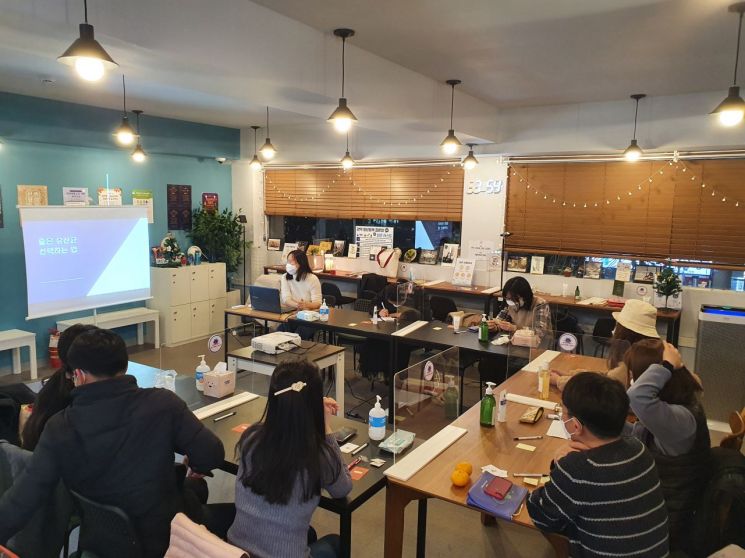
[Asia Economy Reporter Park Jong-il] Gwanak-gu (Mayor Park Jun-hee) has a youth hangout called ‘Sillim-dong Three Room.’ It is a youth cultural space where any young person can design their dreams and freely build relationships with peers.
Mayor Park Jun-hee said, “Gwanak-gu, which ranks first nationwide in youth population ratio, has been providing opportunities for young people struggling with employment difficulties to find alternatives and unleash their potential and possibilities through Sillim-dong Three Room, which opened in 2019. I am proud that at the 3rd anniversary of its opening, it has established itself as a hub for youth serving as a youth hub.”
‘Sillim-dong Three Room’ is a base where young people gather in one space to communicate and interact on common interests such as employment, housing, and daily life. It signifies providing three shared spaces?a third living room, workshop, and study?different from their residential spaces for youth living in exam villages, one-room, or two-room apartments.
For young people, most of whom live alone, Gwanak-gu’s Sillim-dong Three Room, a cultural space supporting youth activities by providing a living room, study, and workshop, has marked its 3rd anniversary.
Located on Nokdu Street in the university district, which is highly accessible to youth, ‘Sillim-dong Three Room’ runs various programs such as ▲1:1 comprehensive life counseling program ‘Sangdam Orang’ ▲linkage programs connecting participants and experts in psychological and career counseling ▲programs supporting the formation of youth social networks, receiving great responses.
Additionally, through agreements with 13 institutions including local welfare centers, labor welfare centers, university job centers, housing safety comprehensive centers, and psychological support centers, it serves as a youth policy delivery system where professional and diverse information from various fields converge, revitalizing the youth activity ecosystem.
It has now grown into a comprehensive youth support institution with over 15,000 members.
About 300 in-house programs are held annually, with around 2,000 young people participating each year. Moreover, it provides over 200,000 youth information newsletters annually to its members.
Furthermore, it offers customized programs for the ‘Youth Challenge Support Project’ to boost youth confidence and plays a role in promoting employment so that they can contribute to society again. Notably, this year it was selected as an operating institution for the ‘Youth Challenge Support Project’ hosted by the Ministry of Employment and Labor and currently ranks first nationwide in project achievement rate, on track for early completion within the project period.
Mayor Park Jun-hee said, “Based on the successful operation of the youth cultural space Sillim-dong Three Room, we will develop the ‘Gwanak Youth Center,’ scheduled for completion this year, into a comprehensive youth activity hub encompassing youth employment, jobs, culture, welfare, psychological counseling, and community support,” adding, “We will continue to create Gwanak as a youth-specialized district where young people can confidently live as active members of the local community through youth policies.”
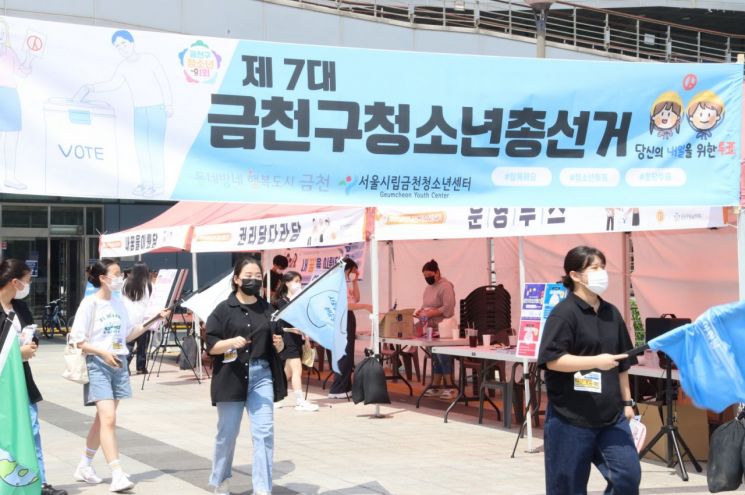
Geumcheon-gu (Mayor Yoo Sung-hoon) has elected 20 youth council members to form the 7th Youth Council.
The Geumcheon-gu Youth Council, first established in 2016, is a specialized youth policy participation project in Geumcheon-gu now entering its 7th term. The Youth Participation Committee forms policy parties, and 20 youth council members are elected based on party vote shares through elections.
The general election was held on August 20th in the lobby on the first floor of the district office, conducted both online and offline for youth residing or studying in Geumcheon-gu, with a total of 392 participants.
According to the voting results, the total seats were allocated by party vote shares as follows: ▲Nae Kkum-eul Irwotdang (My Dream Fulfilled Party) 7 seats ▲Urineun Dong-ilhadang (We Are the Same Party) 5 seats ▲Jigureul Guhandang (Save the Earth Party) 4 seats ▲Gwonridadaradang (Rights Party) 3 seats ▲Sahoe-reul Bakkundang (Change Society Party) 1 seat.
The 7th Geumcheon-gu Youth Council will open in September and hold regular meetings. It will also review projects in the ‘Education and Youth’ sector of the 2023 resident participation budget.
Mayor Yoo Sung-hoon said, “I hope that through the 7th Youth Council activities this year, young people will become subjects of rights and participate and grow as democratic citizens,” adding, “We will continue to strive to ensure that youth voices are actively reflected and improved in policies.”
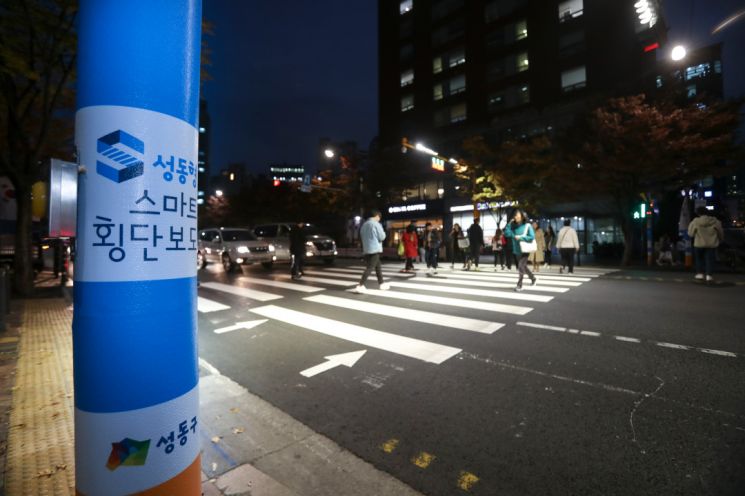
Seongdong-gu (Mayor Jung Won-oh) is promoting the safety of children’s school routes ‘smartly’ by starting to build a big data system for school route safety facilities.
The Children’s School Route Safety Facilities Database Construction Project (hereinafter ‘Safety Facilities DB Construction Project’) is part of the Ministry of the Interior and Safety’s Digital New Deal initiative, where local governments and companies collaborate to improve public data quality and open it for public use. Seongdong-gu was selected for this project and secured approximately 670 million KRW in national funding for public data construction and opening. This selection enables the implementation of the Children’s School Route Safety Facilities DB Construction Project and the Building Permit Data Construction Project to create safe commuting routes.
Having started the project last month, the district will work with a big data construction specialist company until December this year to identify the status of safety facilities to prevent accidents on children’s school routes. Using 13 youth interns, on-site surveys will collect detailed information and photos on nine types of data including illegal crossing prevention bumps, safety signs, and traffic enforcement cameras.
The constructed data will be opened on the Public Data Portal and Seongdong Smart Roadview and used for big data analysis such as site analysis when installing safety facilities. A district official said, “This project will not only systematically secure data on safety facilities but also help expand data-related jobs by hiring youth interns.”
Creating Safe School Routes for Elementary Schools... Now Listening to Children’s Opinions via Metaverse
Moreover, since 2018, the district has formed a Living Lab with parents to create safe school routes for all elementary schools in the area. The Living Lab is a participatory urban policy process where residents actively engage in solving social problems occurring in daily life.
Based on these efforts, over the past three years, the Living Lab project has brought many changes to school routes, including replacing anti-slip facilities, repairing signs, repainting facilities, maintaining stair greenery, installing new insecticides, and installing CCTV.
Not stopping there, Seongdong-gu plans to promote the 2nd phase of the Safe School Route Living Lab using metaverse technology. This year, to solve safety issues on school routes identified from children’s perspectives, metaverse technology will be introduced. A game reflecting actual terrain was created on ‘Roblox,’ a metaverse platform popular among elementary students, to engage children’s interest and allow them to leave opinions on safety issues.
In collaboration with elementary schools, the ‘Safe School Route Living Lab’ class will be included in the regular curriculum. Suggestions from elementary students will be addressed using new smart technologies such as floor traffic lights and traffic-responsive Keybots. This project is planned to be carried out with 240 million KRW in national funding secured through selection in the ‘Digital Utilization Issue Resolution Project Contest.’
Leading Accident Prevention by Building Smart Traffic Safety Facilities on School Routes
The ‘Seongdong-type Smart Crosswalk’ is the nation’s first smart crosswalk integrating eight types of smart safety functions. It installs pedestrian signals in blue and red on the ground to help children easily recognize walk signals. When the signal is red and children cross the road, a warning voice says, “It is dangerous, please step back.” Currently, 78 smart crosswalks have been installed nationwide, and pedestrian traffic accidents have decreased by more than 21.5% since installation.
Another child pedestrian safety measure, the ‘Yellow Carpet,’ is a waiting area at crosswalks with yellow backgrounds and caution phrases such as ‘Look Left and Right’ and ‘Watch for Cars!’ To overcome durability issues like peeling paint over time, functional blocks called ‘Sign Blocks’ that do not deteriorate were introduced and installed in all elementary schools in the area last year. This month, 14 more schools including Gyeongdong Elementary received additional installations, bringing the total to 57 Yellow Carpets in the district, further enhancing safety on children’s commutes.
Since 2019, utility poles on narrow school routes have been maintained through MOUs with KEPCO and KT. A joint public-private survey was conducted on about 1,620 utility poles around 41 schools, selecting poles for maintenance. Currently, 90 poles have been maintained, with a total of 150 poles scheduled for maintenance by 2023.
Nation’s First Operation of Walking School Bus During Vacations... Over 98% Parent Satisfaction
Additionally, the Walking School Bus, started in 2012, continues to protect children’s commutes. This year, 86 traffic safety instructors accompany children traveling in the same direction on 41 routes across 17 elementary schools. Since last year, it has been operated during vacations nationwide for the first time, providing seamless care and reducing parents’ burdens. A satisfaction survey conducted in July with 1,186 parents and students showed over 98% satisfaction.
Mayor Jung Won-oh of Seongdong-gu said, “The ongoing project to create safe commuting routes is our top priority policy concerning children’s safety,” adding, “We will continue to introduce smart technologies and maintain continuous communication with parents to create a safer pedestrian environment for children.”
© The Asia Business Daily(www.asiae.co.kr). All rights reserved.
![Clutching a Stolen Dior Bag, Saying "I Hate Being Poor but Real"... The Grotesque Con of a "Human Knockoff" [Slate]](https://cwcontent.asiae.co.kr/asiaresize/183/2026021902243444107_1771435474.jpg)


















