si-LH Jeonnam Regional Headquarters, Agreement on Housing Welfare Support for People with Mental Illness
Providing Housing and Customized Housing Maintenance Support... Pilot Implementation for 2 Years
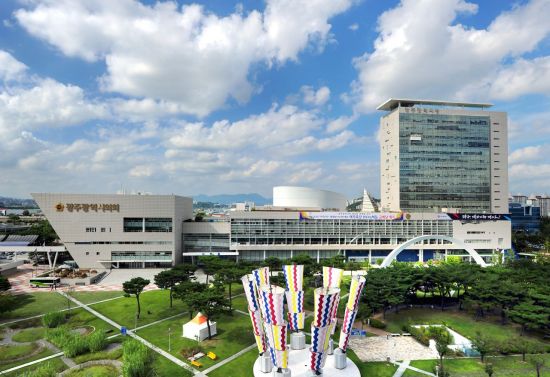
[Asia Economy Honam Reporting Headquarters Reporter Yoon Jamin] Gwangju Metropolitan City is accelerating efforts to help mentally ill patients settle stably within the local community.
The city announced on the 23rd that starting next month, it will pilot the Independent Living Housing Operation Project for two years in collaboration with the LH Jeonnam Regional Headquarters.
Since the revision of the Mental Health Welfare Act in 2017, deinstitutionalization has been strengthened to promote social reintegration and independence of mentally ill patients, increasing the need for a housing welfare support system to help them settle in the community.
The "Gwangju City Independent Living Housing Operation Project for Mentally Ill Patients" provides independent living housing and customized services for housing maintenance to mentally ill patients who desire independence or self-reliance but have unstable housing and weak economic and social support systems.
Among local governments nationwide, Gwangju is the third to promote this project following Seoul and Gyeonggi Province.
To this end, Gwangju City revised the "Ordinance on Mental Health Promotion and Welfare Service Support for Mentally Ill Patients" last year, and in May signed a business agreement with the LH Jeonnam Regional Headquarters for housing welfare support for mentally ill patients and a contract for two purchased rental houses.
In June, a housing welfare support council for mentally ill patients was formed, and the "Independent Living Housing Operation Guidelines" and "Tenant Selection Criteria" were established.
The independent living housing accommodates two people per house, with one room per person. Eligible tenants are mentally ill patients aged 19 to under 65 residing in Gwangju Metropolitan City who wish to live independently and can live independently with some assistance. Two tenants have been confirmed through recent reviews by the housing welfare support council for mentally ill patients. Residency is allowed for up to three years.
The main contents of the project include ▲ support for purchased rental housing and rental deposit ▲ purchase and installation of home appliances, furniture, and supplies within the house ▲ preparation such as defect inspection, insurance subscription, and cleaning before moving in ▲ provision of customized case management services to support tenants' housing maintenance and independent living.
The Gwangju Metropolitan Mental Health Welfare Center, the city's entrusted institution, will oversee the overall operation and collaborate with various organizations such as the Basic Mental Health Welfare Center and the Health Management Association to provide independent support programs, health checkups, mental emergency situation management, and peer supporter counseling.
For this purpose, one housing coordinator, one peer supporter, and one case manager will be assigned per tenant.
In particular, the city has established a day and night crisis support system for the operation of independent living housing to respond immediately to psychiatric emergencies and will continue case management even after tenants move out to help them settle in the community.
Ryu Misu, Director of the Welfare and Health Bureau of the city, said, "Mentally ill patients, including those with mental disabilities, are socially vulnerable groups facing double discrimination among marginalized groups. They are not subjects of social exclusion but require environmental creation and care. We will gradually expand independent living housing after the pilot project so that mentally ill patients can settle stably and live independently in the community."
© The Asia Business Daily(www.asiae.co.kr). All rights reserved.

















