Nation's First Introduction of 'Integrated Discount Pass' Usable for All Future Public Transport Including Maritime Transportation
Four Major Strategies and 11 Tasks to be Implemented by 2030 ... Expansion of Urban Rail and Integration with Persona
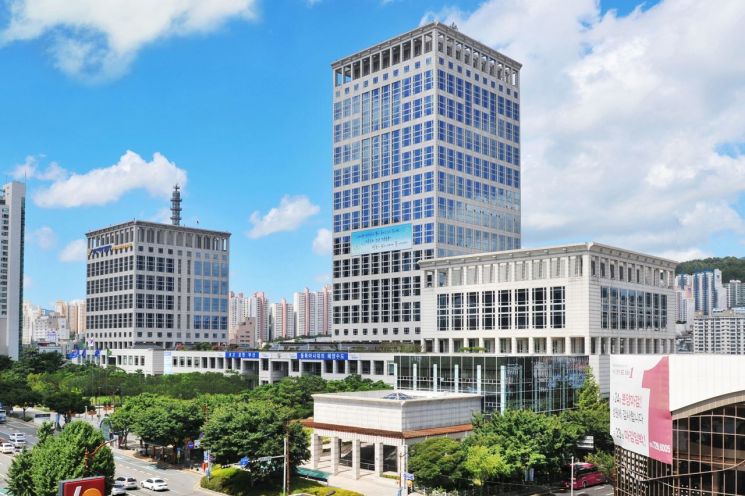
[Asia Economy Yeongnam Reporting Headquarters Reporter Dongguk Lee] Busan City has established the ‘Busan Public Transportation Vision 2030’ and will implement four major strategies and 11 tasks by 2030: ▲Creating a public transportation-friendly 15-minute city ▲Data-driven safe and convenient public transportation ▲Building an eco-friendly transportation system ▲Creating an innovative smart transportation environment.
The ‘Busan Public Transportation Vision 2030’ is a strategy to create a ‘smart transportation city that is convenient and pleasant in daily life,’ enabling citizens to travel conveniently from origin to destination anywhere through various transportation modes such as walking, bicycles, personal mobility (PM), public transportation, and future mobility, in response to rapidly changing transportation demands.
Through this, the city plans to significantly increase the public transportation modal share, which has remained in the 40% range since 2008, to 60% by 2030.
▲Strategy 1: Creating a public transportation-friendly 15-minute city
The first strategy is to build a dense public transportation network and strengthen transfer connections between public transportation and other modes of transport to create a public transportation-friendly 15-minute city.
An efficient public transportation system will be established through the expansion of the railway network. Urban railways under construction, such as the Sasang?Hadan line, will be opened on schedule, and the Hadan?Noksan line, C-bay-Park line, Nopo?Jeonggwan line, Gangseo line, and Osiria line will be established by 2030 by drastically shortening administrative procedures.
The double-track railway from Bujeon to Masan and the metropolitan railway connecting Busan?Yangsan?Ulsan will be opened without delay to respond to the transportation demand of the Busan?Ulsan?Gyeongnam (Bu-Ul-Gyeong) mega city. The public transportation foundation will be strengthened through a big data-based bus route reorganization reflecting changes in transportation demand and terrain due to railway network expansion and the characteristics of 62 15-minute living zones.
Secondly, transportation hub facilities will be expanded to increase public transportation usage. In urban development areas such as the second phase of the North Port redevelopment site and the former site of the Beomcheon-dong railway vehicle maintenance depot, transportation hub facilities such as complex transfer centers and downtown stations (public garages) will be prioritized to promote public transportation-oriented urban development.
Thirdly, accessibility to public transportation will be enhanced by linking with personal mobility (PM). Shared mobility operation zones will be established at one location per 15-minute living zone, and last-mile mobility infrastructure connecting public transportation and final destinations will be built around transportation nodes.
Additionally, 66.37 km of urban lifestyle bicycle lanes will be expanded, and Busan-style shared electric bicycles will be introduced and operated from 2024 to strengthen connectivity with public transportation.
▲Strategy 2: Data-driven safe and convenient public transportation
By providing demand-tailored public transportation services, a data-driven safe and convenient public transportation system faster than private cars will be created.
A transportation environment considerate of public transportation users will be established. The supply rate of low-floor buses for transportation-vulnerable groups will be increased from 29% to 89%, a 60% increase, and 30 new barrier-free bus stops will be installed.
For industrial complex workers, new town residents, and tourists, user demand will be collected and analyzed through big data to expand demand-tailored bus routes by time, day, and season, and punctuality of public transportation will be secured through solid operation of central bus-only lanes.
Next, a pleasant and safe boarding environment will be created. Urban railway facilities will be improved by replacing old electric trains and installing customer waiting rooms, and advanced safety devices preventing accidents will be installed on all buses.
Smart bus shelters equipped with driver support systems that assist with drowsy driving warnings and various convenience facilities such as heated seats will also be introduced.
Finally, the scope of public transportation services will be expanded. Starting with the operation of amphibious buses in the second half of this year, reflecting diverse citizen transportation demands, maritime transportation means such as water taxis and water buses linked with land public transportation will be introduced.
In addition, to respond to the increase in metropolitan transportation demand in the Bu-Ul-Gyeong area, metropolitan express bus operations will be promoted in line with the launch of the Bu-Ul-Gyeong special local government.
▲Strategy 3: Building an eco-friendly transportation system
In line with the full transition to a carbon-neutral society, an eco-friendly transportation system will be established to foster an eco-friendly transportation culture and implement strong demand management.
The eco-friendliness of transportation modes and facilities will be enhanced. When purchasing or replacing city buses, electric and hydrogen buses will be prioritized to raise the proportion of eco-friendly vehicles to over 80%.
Trams, an urban eco-friendly transportation mode, will be continuously discovered on various routes suitable for Busan beyond the urban railway network construction plan to minimize public transportation blind spots.
Next, an advanced transportation culture city will be created together with citizens. A mobile app allowing recommendations for courteous drivers will be developed to establish a culture of kindness by citizens.
Incentives for voluntary surrender of driver’s licenses by elderly drivers aged 65 and over will be significantly increased from 100,000 KRW to 200,000 KRW, supporting a total of 100,000 people.
Finally, unnecessary travel will be reduced to realize a carbon-neutral city. A convenient walking environment will be created through the 15-minute city concept, and personal mobility will be activated to eliminate traffic-inducing factors.
Strong transportation demand measures, such as imposing congestion charges if the modal share of passenger cars exceeds 45% (39.9% as of 2021), will also be reviewed and promoted.
▲Strategy 4: Creating an innovative smart transportation environment
An innovative smart transportation environment utilizing advanced transportation technologies such as next-generation express rail and commercialization of autonomous vehicles will be created.
Various future mobility modes will be introduced. In line with the 2030 Busan World Expo and the opening of Gadeokdo New Airport, the next-generation express railway system, Urban Loop, will begin construction in 2026 and be completed by 2030.
Along with this, the Busan-type express railway system (BuTX), a new transportation mode connecting transportation nodes in the Bu-Ul-Gyeong metropolitan area, will be included in the 2026 national railway network construction plan and promoted.
The Osiria tourist complex and Eco Delta City area will be designated and operated as autonomous vehicle pilot operation zones.
A smart transportation system utilizing advanced technology will be established. The Busan-type Mobility as a Service (MaaS), which provides optimal transportation information through real-time information linkage between transportation modes, will be piloted in the Eco Delta Smart City and expanded citywide by 2026.
A contactless fare payment system will be introduced, and smart intersections and emergency vehicle priority signal systems will be expanded to further enhance citizen safety and convenience.
The city is also considering the nation’s first introduction of an ‘integrated discount ticket’ usable on all public transportation such as subways and buses along with the promotion of the ‘Busan Public Transportation Vision 2030.’
It plans to implement this as soon as possible to drastically reduce citizens’ transportation costs and increase social benefits such as vehicle speed.
To ensure the smooth implementation and efficient execution of the core policies of the ‘Busan Public Transportation Vision 2030,’ the city plans to recruit external experts and operate a transportation policy research office.
Mayor Park Hyung-jun said, “We will faithfully implement the ‘Busan Public Transportation Vision 2030’ we have prepared to realize a 15-minute city and a green smart city, and further strive to showcase future public transportation in Busan that harmonizes with the 2030 Busan World Expo and Gadeokdo New Airport.”
© The Asia Business Daily(www.asiae.co.kr). All rights reserved.
![Clutching a Stolen Dior Bag, Saying "I Hate Being Poor but Real"... The Grotesque Con of a "Human Knockoff" [Slate]](https://cwcontent.asiae.co.kr/asiaresize/183/2026021902243444107_1771435474.jpg)
















