[Seoul District News] Seongdong-gu Social Venture Scale-up Program Successfully Concluded ... Dongdaemun-gu Provides Customized Home Visit Rehabilitation Exercise Service with Robot Rehabilitation Equipment Rental for Disabled ... Gwanak-gu AI Robot ‘Chani’ Eases Loneliness of Single Disabled Persons

[Asia Economy Reporter Park Jong-il] Seongdong-gu (Mayor Jung Won-oh) announced that it has successfully completed the ‘Social Venture Scale-up Program,’ a project that selects social venture companies with high growth potential in the region and nurtures them intensively through customized management consulting over six months.
Now in its third year, this program is a public-private joint project prepared by Seongdong-gu and Korea Social Innovation Finance to strengthen the investment attraction capabilities of social venture companies and create a sustainable social venture ecosystem. Three social venture companies?DeepVisions, TaxBee, and Yatab Enter?were selected through document and interview screening to participate.
Through in-depth management diagnosis, customized goals were set for each company, and step-by-step IR consulting was conducted to connect with investment attraction. The program also included a Demo-day event, where business models were disclosed to investors, and 1:1 follow-up meeting support, serving as an evaluation process necessary for practical investment attraction.
Korea Social Innovation Finance (CEO Lee Sang-jin), which participated in the project, is a social venture company registered as an accelerator with the Ministry of SMEs and Startups in 2019. In the same year, it signed an agreement with Seongdong-gu to operate a one-stop startup service for nurturing social ventures in the region and is currently building a specialized platform to strengthen corporate growth.
DeepVisions was established with the vision of spreading positive influence to the Earth and people through AI technology. It developed a technology that analyzes photos taken with the fine dust measurement application ‘Mise Chal-kak’ to measure fine dust and prevent illegal dumping through a self-developed illegal waste dumping detection solution. Currently, its technological capabilities have been recognized, and it was selected as a data voucher supplier company by the Ministry of Science and ICT, supporting AI technology development projects for 19 companies. It is also preparing for global business in Laos, China, and other regions.
TaxBee operates an easy self-bookkeeping, tax filing, and consultation platform. It developed and operates a platform that allows users to file taxes easily through an app at about one-tenth the fee of traditional tax agents. Currently, it has about 15,000 subscribers, showing an annual growth rate of over 100 times compared to 100 users last year. It is a company pursuing social value by supporting small business owners.
Yatab Enter provides customized psychological counseling using avatars applied with AI facial recognition technology on an online virtual platform called MetaForest. It currently operates psychological counseling programs at Korea University, Seoul National University of Education, Ulsan University, and runs mentoring programs for nursing students and nurses at Hanyang University’s nursing department.
The participating companies unanimously agreed that the program was a great opportunity to receive professional IR coaching and consulting through communication with investors for investment attraction, and a chance to review their current business models from the perspectives of profitability and social value creation. They also expressed their intention to recommend the program to other social venture companies, believing it will be a great help to startups planning to attract investment in the future.
Jung Won-oh, Mayor of Seongdong-gu, said, “For startup companies like social ventures, attracting investment that recognizes social value pursuit as well as innovative technology and marketability is an important growth foundation,” adding, “Our district will continue to promote customized policies to build a social venture ecosystem in Seongsu-dong.”

Dongdaemun-gu (Mayor Lee Pil-hyung) announced that the Dongdaemun-gu Public Health Center (Director Jang Seung-hee) has been finally selected as a participating institution in the innovative product pilot project contest hosted by the Public Procurement Service, and will promote the first home-visit robot rehabilitation project for the disabled among Seoul’s public health centers.
The robot rehabilitation project is a business that rents robot rehabilitation devices to disabled people and provides customized upper and lower limb rehabilitation exercise services. It was introduced to significantly reduce the economic burden caused by rehabilitation by performing rehabilitation exercises to maintain function and improve muscle strength using robot rehabilitation devices that utilize ICT technology.
The robot rehabilitation device can be controlled via a smartphone application and allows non-face-to-face advice and consultation through video calls, making it easy and safe to use at home.
Additionally, the user’s data and progress are automatically recorded in the application, allowing the user to visually check their achievement level while exercising. Professional personnel can receive data without visiting in person, enabling systematic rehabilitation exercise and management without the risk of infectious disease transmission such as COVID-19.
In particular, this robot rehabilitation project is notable for minimizing the disadvantages of non-face-to-face services and ensuring safety through systematic management and operation by rehabilitation professionals such as occupational therapists and physical therapists, as well as advice and consultation via video calls.
The district signed a business agreement with the Public Procurement Service on July 28 and received full support (a total of 65 million KRW) for robot rehabilitation devices for the rehabilitation project. The project is about to begin in earnest, and after staff training, participants will be selected from registered disabled persons for the home-visit rehabilitation project at the health center, users of disability welfare centers, and medical institutions in the local community.
Lee Pil-hyung, Mayor of Dongdaemun-gu, said, “We aim to support disabled people to live active lives through the robot rehabilitation project,” adding, “In addition to the robot rehabilitation project, we will strive to play a leading role in the public rehabilitation field of the 4th industrial revolution era by creating a convenient living environment for the disabled by integrating ICT technology.”
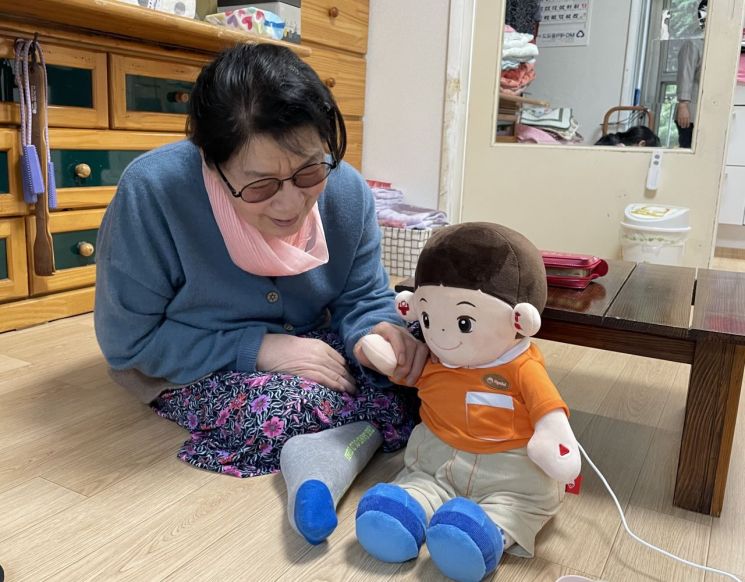
Gwanak-gu (Mayor Park Jun-hee)’s AI companion robot ‘Channy’ is alleviating loneliness among elderly people living alone and disabled individuals living alone, filling the void left by family members.
‘Channy’ is named after the Korean greeting ‘Gwaenchan-ni’ (Are you okay?), and means ‘to help daily life (贊: to assist) and benefit life (利: to benefit).’ It is an AI companion robot that provides care services next to single-person households in need of care, including ▲ personalized notifications ▲ cute comments and companionship ▲ risk signal detection and emergency linkage ▲ information on government and welfare news.
Since last October, the district has distributed 100 units to disabled individuals living alone, and in May this year, an additional 100 units to elderly people living alone and disabled individuals living alone, strengthening care for vulnerable groups with high social isolation despite the ongoing COVID-19 situation.
In July, an effectiveness analysis of the AI companion robot ‘Channy’ distributed to disabled individuals living alone last October showed that it helps improve psychological stability and quality of life for disabled individuals living alone.
The analysis examined changes in depression scale scores, lifestyle management, satisfaction, and server data from the robot for disabled individuals living alone who used ‘Channy.’
First, the average depression scale score decreased from 6.42 points (maximum 15 points) to 4.65 points. Notably, the proportion of the high-risk group with depression scores of 11 or higher dropped from 39.5% to 7.5%, a 32% decrease.
In lifestyle management, scores for managing sleep, meals, and medication improved from 17.7 points (maximum 24 points) to 20.6 points, indicating that the companion robot positively affects the lifestyle patterns of disabled individuals living alone.
The satisfaction survey showed an average score of 93 out of 100, with all respondents expressing willingness to continue using the robot. Convenience scored 86 points, conversation satisfaction 90 points, psychological stability 95 points, and quality of life improvement 96 points, all relatively high.
Voice recognition-based active conversation topics included music playback and weather/lifestyle information, with average daily conversation counts of 9.3 and 5.5 times respectively, demonstrating that the robot effectively provides daily information and companionship to disabled individuals living alone.
The district plans to re-educate users who use ‘Channy’ below the average usage level, designate dedicated personnel for device management at welfare centers and other executing institutions, and operate the program to prevent a decrease in robot usage.
Mayor Park Jun-hee said, “This effectiveness analysis revealed that the AI companion robot alleviates loneliness and provides significant emotional support to disabled individuals living alone,” adding, “Based on these results, we will solidify the project and actively promote AI-based smart integrated care services for vulnerable groups, creating a warm and equitable care environment for a happy community.”
© The Asia Business Daily(www.asiae.co.kr). All rights reserved.
![Clutching a Stolen Dior Bag, Saying "I Hate Being Poor but Real"... The Grotesque Con of a "Human Knockoff" [Slate]](https://cwcontent.asiae.co.kr/asiaresize/183/2026021902243444107_1771435474.jpg)


















