"Includes home healthcare recipients, elderly couples, etc.
Scheduled to start next week after local government situation review"
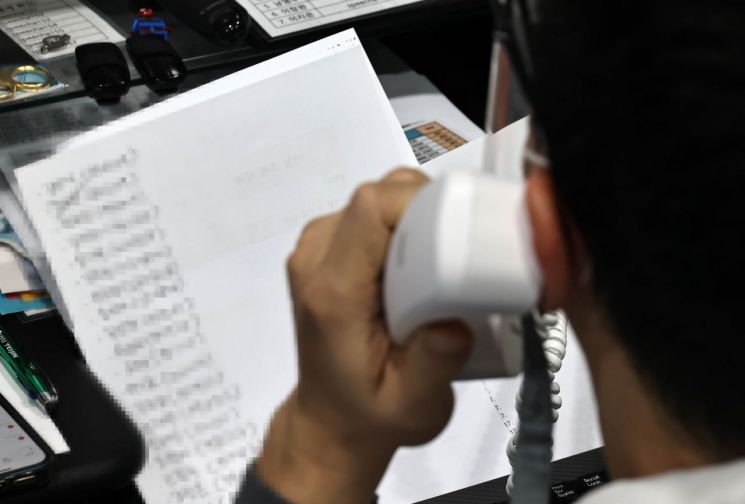
[Asia Economy Reporter Kim Young-won] The government will establish a monitoring system that includes checking the health status of vulnerable groups such as elderly living alone via phone calls during the early stages of home treatment.
On the 19th, the Central Disaster and Safety Countermeasures Headquarters discussed the "Focused Protection Measures for Vulnerable Groups such as Elderly Living Alone Under Home Treatment," which includes these details. Accordingly, the government plans to utilize community-provided care and nursing services to check the health status of vulnerable groups and provide medical information to prevent COVID-19 in advance and manage their health.
First, health and welfare project personnel such as those providing customized elderly care services and home nursing services, as well as visiting nursing institutions, will confirm the presence of respiratory symptoms and health status of elderly living alone through phone calls or visits. They will also provide information on COVID-19 testing and medical institutions.
Son Young-rae, head of the Social Strategy Division at the Central Accident Response Headquarters, explained, "Dedicated social workers and life support workers will check health and provide medical information," adding, "We plan to make daily welfare calls to long-term care home service users."
For vulnerable groups such as elderly living alone aged 60 or older who are confirmed COVID-19 positive and undergoing home treatment, their health status will be regularly checked in the early stages. Using public health center home treatment teams, visiting health management projects, and health and welfare teams visiting towns and villages, local governments will form dedicated teams to check health status 2 to 3 times by phone during the early home treatment period, and if necessary, provide visiting health management or promptly connect them to face-to-face medical care.
Park Hyang, head of the Central Disaster and Safety Countermeasures Headquarters’ quarantine general team, said, "This includes not only elderly living alone aged 60 or older but also elderly couples not living with their children," adding, "Among public health center visiting health care targets who test positive or those receiving visiting health and welfare services from community offices, those living alone or elderly couples living separately, even if they are not basic livelihood security recipients, will also be included."
Some local governments have already established such monitoring systems. Park said, "We are checking when other local governments can start implementing this," and added, "We are preparing to implement it together from next week after confirming local government situations."
Additionally, the government announced that it conducted a second inspection to ensure the solid operation of "one-stop medical institutions" where COVID-19 diagnosis and treatment can be received at once. This inspection is the second following the one conducted last month, and from the 16th for four days, it examined whether functions are being performed and the operation status of the fast track for high-risk groups.
Son said, "The inspection results will be discussed soon at the Central Disaster and Safety Countermeasures Headquarters meeting, and we will actively reflect various system improvement requests from the medical field."
© The Asia Business Daily(www.asiae.co.kr). All rights reserved.
![Clutching a Stolen Dior Bag, Saying "I Hate Being Poor but Real"... The Grotesque Con of a "Human Knockoff" [Slate]](https://cwcontent.asiae.co.kr/asiaresize/183/2026021902243444107_1771435474.jpg)
















