RE100, Not an Option but a Necessity... Directly Linked to Rising Production Costs
Business Community "Financial and Institutional Support Must Be Expanded"
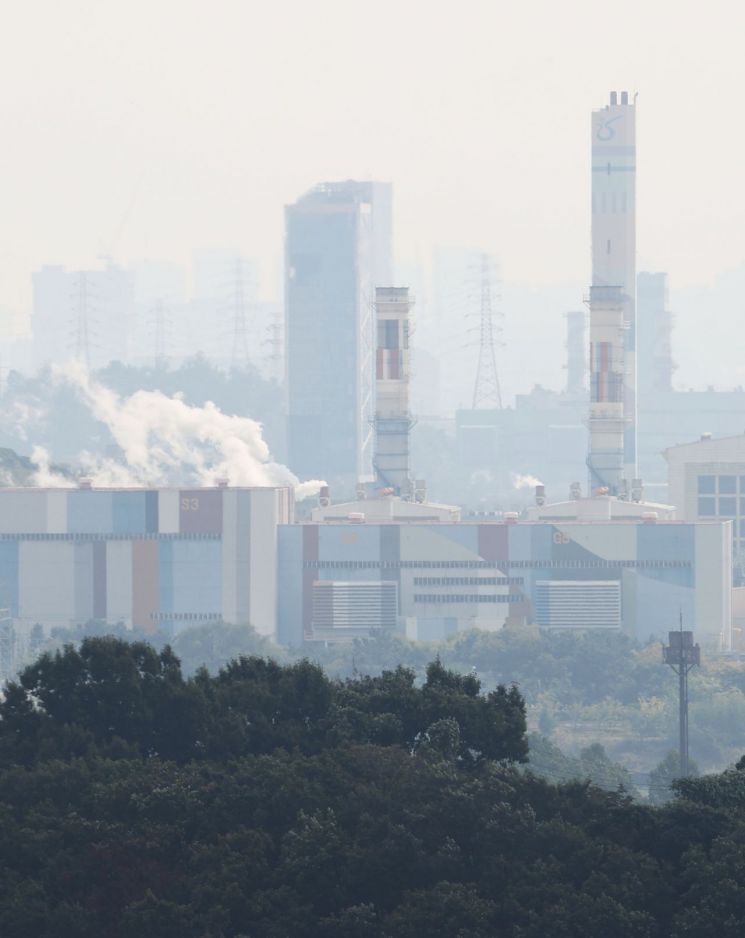
[Asia Economy Reporter Han Yeju] Domestic companies are accelerating their enrollment in 'RE100.' As global companies increasingly demand participation, it has become an essential requirement for survival given the high export dependency of domestic companies.
However, participation in RE100 directly leads to increased production costs for companies. This is because there is not enough renewable energy in Korea to meet the companies' needs. The business community unanimously agrees that the government should expand financial and institutional support to reduce the cost burden.
According to the business community on the 20th, LG Electronics recently announced that its ESG (Environment, Social, Governance) Committee under the board of directors unanimously approved the application for RE100 membership. Previously, the LG Electronics ESG Committee discussed RE100 membership approval on July 28 last year but rejected it unanimously.
RE100 is a campaign in which companies pledge to switch 100% of their electricity consumption to renewable energy. It was launched in 2014 through a collaboration between the UK non-profit organization The Climate Group and the global carbon disclosure initiative, the Carbon Disclosure Project (CDP). When a company submits an application, membership is confirmed after approval by The Climate Group.
LG affiliates are joining RE100 one after another. In April last year, LG Energy Solution became the first domestic battery company to join RE100, and LG Innotek joined last month.
Samsung Electronics recently inquired about the progress of RE100 with its domestic and overseas partners. Since joining the CDP supply chain program in 2019, Samsung included RE100-related items in its surveys to comprehensively assess membership status and progress. Although Samsung Electronics has not set a specific date for RE100 membership, internal discussions are ongoing. There is also speculation that Vice Chairman Lee Jae-yong’s return to frontline management has energized ESG management.
For companies, renewable energy is no longer just an environmental issue. It has long expanded into a matter that determines survival as well as emerging as a new trade barrier. Global credit rating agencies and investment institutions use RE100 and similar initiatives as key criteria when evaluating how much companies are addressing climate change. Failure to meet these standards results in a lack of investment.
Pressure from overseas clients to participate is also intensifying. Especially in the European and North American markets, where the green movement is growing due to exposure to climate changes such as heatwaves and droughts, demands are strong. Companies like BMW and Apple have imposed contractual obligations on domestic suppliers, and regulations such as the European Union’s Carbon Border Adjustment Mechanism and the U.S. Securities and Exchange Commission’s mandatory climate risk disclosures effectively enforce participation.
The KDI School of Public Policy and Management and the Korea Energy Economics Institute estimate that if Korean companies do not join the renewable energy transition trend, exports in the automobile, semiconductor, and display panel industries will decrease by 15%, 31%, and 40%, respectively. In fact, KOTRA’s analysis of RE100 initiatives among 61 global manufacturing companies found that 30 of them have implemented regulatory measures targeting existing partners.
Overseas business sites are gradually achieving RE100. However, domestic business sites in Korea remain an obstacle. There is insufficient renewable energy in Korea to meet companies’ needs. While renewable energy costs are relatively low overseas, domestic renewable energy costs are nearly 1.5 to 2 times higher than abroad.
According to the '2021 High Electricity Consumption Companies Ranking' submitted by Korea Electric Power Corporation (KEPCO) to Rep. Koo Ja-geun of the People Power Party, Samsung Electronics used 18.41 TWh (terawatt-hours) and SK Hynix used 9.21 TWh last year. However, the renewable energy Samsung secured domestically during the same period was only 500 GWh, less than one-thirtieth of its electricity consumption.
Among the top 30 companies in Korea by electricity consumption, including Samsung Electronics, industrial electricity usage totaled 102.92 TWh last year. Korea’s total renewable energy generation was 43.09 TWh, so to achieve RE100, these companies would need to more than double their solar and wind power facilities. This explains why companies want to achieve RE100 but complain that "there is no renewable energy."
Industry insiders say that price is the most important consideration for companies when procuring renewable energy, and they unanimously agree that it is too expensive. They call for the government to introduce active support measures, such as reducing ancillary costs in the renewable energy supply chain, to help companies facing urgent challenges.
An industry official said, "The renewable energy procurement system is inefficient compared to major overseas countries," and added, "Government support is necessary to alleviate the high cost burden."
© The Asia Business Daily(www.asiae.co.kr). All rights reserved.
![Clutching a Stolen Dior Bag, Saying "I Hate Being Poor but Real"... The Grotesque Con of a "Human Knockoff" [Slate]](https://cwcontent.asiae.co.kr/asiaresize/183/2026021902243444107_1771435474.jpg)
















