Rising Yen Value Amid Global Recession Concerns
"Average Around 130 Yen in Q1 Next Year"
US Fed Aggressive Tightening May Cause Further Yen Depreciation
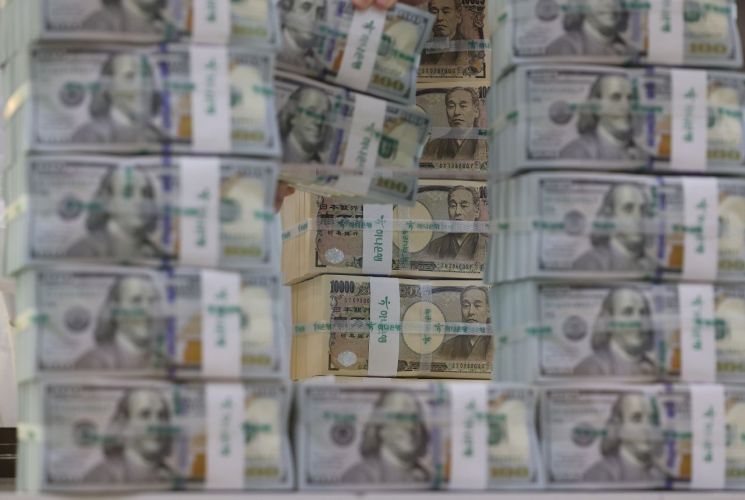
[Asia Economy Reporter Lee Ji-eun] The yen, which had been falling sharply, is rebounding as concerns over a global economic recession have caused U.S. long-term Treasury yields to decline. This has led to observations that the "yen big short" phenomenon?where investors sell yen expecting its value to drop?has peaked.
On the 17th (local time), Bloomberg reported that the yen has recently been strengthening among the major 10 countries (G10) currencies, lending weight to the theory that the yen selling that had heated up the global foreign exchange market has reached its peak.
The yen, which fell to its lowest level in 24 years last month, is showing signs of rebounding as the U.S. economic indicators worsened, causing long-term yields to fall and narrowing the U.S.-Japan interest rate gap. The dollar-yen exchange rate, which had remained between 138 and 139 yen until July, has recently been around 134 yen per dollar.
Bloomberg cited its own statistics, stating that although there were predictions that the yen-dollar exchange rate would rise to 140 yen, the yen selling trend has recently eased, and the yen is expected to maintain an average level in the 130 yen range in the first quarter of next year.
Yukio Ishizuki, a strategist at Daiwa Securities Tokyo, told Bloomberg, "It is not yet the perfect timing to fully buy yen, but there is a growing consensus among investors that it is difficult to continue the yen selling strategy."
Bloomberg also reported that concerns over a recession in Europe due to inflation and soaring energy prices have led the yen to strengthen further against the euro.
Akira Moroga, currency product manager at Aozora Bank Tokyo, said, "The Australian and Canadian dollars, which are sensitive to resources, are being sold off in commodity markets due to concerns about economic slowdown. On the other hand, the yen selling trend is weakening compared to its peak phase."
However, there are still forecasts that the yen could decline further. This is because last week's U.S. July employment report showed better-than-expected strength, raising concerns that the U.S. Federal Reserve (Fed) might pursue aggressive monetary tightening.
In response to these forecasts, U.S. long-term yields rose, widening the U.S.-Japan interest rate gap, and the yen exchange rate increased by 0.21 yen compared to the previous day. An increase in the yen-dollar exchange rate means the yen's value has fallen against the dollar.
© The Asia Business Daily(www.asiae.co.kr). All rights reserved.
![Clutching a Stolen Dior Bag, Saying "I Hate Being Poor but Real"... The Grotesque Con of a "Human Knockoff" [Slate]](https://cwcontent.asiae.co.kr/asiaresize/183/2026021902243444107_1771435474.jpg)
















