[Asia Economy Reporter Sumi Hwang] The South Pacific island nation of Vanuatu has announced its policy to completely phase out fossil fuels. This move is interpreted as a response to growing concerns over damages such as rising sea levels caused by rapid climate change.
On the 14th (local time), according to the British daily The Guardian, the Vanuatu government declared that it will transition to 100% renewable energy for its domestic electricity by 2030. It also called for the establishment of a United Nations agency to provide financial support to impoverished countries affected by climate change. Facilities to support energy-vulnerable groups are also being promoted. The Guardian reported that this policy is estimated to require a budget of about 1.2 billion USD (approximately 1.5 trillion KRW).
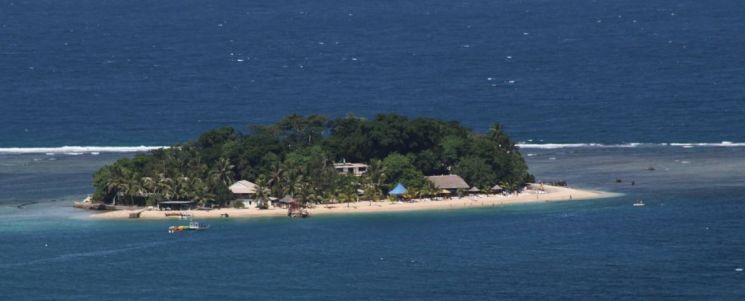
The South Pacific island nation of Vanuatu consists of four large islands and 80 smaller islands. According to The Guardian, Vanuatu absorbs more carbon dioxide, a major cause of global warming, than it emits.
However, it is classified as a representative country suffering from the effects of climate change. In fact, Vanuatu is known to be experiencing difficulties such as rising sea levels, increased salinity of groundwater, and flooding of low-lying areas. Every year, strong typhoon damage results in many displaced persons and casualties.
As climate change worsens recently, these damages are expected to intensify. Previously, the Intergovernmental Panel on Climate Change (IPCC), a UN body, warned in its global warming report that South Pacific island nations could completely disappear within the 21st century.
The report projected that before 2040, the Earth's temperature will rise by 1.5 degrees Celsius above pre-industrial levels, and extreme events such as heatwaves and heavy rains will become frequent. It also warned about sea level rise caused by global warming and emphasized that reducing greenhouse gas emissions is the only solution.
Given this situation, Vanuatu recently requested the International Court of Justice (ICJ) to recognize its right to protection from the impacts of climate change. According to AFP news on the 13th of last month, at the Pacific Islands Forum held in Suva, the capital of Fiji, Marc Ati, Vanuatu's Foreign Minister, asked for ICJ's support in efforts to combat climate change.
He said, "I am confident that Australia and New Zealand will join together," and after securing support from member states on this agenda, he plans to seek the consent of the entire international community at the United Nations General Assembly in September. Although the ICJ's opinions are not binding, this is based on the judgment that they have broad influence in the international community.
Meanwhile, The Guardian described Vanuatu government's fossil fuel phase-out policy as "the most ambitious climate policy in the world," and evaluated that "the announcement by the small island nation stands out in international climate efforts."
© The Asia Business Daily(www.asiae.co.kr). All rights reserved.
![Clutching a Stolen Dior Bag, Saying "I Hate Being Poor but Real"... The Grotesque Con of a "Human Knockoff" [Slate]](https://cwcontent.asiae.co.kr/asiaresize/183/2026021902243444107_1771435474.jpg)
















