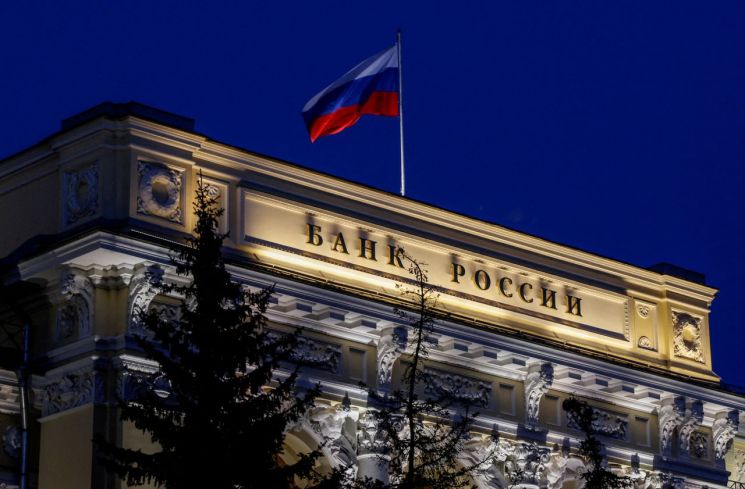
[Asia Economy reporters Hyunjin Jeong and Byunghee Park] Russia is expected to record its first negative growth since the invasion of Ukraine. While there are projections that the economic scale will shrink to the level of four years ago, considering the barrage of sanctions from Western countries such as the United States and Europe, it is evaluated that Russia has relatively held up well. In fact, the impact of Western sanctions on Russian crude oil production and exports has also been limited.
According to Bloomberg on the 11th (local time), Russia will announce the preliminary GDP figures for the second quarter on the 12th. Bloomberg surveyed 12 analysts, and the forecast for Russia's Q2 GDP growth rate is -4.7% on an annualized basis. This would mark Russia's first negative growth in over a year since Q1 last year. Although Russia's Q1 GDP growth rate was 3.5%, showing positive growth after the war in Ukraine began at the end of February, it eventually turned negative.
Growth Forecast Revised Up from -10% to -4.7%
Alexander Isakov, a Russian economist, told Bloomberg Economics, "The Russian economy will return to the size it was in 2018, four years ago, in Q2," adding, "The accommodative monetary policy to support demand is expected to slow the pace of recession somewhat until Q4." He further stated, "Due to the deterioration of exports caused by Europe's energy import suspension, the Russian economy is expected to shrink an additional 2% next year."
The slump in Russia's economy in Q2 appears to be due to the flood of sanctions from the U.S. and Europe following the Ukraine war. As a result, trade with Russia has significantly decreased, some industries such as automobile production have halted factory operations, and consumer spending has declined. The Russian Central Bank has forecasted that the economic situation will worsen over the coming quarters and that recovery will be difficult until the second half of next year.
However, despite the large-scale sanctions poured on Russia, economic experts judge that the impact has been less severe than expected. Initially, Russia's Q2 GDP growth rate was expected to reach -10% on an annualized basis, but this level has improved to the -5% range. When Bloomberg surveyed analysts on Russia's Q2 GDP growth rate forecast, it was -10.0% in March, then gradually improved to -9.5% in April, -9.1% in May, -9.0% in June, and further to -8.8% in July and -4.7% in August.
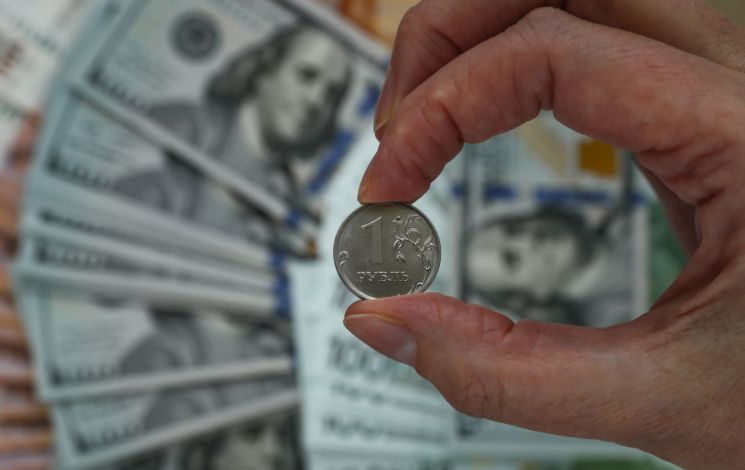
Last month, JP Morgan and Citigroup raised their forecasts for Russia's GDP growth rate this year from previous estimates of -7.0% and -9.6% to -3.5% and -5.5%, respectively. Evgeny Suborov, chief Russian economist at CentroCreditBank, said, "The crisis in the Russian economy is moving along a very soft trajectory," and added, "The Russian economy is expected to reach its bottom around mid-next year."
Bloomberg reported that the Russian Central Bank has played a role in controlling capital and suppressing sudden market and ruble fluctuations through significant interest rate hikes, and that the situation has improved enough for the bank to withdraw such measures. In fact, immediately after the Ukraine invasion, the Russian Central Bank raised the benchmark interest rate from 9.5% to 20% in one go to prevent the ruble's value from falling. As the situation improved, the rate was gradually lowered, and last month it was reduced from 9.5% to 8%, adjusting the rate to a level even lower than before the Ukraine invasion.
In this month's monetary policy report, the Russian Central Bank analyzed, "The recession this year is expected to be less severe than anticipated in April," while also noting, "At the same time, the impact of supply shocks may expand over time."
Russian Crude Oil Production at -3% Compared to Pre-War Levels
One of the main reasons the Russian economy has endured is that the energy sector, which accounts for about 20% of GDP, has not yet suffered a major shock. According to the British Financial Times (FT), citing a report released by the IEA on the same day, the impact of Western sanctions on Russian crude oil production has been limited. According to the IEA, Russia's daily crude oil exports have decreased by about 2.2 million barrels since the outbreak of the Ukraine war. However, increased crude oil exports to China, India, and T?rkiye (Turkey) have helped the Russian government reduce losses.
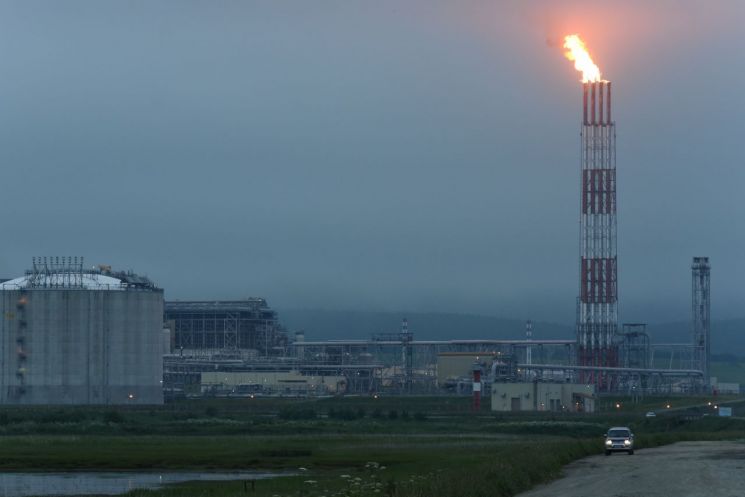
The IEA stated that the decrease in Russia's daily crude oil exports is only 580,000 barrels, and that Western sanctions have not dealt a significant blow to Russian crude oil production. Russia's daily crude oil production last month decreased by only 310,000 barrels compared to before the war. The reduction is less than 3% compared to pre-war levels.
The IEA analyzed that Asian countries are increasing imports by taking advantage of the lower prices of Russian crude oil. In June, China surpassed the European Union (EU) to become the largest importer of Russian crude oil. The IEA explained that compared to early this year, the discount on Russian crude oil relative to U.S. and European crude oil has also narrowed. It estimated that Russia earned approximately $21 billion and $19 billion from crude oil exports in June and July, respectively.
The IEA raised its forecast for Russia's daily crude oil production by 500,000 barrels for the second half of this year and by 800,000 barrels for next year. By revising upward the crude oil demand forecast for this year and next, the IEA also increased its estimate for Russian crude oil production.
© The Asia Business Daily(www.asiae.co.kr). All rights reserved.
![Clutching a Stolen Dior Bag, Saying "I Hate Being Poor but Real"... The Grotesque Con of a "Human Knockoff" [Slate]](https://cwcontent.asiae.co.kr/asiaresize/183/2026021902243444107_1771435474.jpg)


















