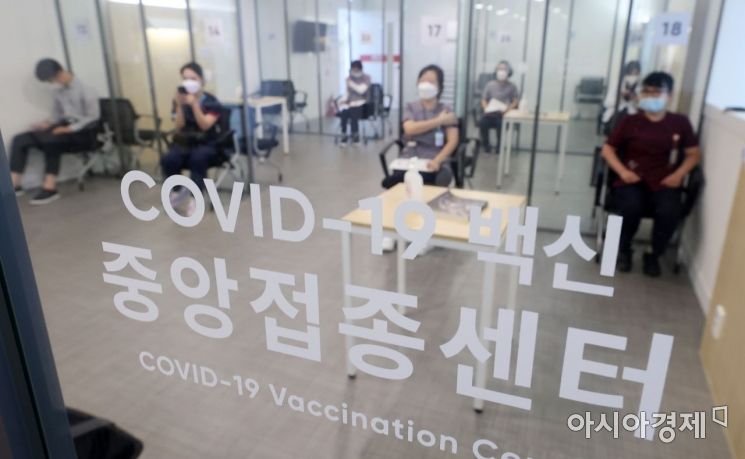
[Asia Economy Reporter Kim Young-won] A study has found that COVID-19 vaccines are associated with abnormal uterine bleeding.
The COVID-19 Vaccine Safety Committee of the Korean Academy of Medical Sciences announced this on the 11th during the third research results presentation on adverse reactions following vaccination.
According to the committee's research, abnormal uterine bleeding was confirmed to have a statistically significant increased risk of occurrence after vaccination, regardless of the vaccine type. The committee evaluated that, based on this study and existing scientific evidence, a causal relationship between COVID-19 vaccines and abnormal uterine bleeding can be accepted.
However, the committee judged that this research result cannot be extended to explain causality between vaccines and oligomenorrhea or amenorrhea. This is because the study confirmed the risk of frequent menstruation with shortened menstrual cycles and bleeding-related abnormal uterine bleeding. Oligomenorrhea refers to a condition where the menstrual interval lengthens to 35?40 days or more.
Furthermore, the committee explained that the study included cases where abnormal uterine bleeding occurred and then recovered, as well as cases with persistent symptoms, indicating the need for future research targeting populations with chronic abnormal uterine bleeding.
Regarding thrombotic diseases such as deep vein thrombosis, no increase in incidence was confirmed across all vaccines. However, a slight consistent increase in the incidence of individual diseases was observed after Pfizer vaccination, leading most experts to consider that detailed future analysis is necessary.
In the case of cerebral venous sinus thrombosis, subgroup analysis showed increased risk among those aged 30?49, 50?64, and women. The committee stated, "Although a statistically significant increase in risk after vaccination was observed, careful interpretation is required considering research limitations such as diagnostic accuracy."
To produce evidence free from such limitations, the committee added that research utilizing registries systematically collecting data from confirmed patients in Korea should be conducted.
Park Byung-joo, chairman of the COVID-19 Vaccine Safety Committee, said, "Since the committee's launch in November last year, we have been rapidly conducting research on adverse reaction diseases and are holding the final presentation of the first year," adding, "We will continue to strive for more accurate scientific causality results in ongoing research."
© The Asia Business Daily(www.asiae.co.kr). All rights reserved.
![Clutching a Stolen Dior Bag, Saying "I Hate Being Poor but Real"... The Grotesque Con of a "Human Knockoff" [Slate]](https://cwcontent.asiae.co.kr/asiaresize/183/2026021902243444107_1771435474.jpg)
















